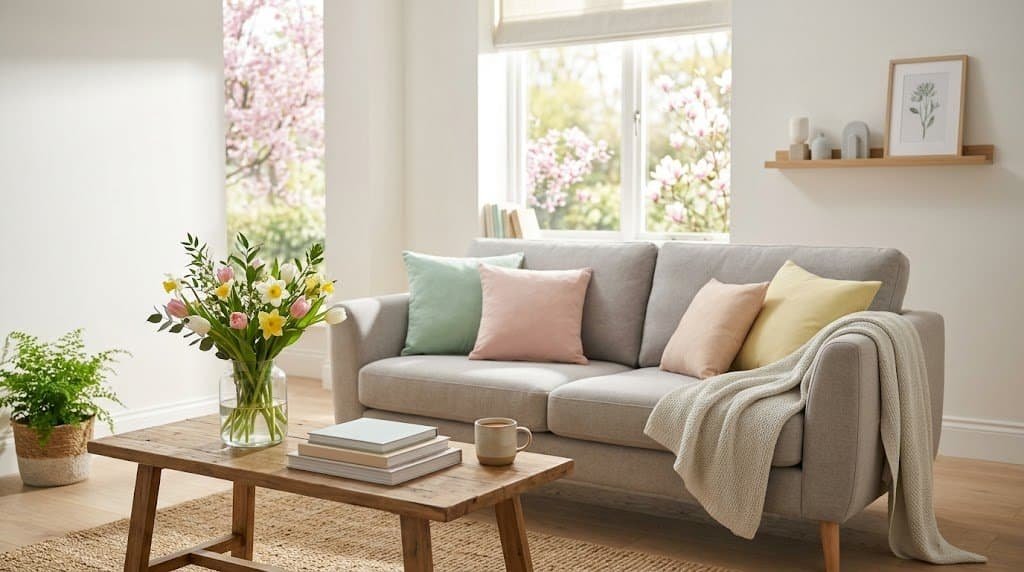
Every year around mid-March, something shifts in me. The days get longer, the light in my kitchen changes, and suddenly my whole house feels heavy. Too dark. Too cluttered. Too much brown.
I used to respond to this by making a Target shopping list that would have cost $800 and ending up with more stuff I did not need. Now I do something smaller, smarter, and way cheaper. Fifteen little updates, each one under $50, most under $20. Together they transform my house from winter-tired to spring-ready in one weekend.
This is my actual list, tested over four springs, refined into what actually works. No expensive renovation projects. No “just replace your entire couch.” Just real, affordable changes that make your house feel lighter, brighter, and ready for the season ahead.
Start Here: The Free Step That Sets Everything Up
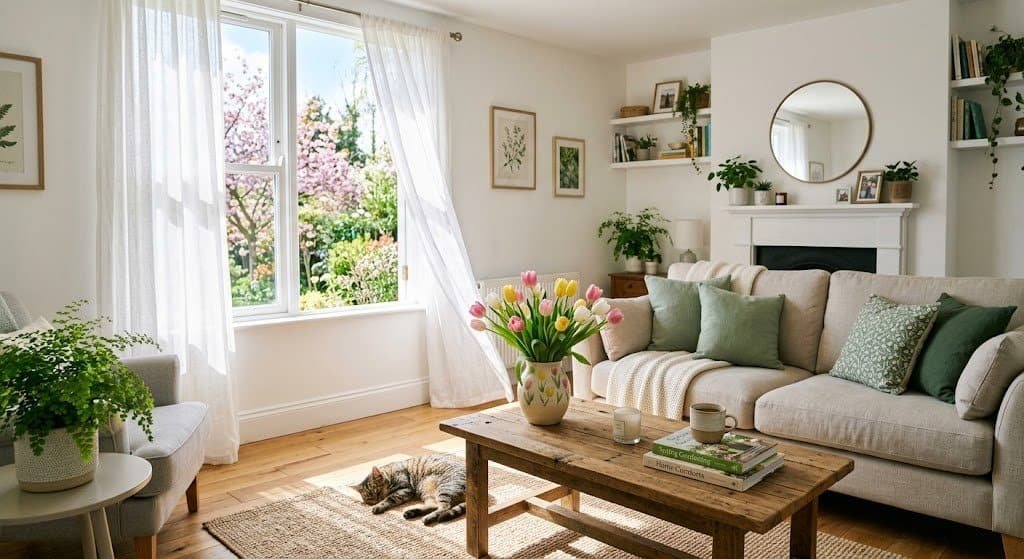
Before you buy a single thing, do this: open every window in your house for an hour.
I know, it sounds ridiculous to put in an article about decor. But stale winter air is the invisible problem in most homes. After four or five months of closed windows and running heat, every fabric in your house is holding onto that stuffy smell. Your rugs. Your curtains. Your couch cushions.
Open everything, run a fan to push air through, and let the real outside air clear it all out. Even better if you can take throw pillows and blankets outside to air out for a couple hours.
This is the starting line. Every update below lands better in a house that has been aired out first. And it costs zero dollars.
1. Swap Your Throw Pillow Covers ($12 to $25)
Do not throw away your throw pillows. Just change the covers.
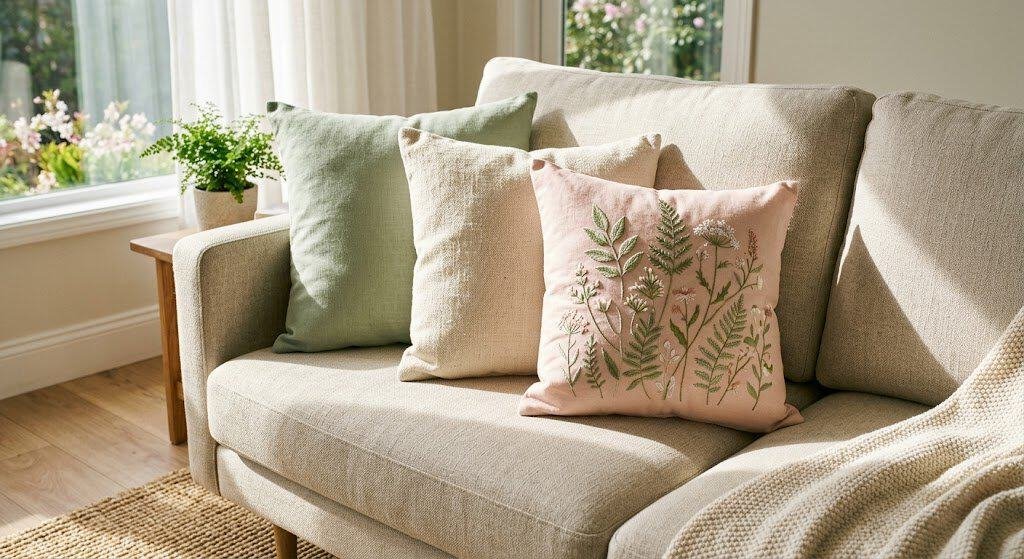
Amazon sells sets of 4 throw pillow covers (18×18 inch) for around $15 to $25. HomeGoods and Target have them for $7 to $12 each. For under $30, you can swap your heavy winter colors (deep reds, browns, moody plaids) for spring ones — soft sage green, warm cream, blush pink, or anything botanical.
The trick is to keep your pillow inserts and just rotate covers seasonally. Store the winter covers in a bin in the closet. In October, you swap them back. This is the single biggest “my house feels different” upgrade you can make for the least money.
My current rotation: four covers in a soft eucalyptus green pattern, two solid cream linen-look covers, and one blush pink accent cover. Total cost when I bought them three years ago: $42. I have used them every spring since.
2. Fresh Flowers (Even the Grocery Store Kind)
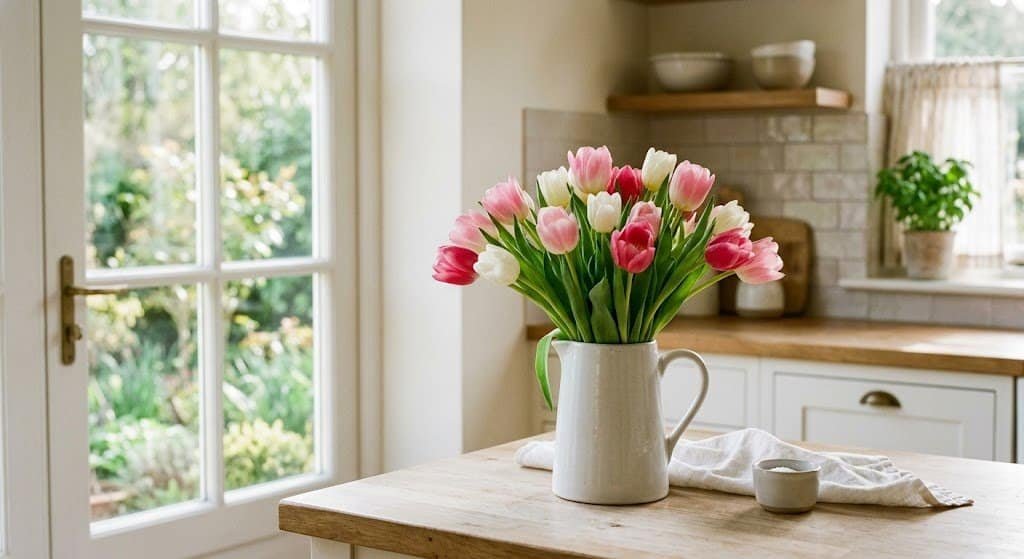
There is a reason every home decor magazine features fresh flowers in spring photo shoots. They work. A $10 bunch of grocery store tulips in a pretty vase on your kitchen counter changes the whole feel of the room.
Here is what I have learned after years of buying grocery store flowers:
Trader Joe’s has the best cheap flower selection. Consistent $5 to $8 bunches, fresh, and a wide variety. Buy there if you have one nearby.
Tulips are the spring flower that lasts. Usually 7 to 10 days if you change the water. Much longer than most cut flowers.
Skip roses in spring. Spring is the season of tulips, daffodils, ranunculus, lilacs (if you are lucky), and peonies (in May). Roses feel like February.
Use anything as a vase. A mason jar, an empty wine bottle, an old olive oil tin. Matching “proper” vases are unnecessary.
Budget: $10 to $15 per week. Consider it the price of a small bottle of wine you would otherwise buy, except this lasts 10 days.
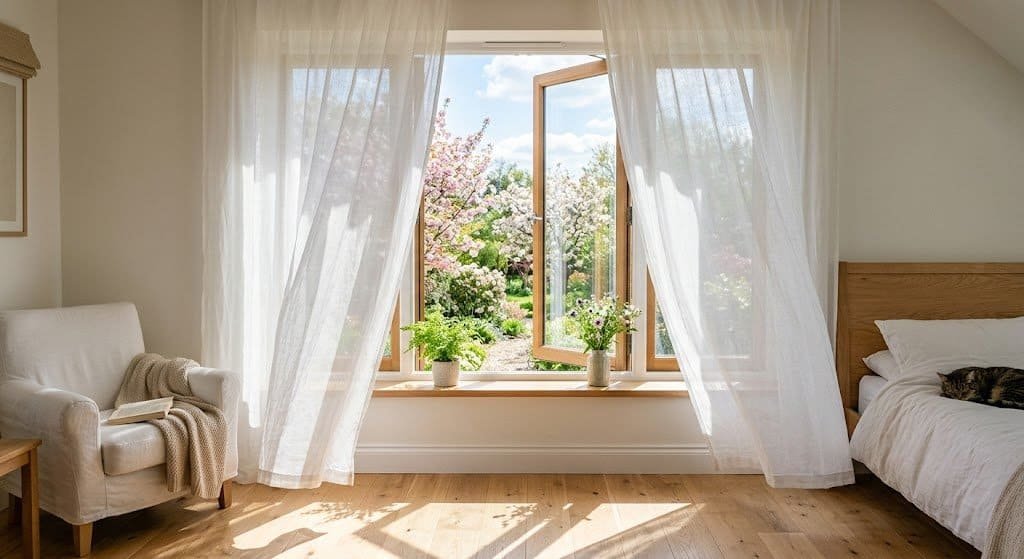
3. Switch Out Heavy Curtains for Sheer Panels ($20 to $40)
If you have heavy velvet, thick linen, or dark-colored curtains in your living room, bedroom, or anywhere else, spring is the time to swap them.
Amazon sells sheer white or cream curtain panels for $20 to $40 per pair. IKEA has them even cheaper — their Lill panels are $5 each. Target’s Threshold brand runs about $25 per pair.
Sheer curtains do two things heavier curtains cannot: they let light pool through the whole room instead of blocking it, and they move with the breeze. That gentle curtain movement when you crack a window is the quiet signal that a house feels alive.
Keep your heavier curtains in storage for fall and winter. This is an investment that pays off twice a year — you swap back in October when you want the cozy, insulated feeling again.
The one room where I keep heavy curtains year-round: our bedroom. We are light sleepers and need blackout. Everywhere else — living room, dining room, office — sheer panels in spring and summer.
4. Deep Clean One Thing That Matters Most
Instead of “spring cleaning” your whole house and exhausting yourself, pick one thing that makes the biggest visual impact and deep clean it to near-new condition.
My vote, every time: your entryway.
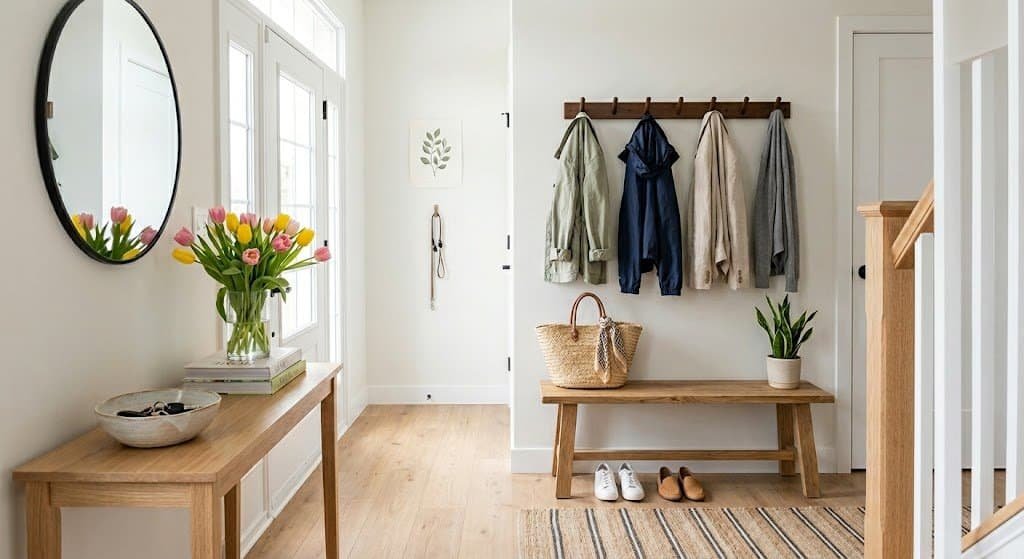
The entryway is the first thing you see when you walk in the door. It sets the mood of the whole house. If your entryway is cluttered, dusty, and covered in winter boots and salt stains, every time you walk in you unconsciously feel the drag of it.
Spend one Saturday morning on it. Take everything off the shoe rack. Wipe down the baseboards. Vacuum any rug. Put winter boots and heavy coats into a closet bin and bring out lighter coats. Add a fresh bunch of flowers to the entryway table.
You walk in the door Sunday morning and your whole house feels different.
Cost: $0 to $15 for cleaning supplies if you are stocked out. Time: 2 hours.
5. Replace One Burned-Out Light Bulb (All of Them, Actually)
This sounds small. It is not.
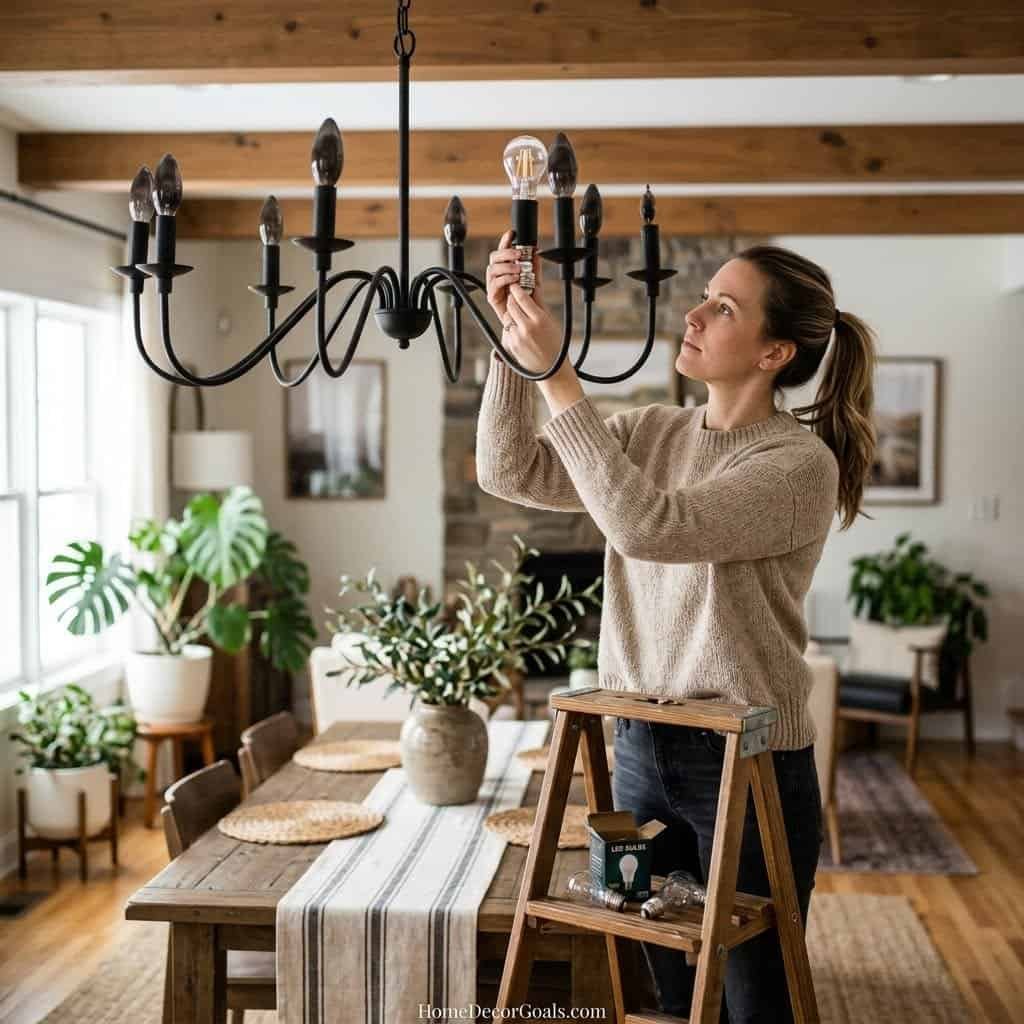
Walk through your house with a notebook and write down every single light bulb that is burned out, dimmer than the others in its fixture, or giving off the wrong color of light. I am betting you have at least 6 to 10 of them.
Dollar Tree, Walmart, and Home Depot sell basic LED bulbs for $2 to $5 each. For under $30, you can replace every burned-out or mismatched bulb in your house.
Critical detail: match the color temperature. Bulbs come in different whites:
- 2700K (Warm White) — what you want in living rooms, bedrooms, dining rooms. Cozy, warm, inviting.
- 3000K to 3500K — good for kitchens and bathrooms where you need to see clearly.
- 4000K+ (Cool White/Daylight) — basically never. Too cold and clinical for a home.
Every bulb in the same room should match. Mismatched bulbs are the invisible reason your rooms feel weird and off.
This one change — making sure every light in your house works and matches — is underrated. It literally changes how your home feels when you turn on lights at night.
6. A New Doormat ($15 to $30)
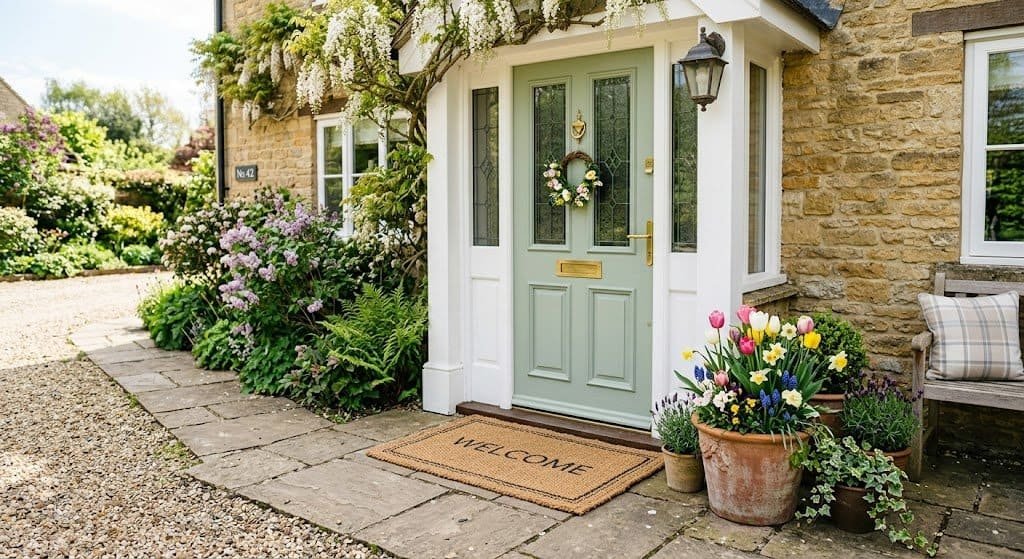
Your doormat is telling your neighbors something about how you feel about your home. If it is faded, crumbled at the edges, or has visible stains, it is saying “I have given up.”
A new doormat costs $15 to $30 at Target, Amazon, HomeGoods, or Bed Bath & Beyond. Pick a natural coir or fiber mat in a simple design. Avoid anything cutesy or phrase-based (“Welcome, wipe your paws”). Simple, textured, neutral.
The entry mat is one of those small signals that sets the tone for your whole home before anyone even walks inside. Plus, practically, a good coir mat scrapes mud off boots way better than a tired old mat.
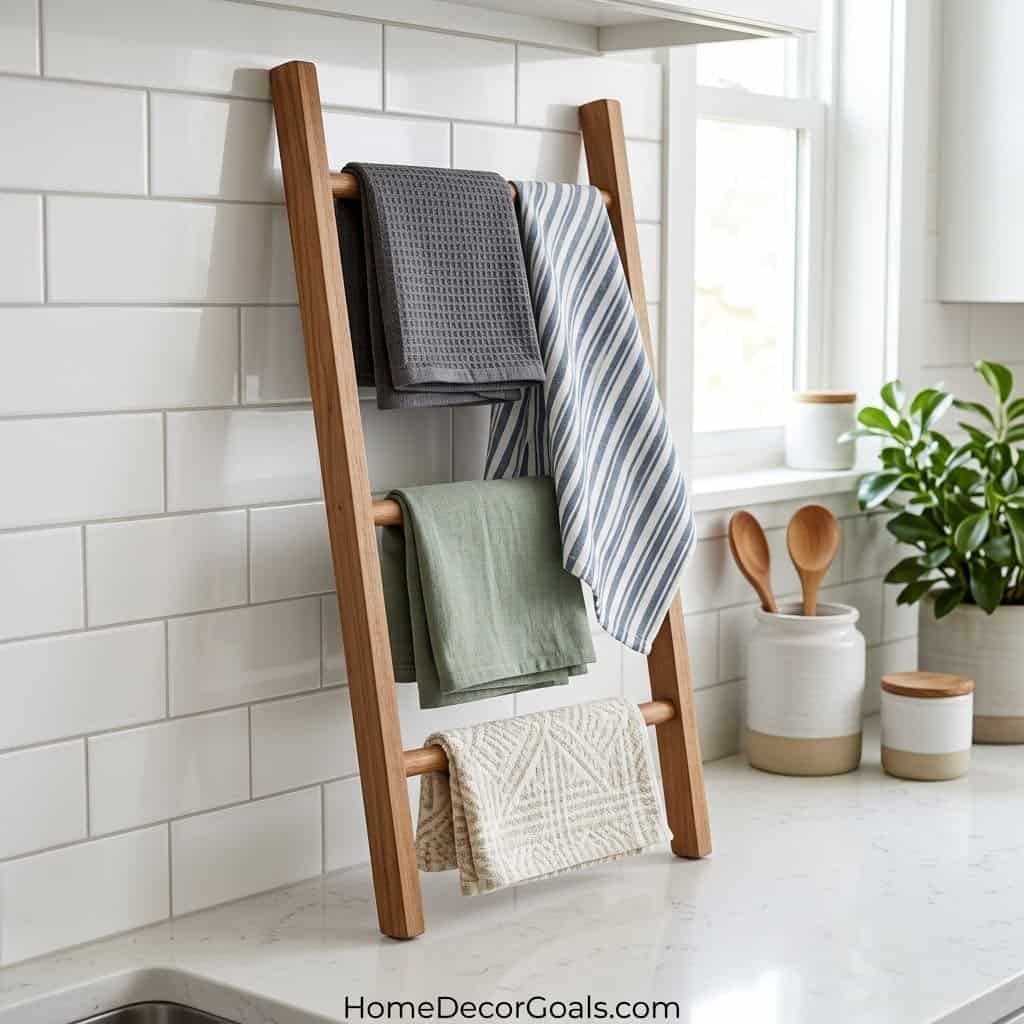
7. Rotate Your Kitchen Towels ($10 to $20)
Another tiny one. Your kitchen towels have been doing heavy labor through winter. Holiday baking, soup splashes, salt-dusted boot wipes. They are probably stained and tired.
Swap them. Amazon sells sets of 4 kitchen towels for $12 to $20. Look for linen or cotton-linen blend in spring colors — cream, soft blue, dusty pink, sage green, or simple white.
Hang one on the oven handle. Drape one over the sink edge. Fold two or three neatly in a drawer for use.
It is such a small thing, but in a kitchen that is the most-used room in your house, swapping tired towels for fresh crisp ones registers every time you walk in.
8. Move One Piece of Furniture
Free. Takes 20 minutes. Changes your whole space.
Walk into your main living area and look hard. Is there one piece of furniture — an armchair, a side table, a lamp, a bookshelf — that has been in the exact same spot for more than a year?
Move it. Not to a totally different room necessarily. Just to a different spot. Rotate your couch 90 degrees. Switch the end tables. Move the armchair to the corner it has never been in.
You will notice things about your space you had stopped seeing. Sometimes the new arrangement works better and you keep it. Sometimes you put things back. Either way, you have forced yourself to actually look at your home with fresh eyes.
I do this every spring. About half the time, the new arrangement sticks.
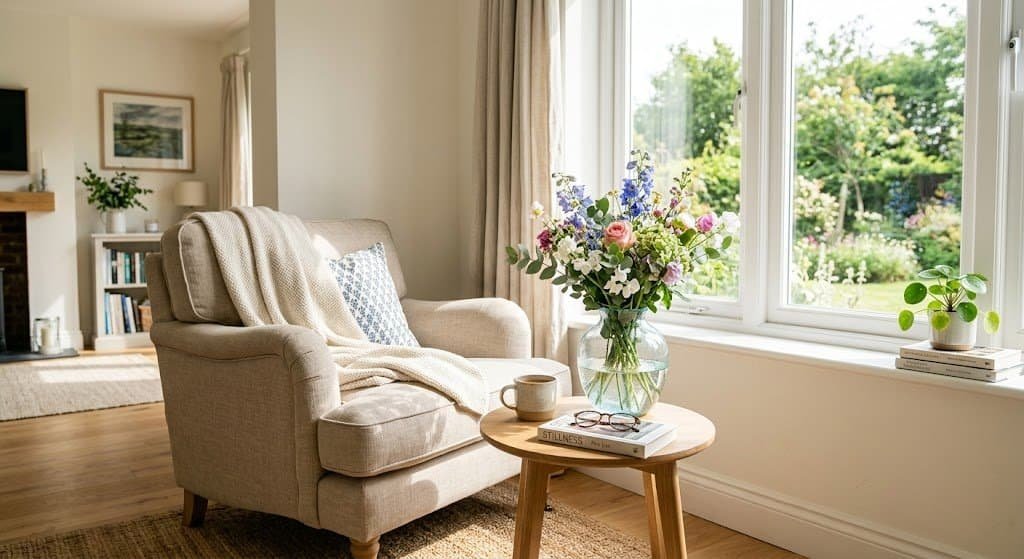
9. Swap Heavy Throw Blankets for Lightweight Ones ($25 to $45)
Winter blankets — thick wool throws, chunky knits, faux fur — belong in storage after March.
Replace them with lighter weight throws in natural fabrics. Linen, cotton, or a waffle-weave blanket is perfect for spring. Target, Amazon, and IKEA all have lightweight throws in the $20 to $40 range.
My favorite for the last two years is a simple cream cotton throw with a subtle waffle texture. It is folded on the arm of my couch. When evenings are cool, it is just enough warmth. When it is warmer, it stays folded and still looks intentional.
Store your winter throws in a vacuum storage bag or a cedar-lined bin in the closet. They will be waiting for you in October.
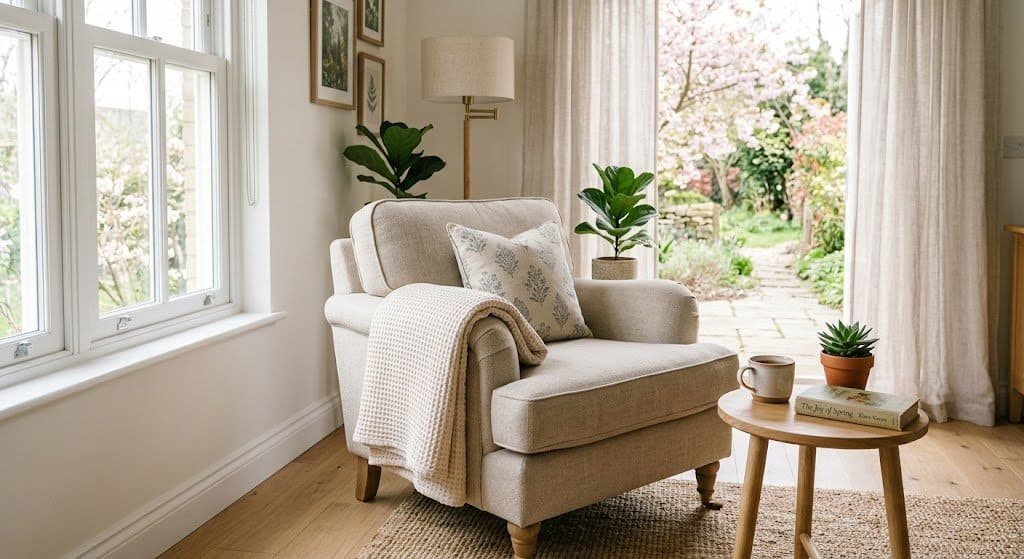
10. One Plant (Even If You Kill Plants)
If you are thinking “I cannot keep plants alive” — this is for you.
Get one pothos or one snake plant. Both are nearly impossible to kill. Both cost $8 to $20 at Home Depot, Lowe’s, Trader Joe’s, or IKEA. Both survive weeks of being ignored.
Plants do something in a room that almost nothing else does. They add life — literal, actual, breathing life. Even one plant on a shelf or side table shifts the energy of a space.
My rules for low-maintenance plant success:
- Pothos loves indirect light and dry soil. Water when the top 2 inches of soil are dry.
- Snake plants want bright indirect light and even less water. Once every two to three weeks in spring.
- Put the plant in a pretty pot (add $10 to $15 for a ceramic pot from Target).
- Ignore it mostly and it will thrive. Plants die from overcare more than undercare.
Start with one. If it lives through spring, add another by fall.
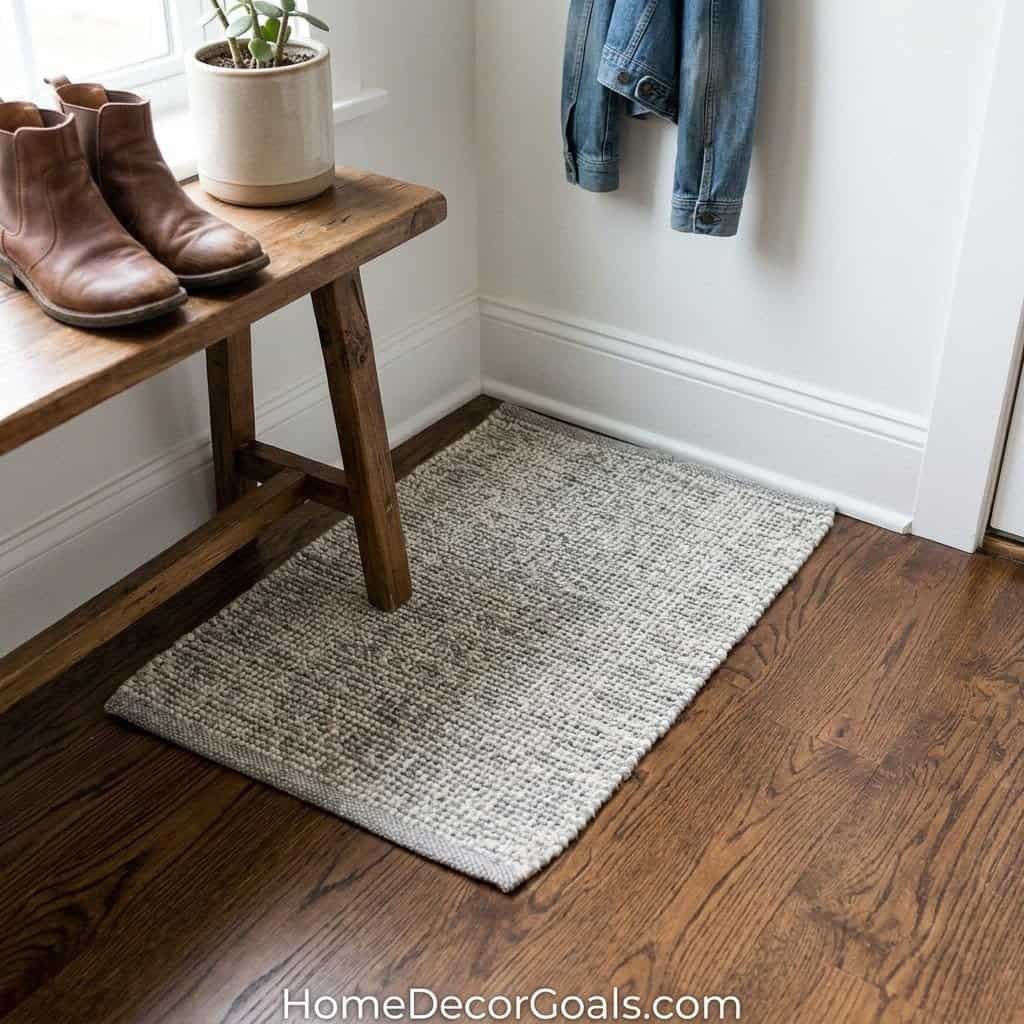
11. A New Small Rug for a Problem Spot ($30 to $50)
You know that spot in your house that just looks off? Usually it is a spot that could use a rug but does not have one. The kitchen in front of the sink. A bathroom floor. A weird empty spot by the back door.
A 2×3 or 3×5 foot rug solves this for $30 to $50. HomeGoods, Target, Ruggable, and Amazon all have them in spring-friendly patterns and colors.
Look for:
- Washable if it is going in a kitchen or bathroom
- Jute or cotton for a living room or bedroom accent
- Lighter colors than your winter rugs
A small well-placed rug softens a space, defines a zone, and hides the floor where it gets the dirtiest.
12. Actually Hang Up That Art You Have Been Meaning To Hang
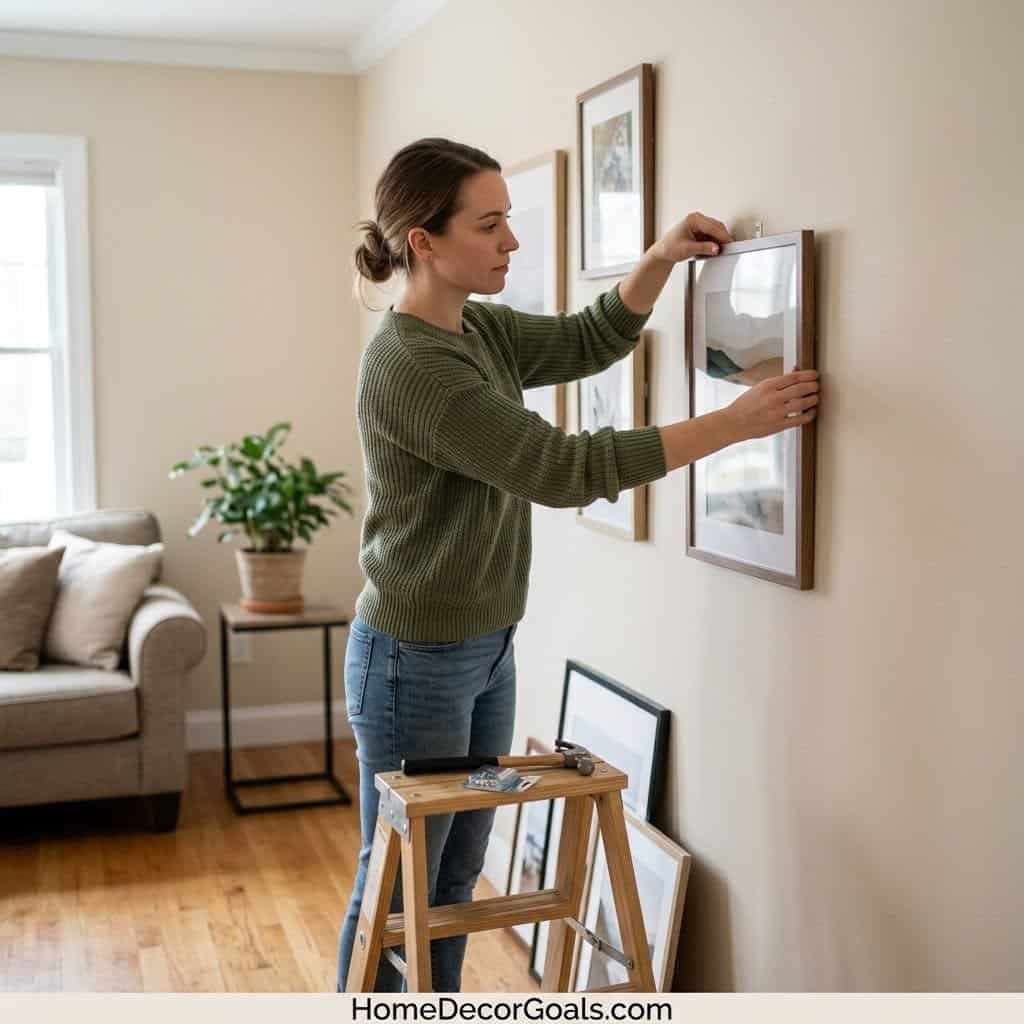
I guarantee you have at least one piece of art somewhere in your house that you have been meaning to hang up for months. Propped against a wall. Sitting in a closet. In a tube in the garage.
Hang it this weekend.
You need a hammer, a nail, and 15 minutes. If you are worried about getting the exact right spot, here is the rule: center of the art should be 57 to 60 inches from the floor. That is “gallery height” and it works in almost any room.
The bare wall that has been sitting in the back of your mind for months? Fixing it in a single afternoon unlocks something. Every time you walk past that wall, you will feel it.
No cost if you already own the art. Maybe $5 for picture hooks.
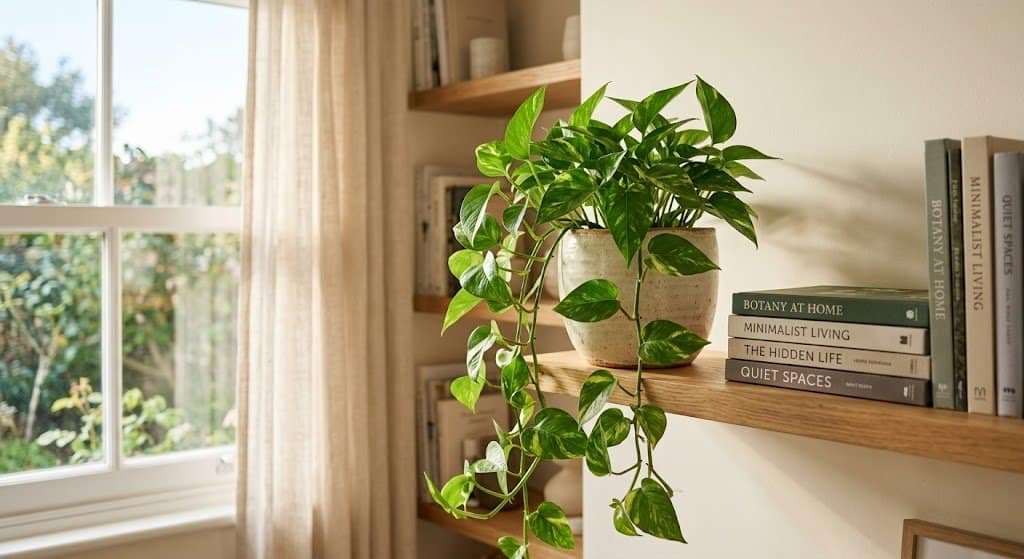
13. Rearrange Your Bookshelf Seasonally (Free)
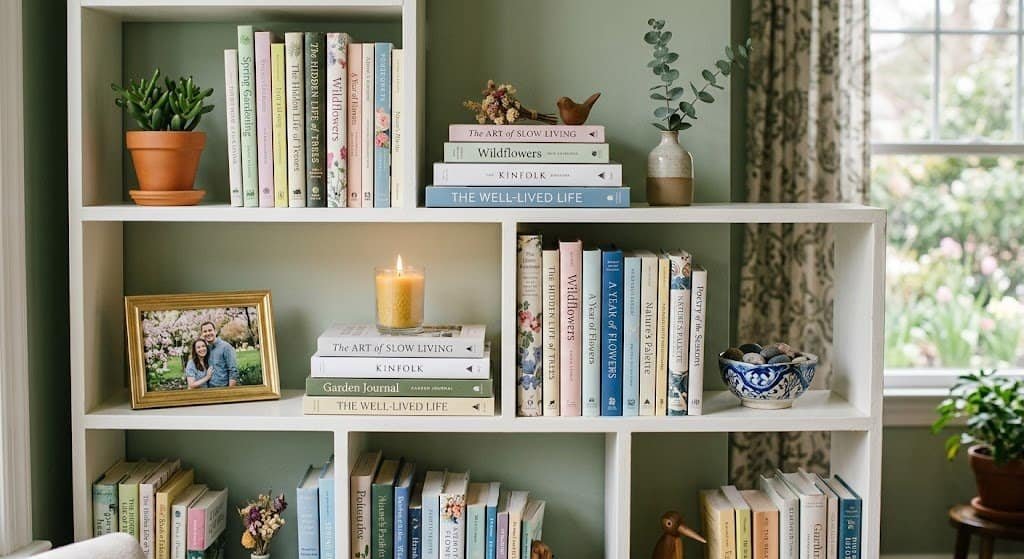
Your bookshelves — if you have them — are one of the most-seen decor elements in your home. And most people set them up once and never touch them again.
Spring rearrangement takes an hour. Here is what I do:
- Remove everything from one shelf
- Restack books by color or spine cleanliness (this alone looks intentional)
- Add a few decorative objects among the books — a small plant, a candle, a bowl, a framed photo
- Leave some negative space. Do not cram every inch.
- Repeat for each shelf
The trick is treating shelves like small curated displays, not storage. Books lying flat in small stacks, with objects on top of them, always looks better than soldier-row vertical books crammed together.
Totally free. Changes how an entire wall of your house looks.
14. Upgrade Your Entryway Hook ($15 to $30)
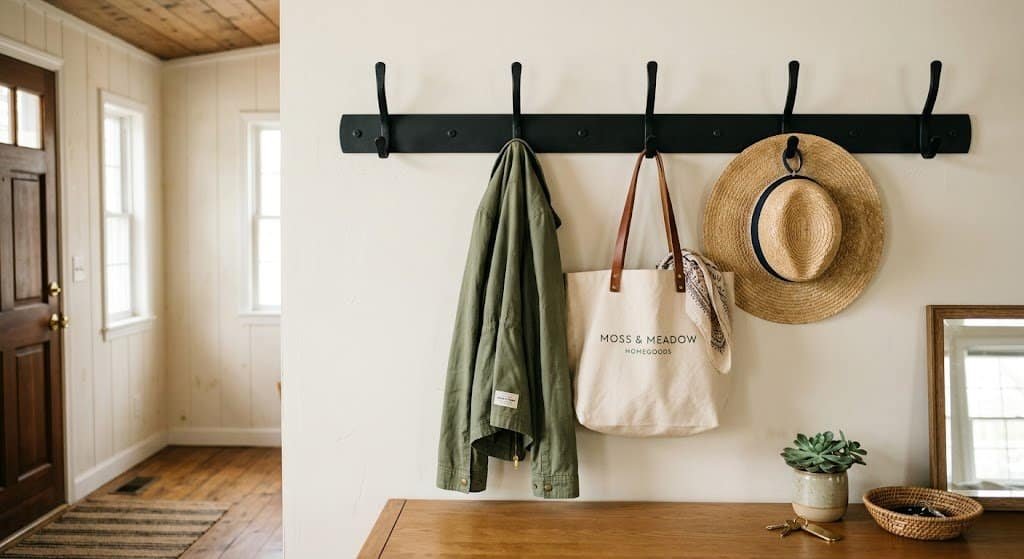
Most people’s entryway is hosting a random mess of bags, jackets, and keys on a single overloaded hook or the back of a chair.
A single nice wall-mounted coat rack or row of hooks — the kind that costs $20 to $35 at Target or Amazon — immediately organizes the space. Matte black iron hooks, brass hooks, or weathered wood hooks all look intentional and polished.
Install it at eye level — about 60 inches from the floor. Hang spring-weight jackets, tote bags, and maybe one decorative straw hat or bag.
What you are doing is creating a “drop zone” that is designed to be seen, not hidden. Entryway hooks that actually look good make you more likely to hang stuff up consistently, which keeps the entryway clean.
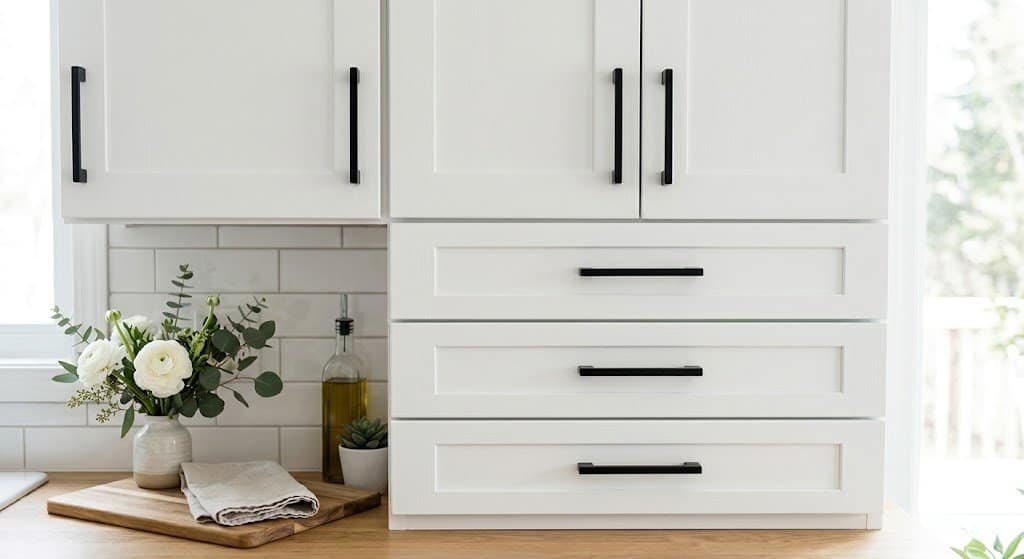
15. Change One Piece of Kitchen Hardware (Under $40)
This is the upgrade that feels fancy but is under $40. Change just the hardware on your kitchen cabinets — or even on just your bathroom vanity.
A set of 10 cabinet pulls or knobs in a nice matte black, brushed brass, or aged bronze runs $20 to $40 on Amazon. Installation is one screwdriver and 30 minutes.
Changing the knobs on a tired old kitchen from the 1990s brass (which looks dated) to modern matte black or brushed brass transforms the feel of the whole kitchen. It is the kind of change that makes guests say “did you redo your kitchen?” when you did not.
You do not have to change every cabinet in the house. Start with just the kitchen, or just your bathroom vanity. See the impact. Expand if you want.
Budget Breakdown: What This Actually Costs
Here is my spring refresh total from last year:
| Update | Cost |
|---|---|
| Throw pillow covers (4) | $25 |
| Fresh flowers (weekly for a month) | $40 |
| Sheer curtain panels | $30 |
| Doormat | $22 |
| Kitchen towels (set of 4) | $18 |
| Lightweight throw blanket | $28 |
| Two plants in pots | $35 |
| Small kitchen rug | $40 |
| Cabinet pulls for kitchen | $32 |
| Light bulbs (replaced 8) | $28 |
| Total | $298 |
For under $300, my entire house feels different in every room. And most of those purchases (curtains, pillow covers, throws, plants) I still have years later.
You do not need to do all 15 updates in one weekend. Even doing 4 or 5 of them this weekend will genuinely shift how your house feels.
Frequently Asked Questions
When is the best time to do a spring home refresh?
Mid-March to early April is ideal — after the worst of winter but before the full pollen bloom. This gives you the visual freshness of spring without peak outdoor allergens ruining indoor air quality.
Do I have to do all 15 updates to see a difference?
No. Picking even 4 or 5 — like swapping pillow covers, adding plants, fresh flowers, and rearranging one piece of furniture — makes a real difference. Start with whatever is easiest or feels most urgent.
What’s the single cheapest spring refresh with the biggest impact?
Swap your throw pillow covers. For $20, you can change the entire feel of your main living space. Pillows are visible from every angle and immediately signal seasonal change.
Where do I store my winter decor when I swap things out?
Under-bed storage bags or vacuum-seal bags work best for throws and pillow covers. A single plastic bin in the linen closet can hold all your winter textiles until fall.
Should I paint a room as part of a spring refresh?
Only if you want a project. Painting is in the “weekend commitment” category, not the “easy update” category. If your walls bother you, fine, paint. But do not assume you need to paint to refresh a space — the textiles and accents do 90% of the work for less effort.
How do I make a rental feel like spring when I cannot change things?
Everything in this list works in a rental. Pillow covers, throws, plants, flowers, curtains, and rugs are all renter-friendly. Hardware on your own items (like furniture knobs) also counts. Avoid only wall paint and permanent fixtures.
What colors define spring decor in 2026?
Soft sage green, warm cream, butter yellow, dusty pink, and muted terracotta are all trending for 2026. But honestly, classic spring whites, creams, and any soft botanical greens will always work. Skip anything too bright or too saturated.
The Real Point
After years of doing this, I have realized the spring refresh is not really about decor. It is about giving yourself permission to start fresh.
Winter makes everything feel heavy — the rooms, the schedule, the energy in your house. A weekend of changing small things gives you that reset feeling. You walk into your living room on Monday morning and something is different. You feel it before you can name it.
That is what $300 and a weekend buys you. Honestly, the best deal in home decor there is.
Related Articles
- 20 Small Balcony Decor Ideas That Maximize Space
- How to Create an Outdoor Living Room on a Budget
- 16 Best Outdoor Rugs for Patios and Decks
- 15 Backyard Fire Pit Ideas for Summer Nights

Which of these updates are you going to try first? Let me know in the comments which one felt most achievable for your home.