20 Small Balcony Decor Ideas That Maximize Space and Style (2026)
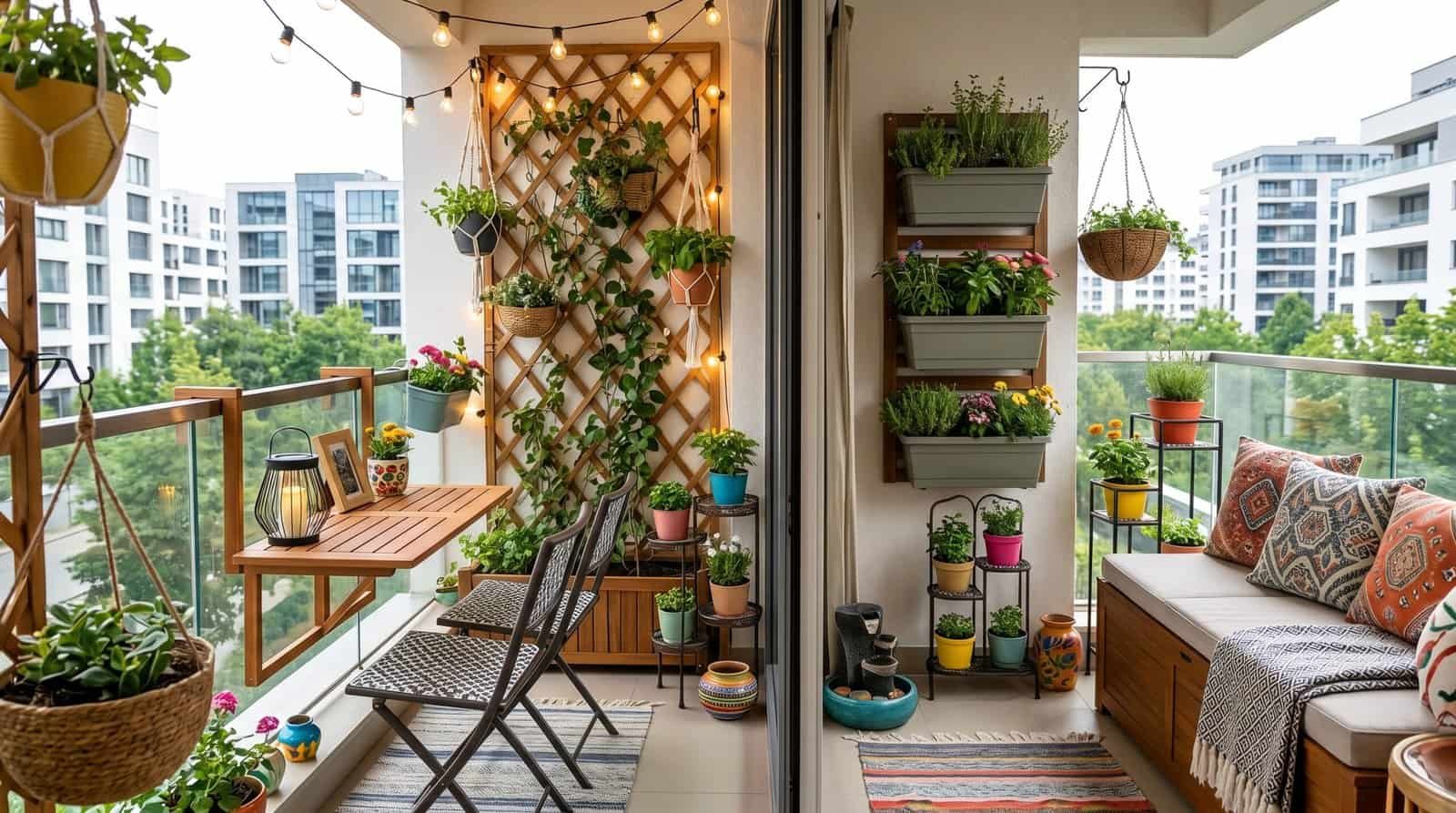
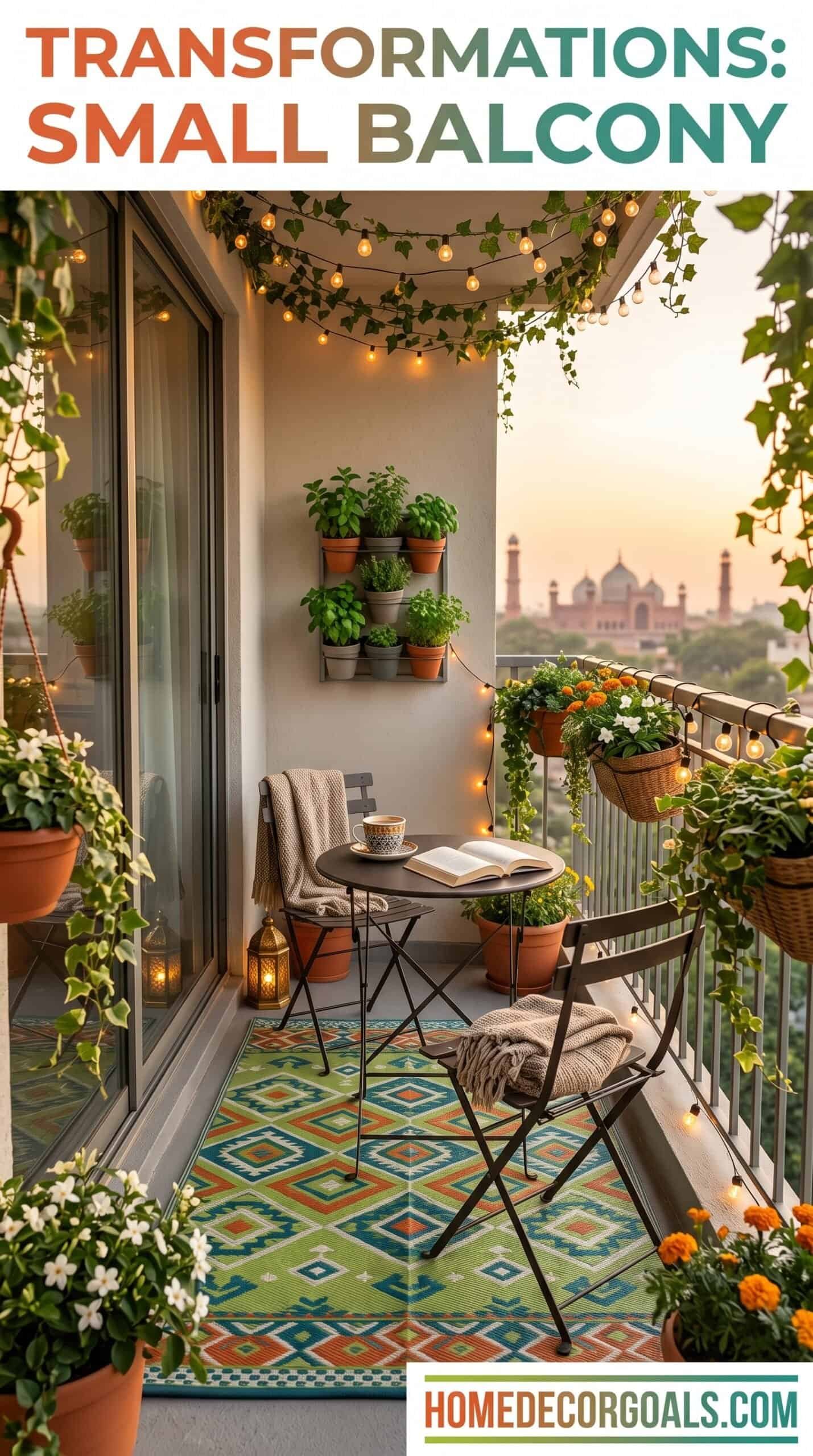
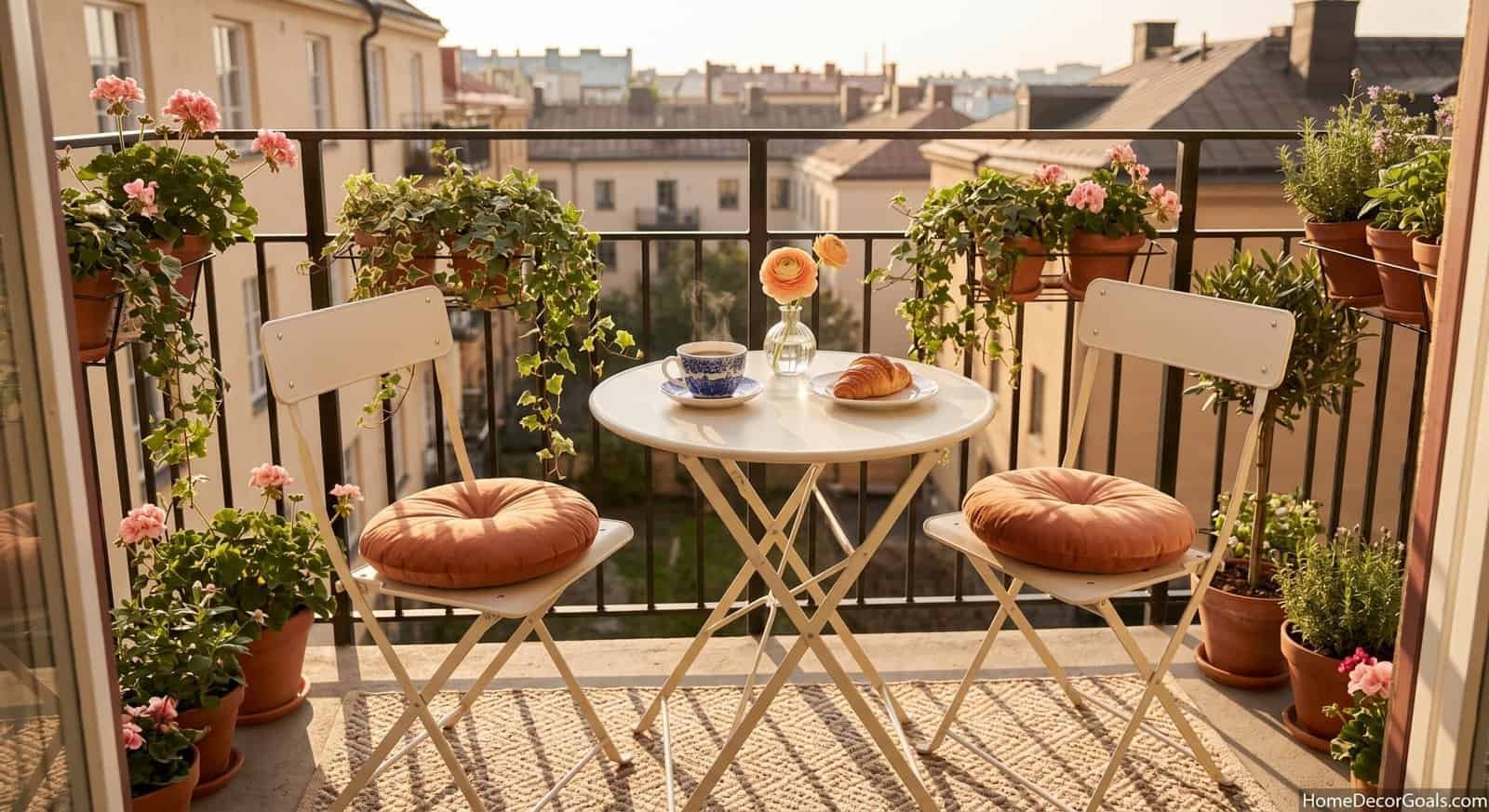
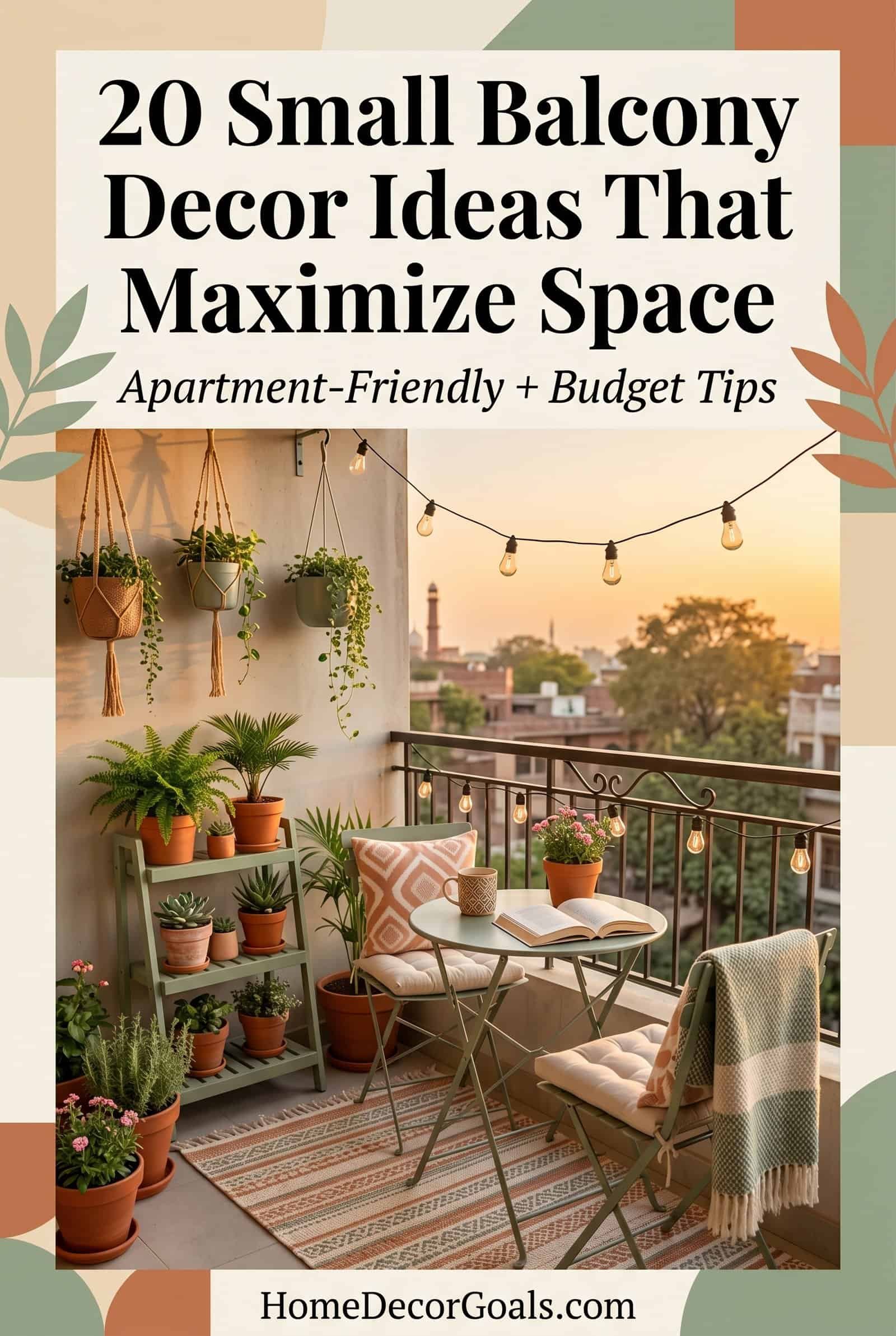
When I moved into my first apartment in the city, the rental listing described the balcony as a “private outdoor retreat.” What I actually got was a concrete rectangle approximately four feet wide and seven feet long — roughly the dimensions of a twin mattress laid on the floor. Standing on it with both arms stretched out, I could touch the railing with one hand and the sliding door with the other. There was room for exactly one human being, a folding chair, and a sense of quiet disappointment.For the first six months, that balcony served as storage for my bicycle and a graveyard for a single dead basil plant. I never sat out there. I never opened the door except to check the weather. It was wasted space attached to an apartment where every square foot cost real money.Then my neighbor moved in next door. Her balcony was the exact same size as mine — same builder, same floor plan, same four-by-seven rectangle of concrete sixty feet above the street. But the first time I glanced over the dividing wall, I stopped and stared. She had transformed that identical space into something that looked like it belonged in a home design magazine. A small bistro table and two chairs that somehow fit perfectly. Planters overflowing with herbs and trailing ivy. A string of warm lights along the railing. A small outdoor rug that made the concrete disappear. A single lantern on the floor that glowed amber in the evening. She was sitting out there with a book and a glass of wine, and she looked like she was on vacation.Same space. Same dimensions. Same concrete. But hers was a retreat and mine was a storage unit. The only difference was intention. She had looked at the exact same limitations I saw and decided they were design opportunities rather than problems. That is what this guide is about — taking the small balcony you have and turning it into the outdoor space you want, using ideas that are specifically designed for tight dimensions, apartment living, and the kind of creative thinking that makes small spaces feel bigger than they are.These 20 ideas are organized from the ground up — literally starting with the floor and working your way to the ceiling. Every idea includes specific product suggestions, exact measurements, budget estimates, and the kind of detailed advice that only comes from someone who has decorated a balcony too small for a standard lawn chair and made it look like a rooftop bar in Barcelona.
Starting From the Ground: Floor and Foundation
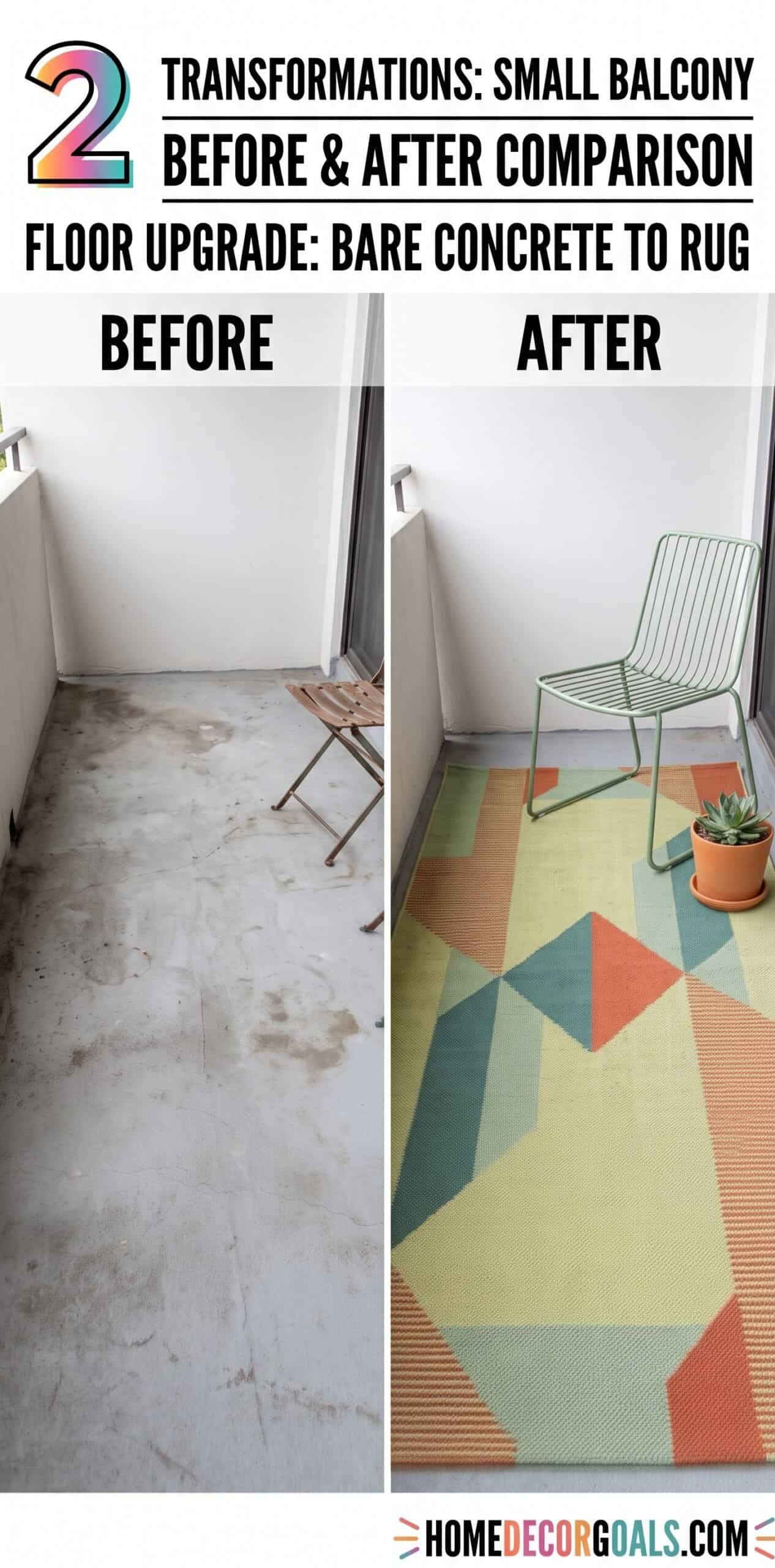
1. An Outdoor Rug That Makes the Concrete Disappear
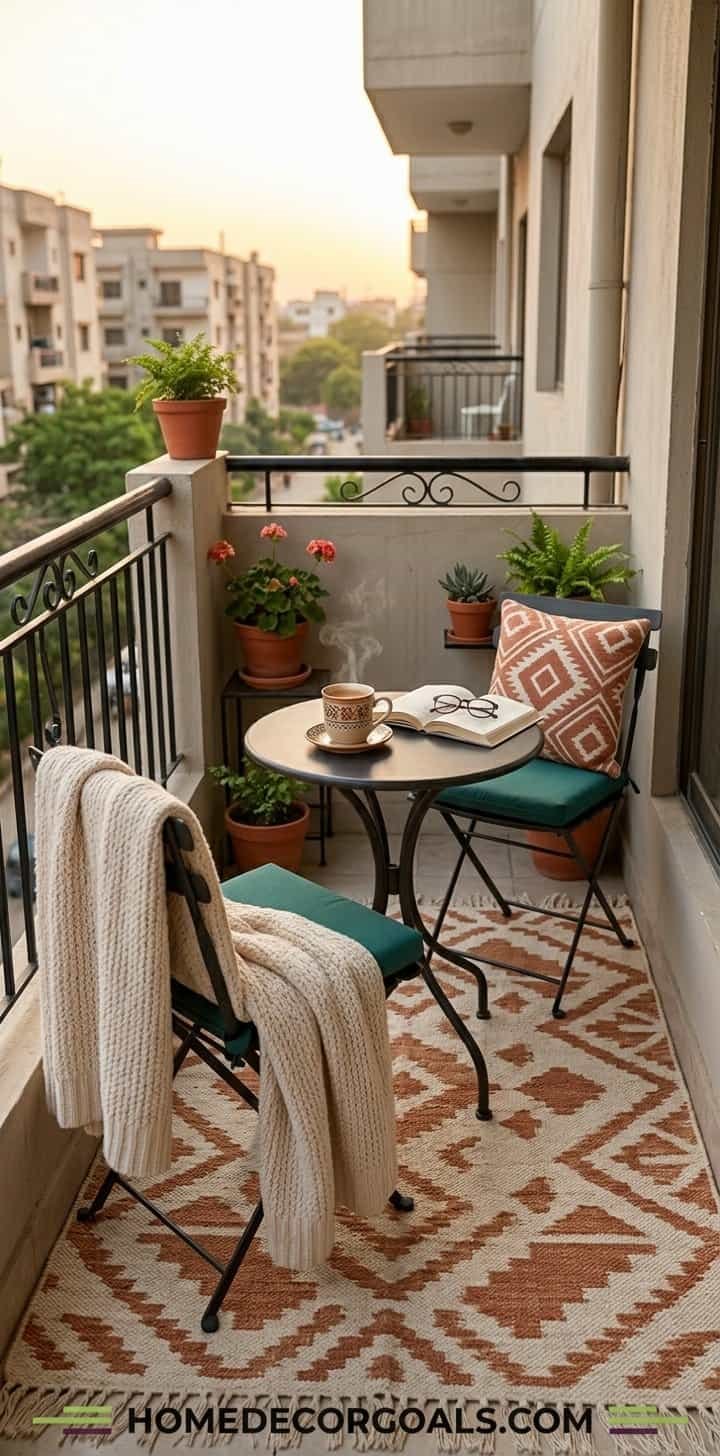
The single fastest transformation you can make to any small balcony is covering the bare concrete or tile floor with an outdoor rug. This one change is so dramatic that everything else you do afterward looks better because of it. Bare concrete reads as unfinished, cold, and institutional — like a parking garage that happens to be attached to your apartment. A rug reads as intentional, warm, and residential — like a room that happens to have a view.For small balconies, a 3×5 or 4×6 rug covers most of the floor area while leaving a border of visible floor around the edges. This border is important — it prevents the rug from looking wall-to-wall cramped and gives the illusion of a defined “seating area” within the larger balcony space, which psychologically makes the balcony feel like it has zones rather than just being one tiny rectangle.Choose a flatweave polypropylene rug that is specifically rated for outdoor use. Indoor rugs will trap moisture, grow mold underneath, and disintegrate within one season. Outdoor-rated rugs handle rain, sun, and humidity without any of those problems. Pattern-wise, a neutral geometric or simple stripe in warm tones (cream, terracotta, sage green) works with virtually any other decor you add later. Avoid extremely busy patterns on small balconies — they create visual chaos in tight spaces. A simple, elegant pattern in warm colors makes the space feel larger, calmer, and more curated.Roll up the rug during heavy storms or extended rain periods to prevent water pooling underneath, which can damage both the rug and the balcony surface. During dry weather, shake it out weekly over the railing to remove dust and debris. This five-second maintenance habit extends the rug’s life dramatically and keeps your balcony looking fresh rather than neglected.The price range for a quality small outdoor rug is $25 to $60, and the visual impact per dollar is higher than any other single purchase on this list. If your budget only allows for one item, make it the rug.
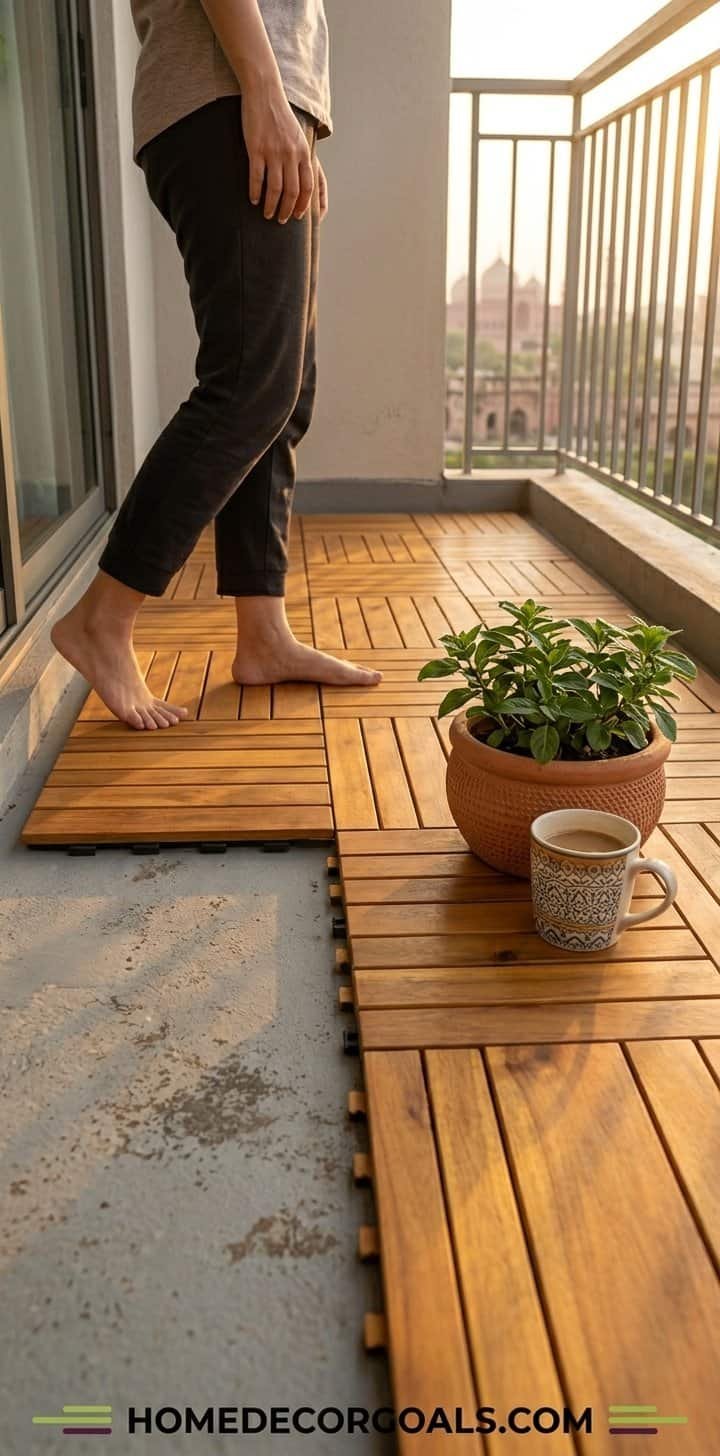
2. Interlocking Deck Tiles Over Concrete (Instant Wood Floor)
If you want to go beyond a rug and truly transform the floor surface, interlocking deck tiles are the most impactful upgrade available for renters and homeowners alike. These are square tiles — typically twelve by twelve inches — made from real wood (acacia, teak, or eucalyptus) or composite material that snap together like puzzle pieces and lay directly on top of your existing concrete, tile, or whatever surface your balcony currently has.The installation requires zero tools, zero glue, zero permanent modification. You literally unbox the tiles, snap them together starting from one corner, and work your way across the balcony. Most small balconies require twelve to twenty tiles, which takes about fifteen to twenty minutes to install. When you move out or want to change the look, you unsnap them, stack them, and take them with you. Your landlord will never know they were there because the original floor is untouched underneath.The visual transformation is staggering. Cold gray concrete becomes a warm honey-colored wood deck. The balcony goes from “outdoor hallway” to “rooftop terrace” in the time it takes to watch one episode of television. The wood surface also stays cooler than concrete in summer sun, which means you can walk on it barefoot without burning your feet — a genuine comfort upgrade that you will appreciate every warm morning when you step outside for coffee.Acacia deck tiles cost approximately $3 to $5 per square foot. For a 4×7 foot balcony, that is $85 to $140 for a complete floor transformation. Composite tiles are slightly cheaper at $2 to $4 per square foot. Both options last three to five years with minimal maintenance — occasional sweeping and a rare cleaning with soapy water.
Seating: Sitting Comfortably in Tiny Spaces
3. A Bistro Table Set (The Classic Small-Space Solution)
A two-person bistro table set is the furniture that was literally invented for small outdoor spaces. The round table (typically 24 to 28 inches in diameter) and two matching chairs fit comfortably in spaces as narrow as three feet wide while providing a functional surface for eating, drinking, reading, and working. The round shape is critical — square and rectangular tables have corners that jut into walking space and create collision points in tight areas. Round edges allow you to squeeze past the table without bruising your hip on a sharp corner every single time you step outside.Look for folding bistro sets where both the table and chairs fold flat for storage. On days when you want to use the balcony floor for yoga, exercise, or simply standing at the railing with a drink, folding furniture lets you reclaim the entire space in thirty seconds. When collapsed against the wall, a folding bistro set takes up approximately four inches of depth — essentially invisible.Material matters for balcony furniture. Metal (wrought iron or powder-coated steel) is the most weather-resistant and requires no maintenance beyond occasional wiping. It is also the heaviest, which means wind will not move it but you might struggle to rearrange. Wood (acacia, teak, or eucalyptus) is warm and beautiful but requires seasonal oiling to prevent cracking. Wicker or rattan looks cozy but degrades faster in direct rain unless it is synthetic resin wicker, which lasts years without any maintenance.Add a small cushion or seat pad to each chair for comfort — even a simple round cushion from the dollar store transforms a hard metal chair into a seat you will actually linger in. Choose cushion colors that complement your rug for a cohesive look that makes the whole balcony feel designed rather than assembled from random pieces.Price range: $60 to $150 for a quality folding bistro set. IKEA, Target, and Wayfair all carry excellent options under $100 that look far more expensive than they are.
4. Floor Cushions and Poufs (Ground-Level Living)
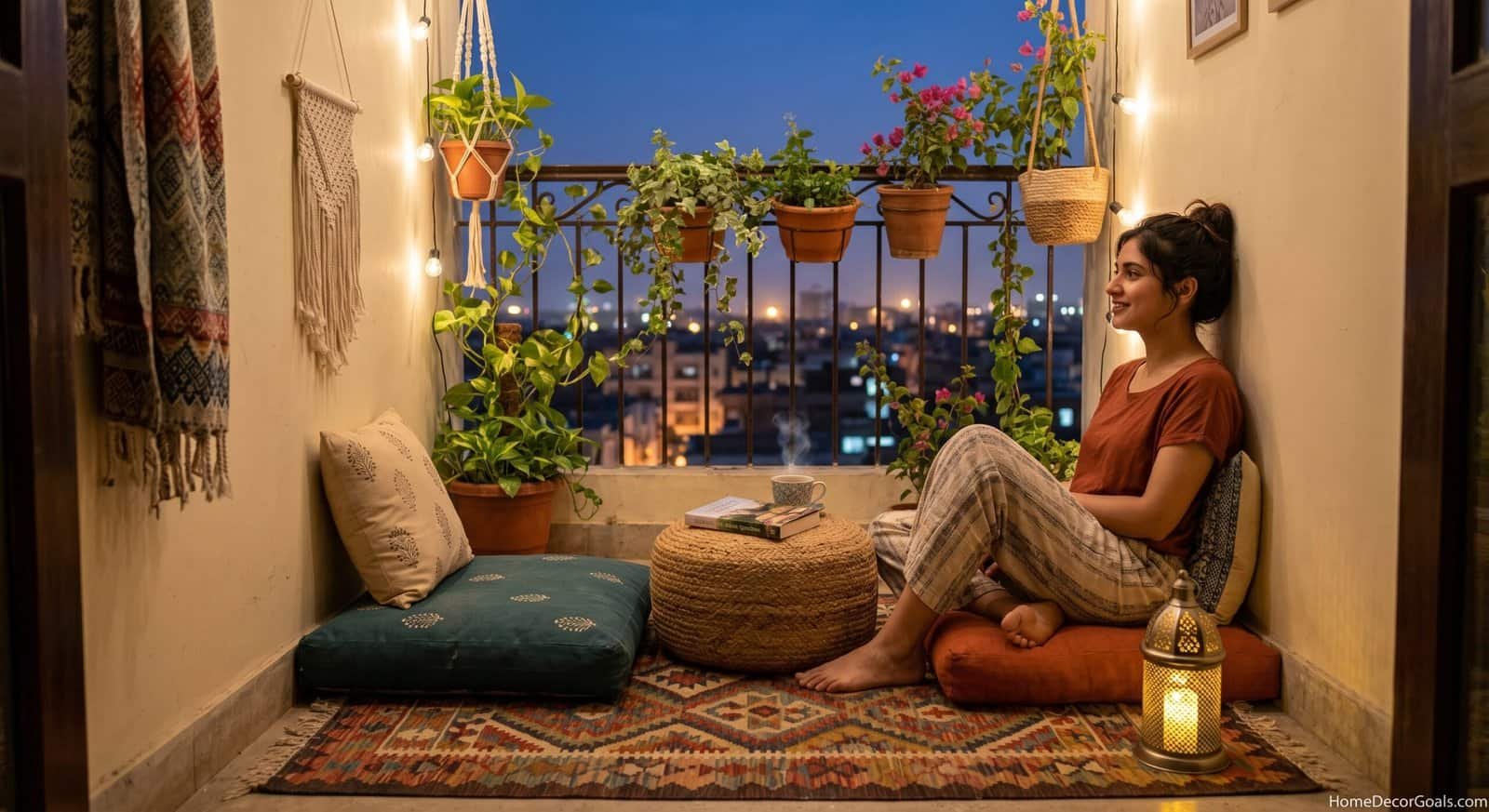
For balconies that are too narrow even for a bistro set — we are talking three feet wide or less — floor cushions and outdoor poufs offer a seating solution that uses zero footprint when not in use because they stack against the wall or go inside when you are done. This is the bohemian, laid-back approach to small balcony living, and for many people, it is actually more comfortable and more social than perching on a tiny chair.Buy two to three outdoor-rated floor cushions (18 to 24 inches square, $15 to $25 each) in coordinating colors and patterns. Stack them against the wall when not in use. When you want to sit outside, lay one or two on the rug, lean against the wall or railing, and you have a ground-level seating arrangement that feels like a Moroccan rooftop terrace. Add a small tray or flat basket as a makeshift table for your drink and phone, and the balcony becomes a functional lounging zone.Outdoor poufs — round, stuffed cushion seats about 16 inches in diameter and 12 inches tall — split the difference between floor cushions and chairs. They provide a slightly elevated seating position and can double as a footrest, a side table (with a small tray on top), or a seat for a second person when company visits. A single outdoor pouf costs $20 to $40 and adds bohemian texture that photographs beautifully for any Instagram or Pinterest post of your balcony.The ground-level seating approach works particularly well for yoga and meditation practitioners who already prefer sitting close to the floor. Your balcony becomes a morning meditation space, an evening reading nook, and a sunset-watching perch — all without a single piece of traditional furniture blocking the already limited floor space.
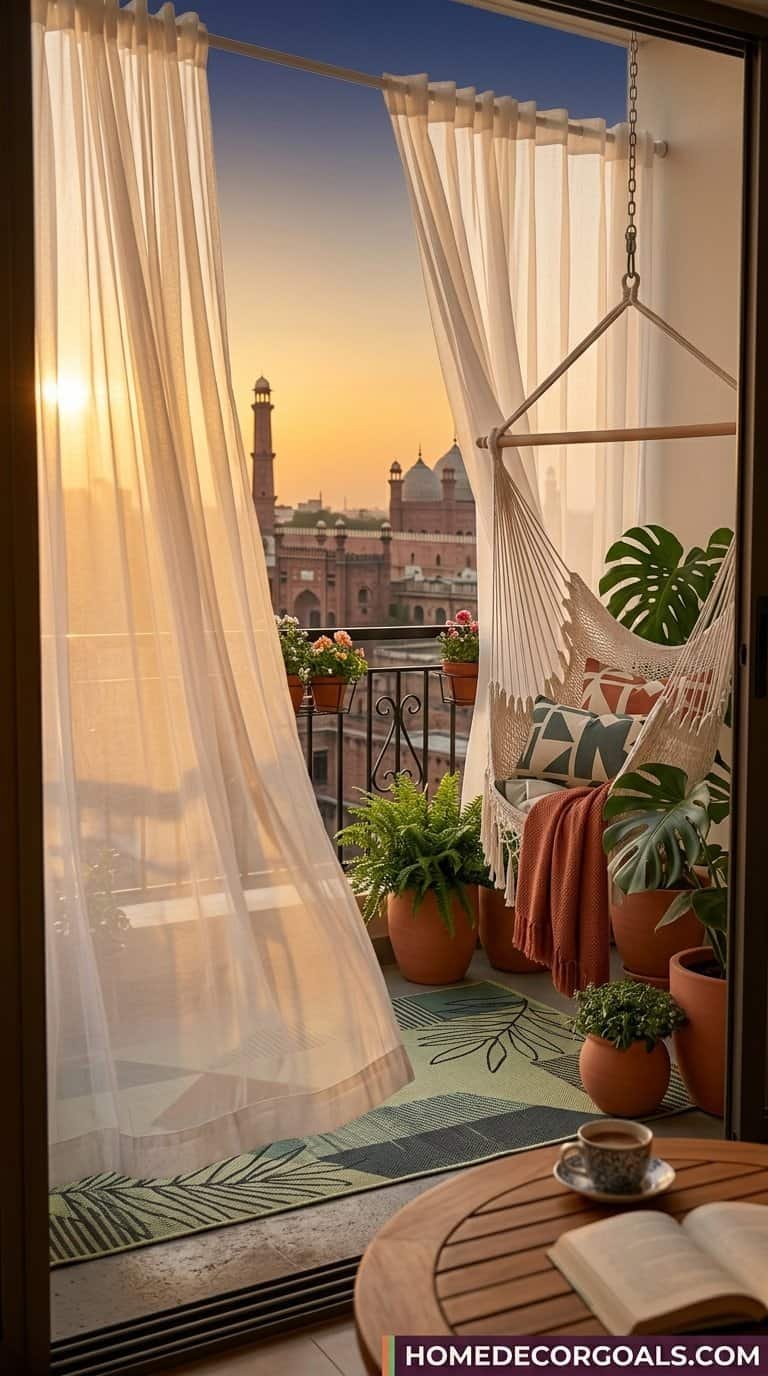
5. A Hanging Hammock Chair (Floating Above the Floor)
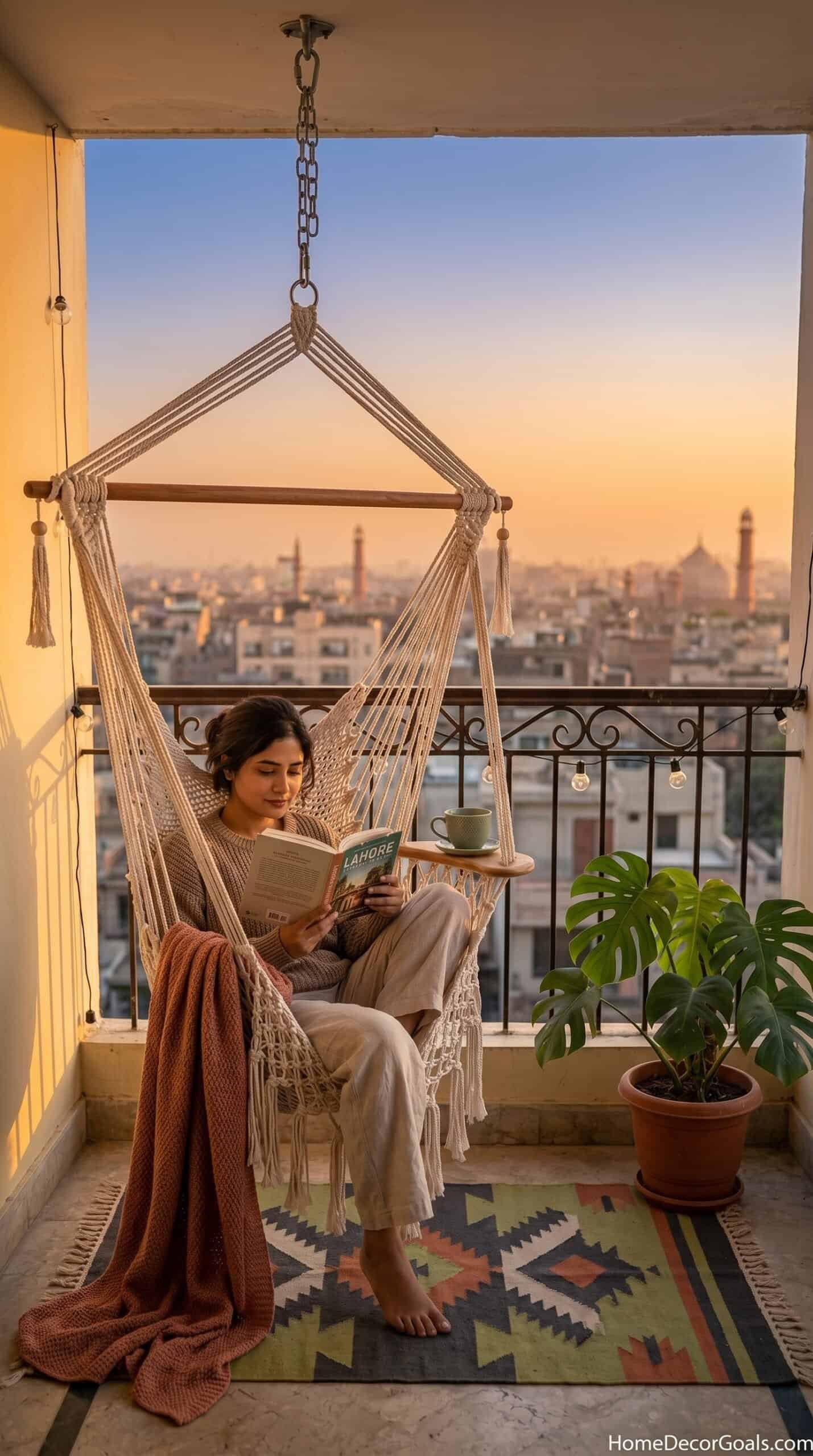
A hanging hammock chair is the single most creative seating solution for a small balcony because it uses ceiling space instead of floor space. The chair hangs from a single overhead hook, swings gently in the breeze, and leaves the entire floor area open for other uses — a rug, plants, a small table, or simply walking space.Most apartment balconies have a ceiling or overhang that can support a hanging chair with a properly installed heavy-duty ceiling hook (rated for 250 to 300 pounds). If drilling into the ceiling is not an option in your rental, a portable hammock chair stand ($50 to $80) supports the chair without any permanent installation, though it does take up floor space, which partially defeats the purpose.The experience of sitting in a hanging chair on a balcony is genuinely different from sitting in any other kind of chair. The gentle swing, the cocoon-like shape that wraps around your body, and the elevated position that puts your eye line above the railing (rather than below it like most chairs) create a sensation of floating above the city. People who install hanging balcony chairs consistently report spending three to four times more time on their balcony than they did with traditional seating, simply because the chair is so uniquely comfortable that it beckons them outside.Macramé hanging chairs ($40 to $80) offer a bohemian aesthetic. Rattan egg chairs ($100 to $200) offer a more structured, modern look. Cotton rope swings ($30 to $60) offer a classic, casual feel. All three styles work beautifully on small balconies and create a statement piece that makes the space feel designed and intentional.Add a soft throw blanket for cool evenings and a small cushion for extra comfort. The hanging chair becomes the reason you go outside — not just a place to sit, but an experience to enjoy.
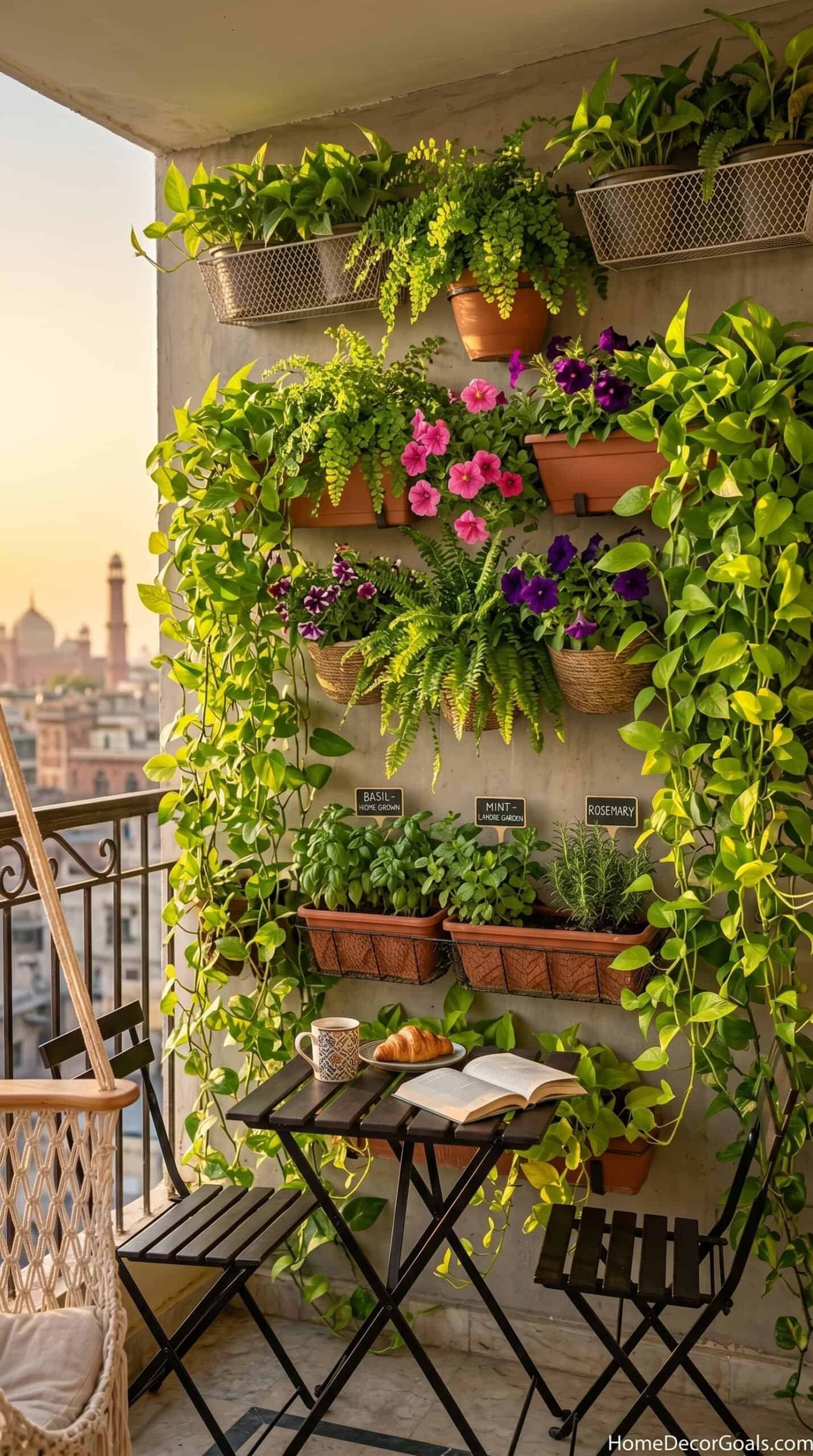
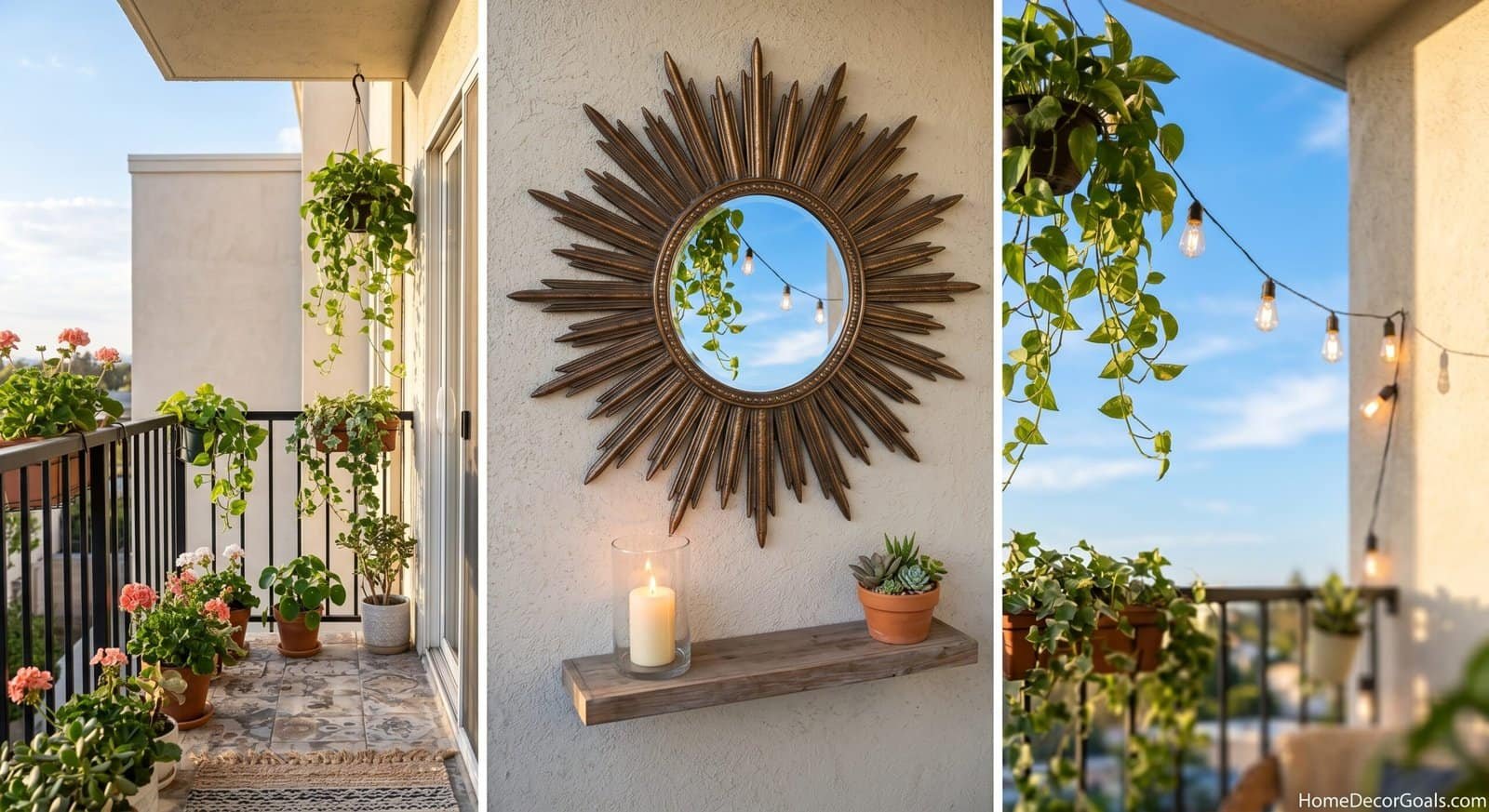
When your balcony floor space is measured in square inches rather than square feet, the only direction left to grow is up. A vertical garden uses the wall space behind your balcony to create a living tapestry of greenery that takes up zero floor area while delivering maximum visual impact and the calming psychological benefits of being surrounded by plants.The simplest vertical garden is a set of wall-mounted planters — small pots or pockets that attach to the wall with hooks, screws, or adhesive strips. IKEA’s SKÅDIS pegboard system ($15 to $25) provides a grid of holes where you hang small pots at different heights, creating a modular, rearrangeable vertical garden. Hanging shoe organizers (clear pocket style, $8 to $12) mounted on the wall provide twelve to twenty planting pockets for herbs, small flowers, and trailing plants — it is not glamorous, but filled with lush greenery it looks like a living wall.For a more polished look, vertical planter frames ($30 to $60) provide a structured, architectural garden that looks deliberately designed rather than improvised. These frames hold three to six pots in a tiered arrangement and mount flat against the wall. Fill them with a mix of trailing plants (pothos, string of pearls, creeping jenny) that cascade downward and upright plants (herbs, small ferns, succulents) that fill in the middle for a balanced, full composition.The plants themselves should be chosen for your balcony’s sun exposure. South-facing balconies (full sun) suit herbs, succulents, petunias, and geraniums. North-facing balconies (shade) suit ferns, pothos, begonias, and impatiens. East-facing (morning sun) and west-facing (afternoon sun) suit most plants with moderate light needs.A vertical garden also creates a natural privacy screen that blocks the view from neighboring balconies without installing ugly privacy fabric or bamboo screens. The plants serve triple duty: decoration, privacy, and the genuine joy of nurturing living things in your outdoor space.
7. Railing Planters (The Space You Forgot You Had)
The railing of your balcony is real estate that most people completely ignore, and it is often the single largest available surface for decoration. Railing planters — elongated pots designed to hook over or clamp onto a balcony railing — add greenery, color, and life to your balcony without using a single inch of floor space.Standard railing planters are 18 to 24 inches long and hold enough soil for a generous planting of flowers, herbs, or trailing vines. Install two to four along the length of your railing and plant them with a mix of upright flowers (geraniums, petunias, marigolds) and trailing plants (sweet potato vine, lobelia, ivy) that spill over the edge and create a cascading waterfall of greenery visible from both inside and outside the apartment.The important safety note: always install railing planters on the inside of the railing (facing your balcony, not the street below). Even with secure clamps, a planter that falls from a high-rise balcony is a serious safety hazard. Inside-mounted planters are equally beautiful, fully secure, and keep you in compliance with most apartment building regulations.Water railing planters every one to two days during hot weather, as the elevated, exposed position causes soil to dry out faster than ground-level pots. Self-watering railing planters ($15 to $25 each) have built-in reservoirs that extend the watering interval to every three to four days, which is a worthwhile upgrade for anyone who tends to forget about their plants during busy weeks.A row of blooming railing planters transforms the visual from “metal railing on a concrete box” to “flowering terrace overlooking the city.” The color of the flowers against the sky is genuinely one of the most beautiful things you can create in a small space, and it costs $20 to $40 for the planters and $10 to $15 for the plants.
8. A Single Statement Plant (One Big Plant Instead of Ten Small Ones)
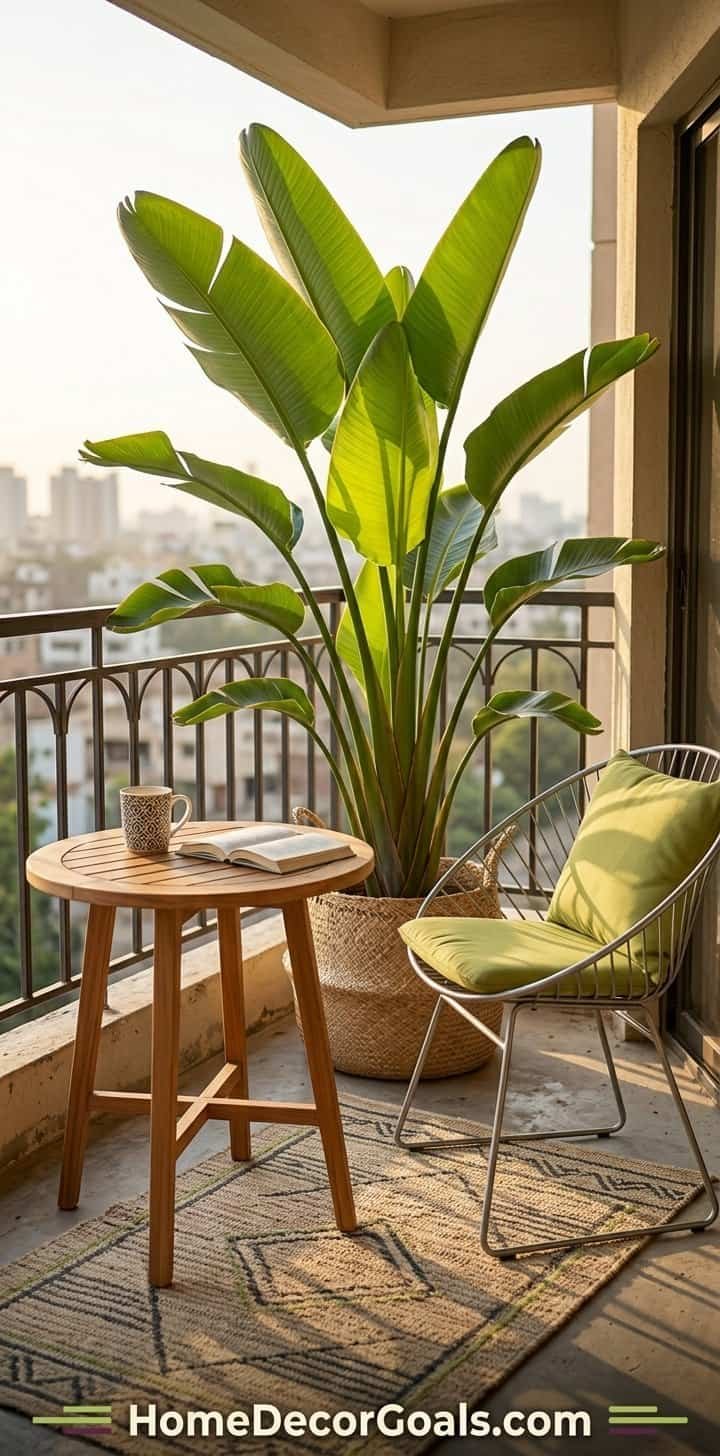
Sometimes the most effective plant strategy for a tiny balcony is a single large statement plant rather than a collection of small pots that clutter the floor and create visual noise. One dramatic plant — a fiddle leaf fig, a large bird of paradise, a tall snake plant, or a potted palm — placed in one corner of the balcony creates a focal point that feels intentional and sophisticated without consuming the entire floor with scattered pots.Choose a plant that is at least three to four feet tall so it has visual presence and reads as a deliberate design choice rather than an afterthought. Place it in a beautiful pot — a woven basket, a ceramic planter in a solid color, or a modern concrete cylinder — that complements your other decor. The pot is as much a design element as the plant itself; a beautiful pot elevates a $15 plant into a $100-looking statement piece.Position the statement plant in the corner furthest from your seating area so it creates depth — your eye travels past the chair, past the table, to the plant in the corner, which makes the balcony feel longer than it actually is. The plant also softens the hard corner where two railings meet, replacing a sharp architectural angle with an organic, living element.Care for outdoor statement plants by choosing species rated for your climate zone and sun exposure. Bring tropical plants inside during cold snaps below 50 degrees Fahrenheit. Water large pots deeply once or twice per week rather than lightly every day — deep watering encourages root growth and produces healthier, more resilient plants.
Lighting: The Magic That Happens After Dark
9. String Lights Along the Ceiling Edge
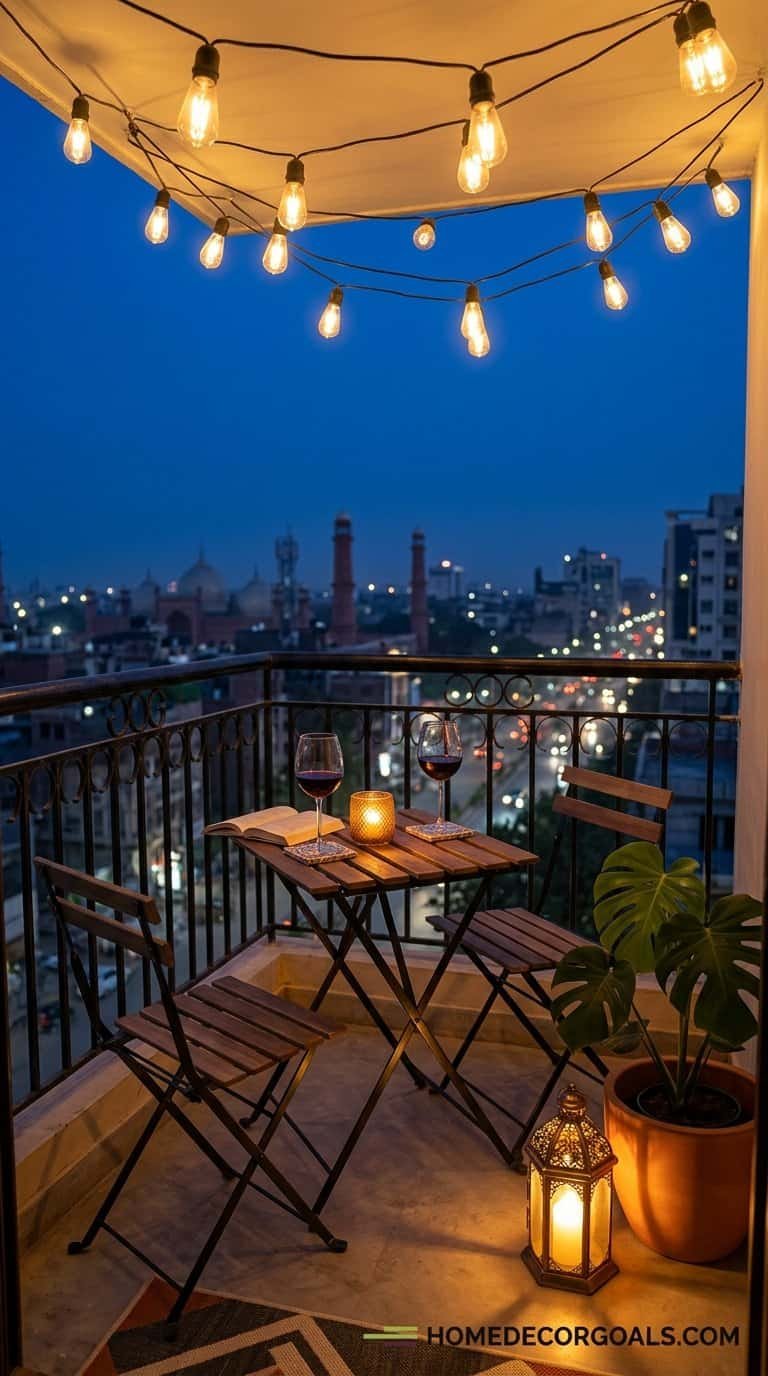
String lights transform a daytime balcony into an evening destination. During the day, your balcony is nice. At night, with string lights glowing, it becomes magical. The warm, scattered glow creates an intimate atmosphere that is simultaneously cozy and romantic — the kind of light that makes everything look softer, warmer, and more beautiful, including you and whoever you are sharing the space with.Run a single strand of warm-white string lights (LED Edison bulb style for a vintage look, or classic mini lights for a more festive feel) along the top edge of the balcony where the ceiling or overhang meets the wall. Use small command hooks to guide the strand in a clean line. For a 4×7 balcony, a single 20-foot strand provides perfect coverage with a few feet of slack for a gentle drape between hooks.The light should be warm white (2700K) — never cool white or daylight color temperature, which makes outdoor spaces feel like a hospital hallway. Warm white mimics candlelight and sunset, which is the exact mood you want on a balcony at 9 PM with a glass of wine. LED string lights cost $8 to $15, use almost zero electricity, and last five to ten years without replacing bulbs.For layered lighting, add a second source at ground level — a small battery-operated lantern, a flameless candle in a hurricane glass, or a set of solar-powered pathway lights tucked beside a planter. The combination of overhead string lights and low-level accent lighting creates depth and dimension that makes the space feel larger and more complex than a single light source can achieve.
10. Solar-Powered Lanterns (No Outlet Needed)
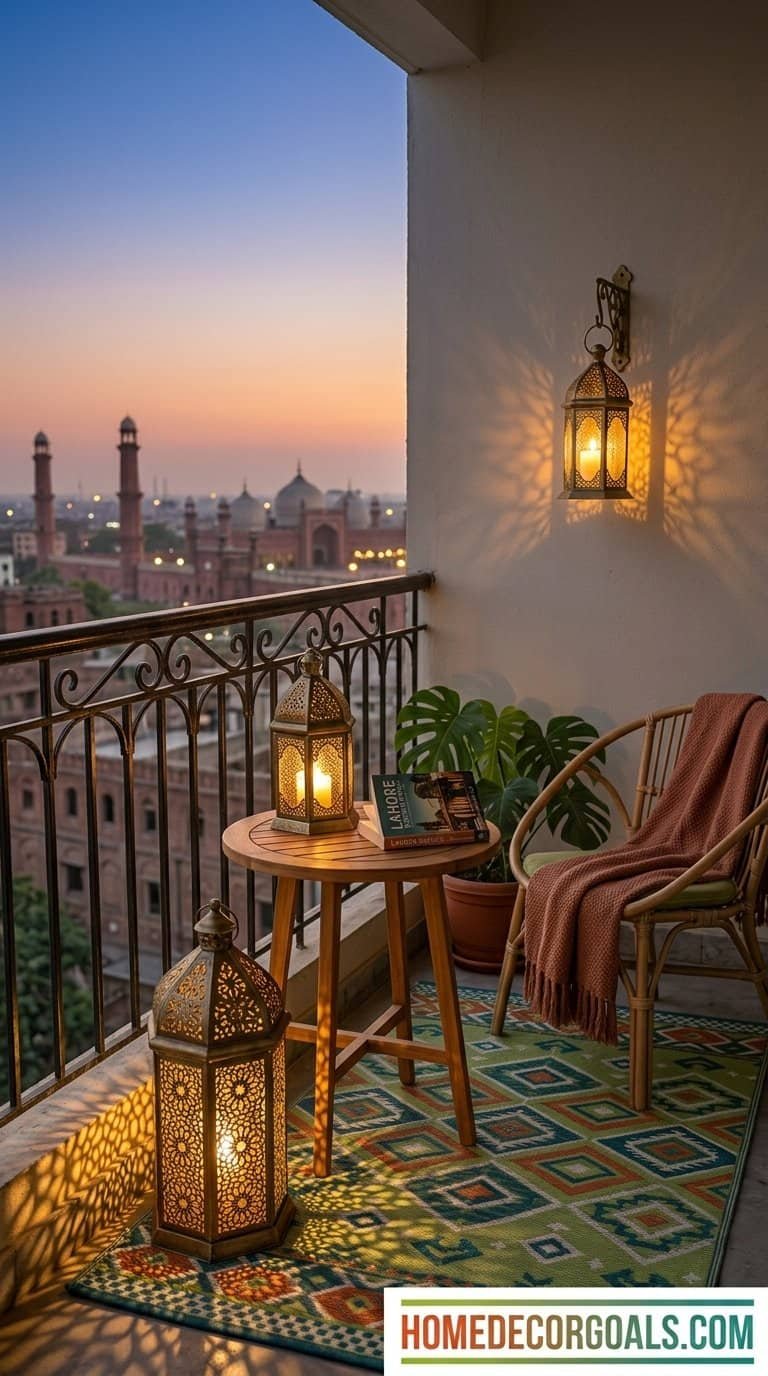
Many small apartment balconies lack electrical outlets, which makes traditional plug-in lighting impossible without running an extension cord through the sliding door. Solar-powered lanterns solve this problem elegantly — they charge in sunlight during the day and glow automatically at dusk, providing four to eight hours of warm light without any wiring, plugging, or battery replacement.Place two to three solar lanterns at different heights on your balcony: one on the floor beside a planter, one on the bistro table, and one hanging from a hook on the wall. The varied heights create visual interest and distribute light evenly across the space. Moroccan-style metal lanterns with cut-out patterns ($10 to $20 each) cast beautiful shadow patterns on the walls and floor. Simple glass jar lanterns ($5 to $10) provide clean, modern light. Paper lanterns ($3 to $5) offer a soft, diffused glow that feels ephemeral and romantic.Solar lanterns are also completely portable — bring them inside during storms, rearrange them whenever you want, and take them with you when you move. No installation, no commitment, no landlord approval needed. They are the lowest-effort, highest-reward lighting solution for any rental balcony.
Privacy and Comfort
11. Bamboo Privacy Screen (Block the Neighbor’s View)
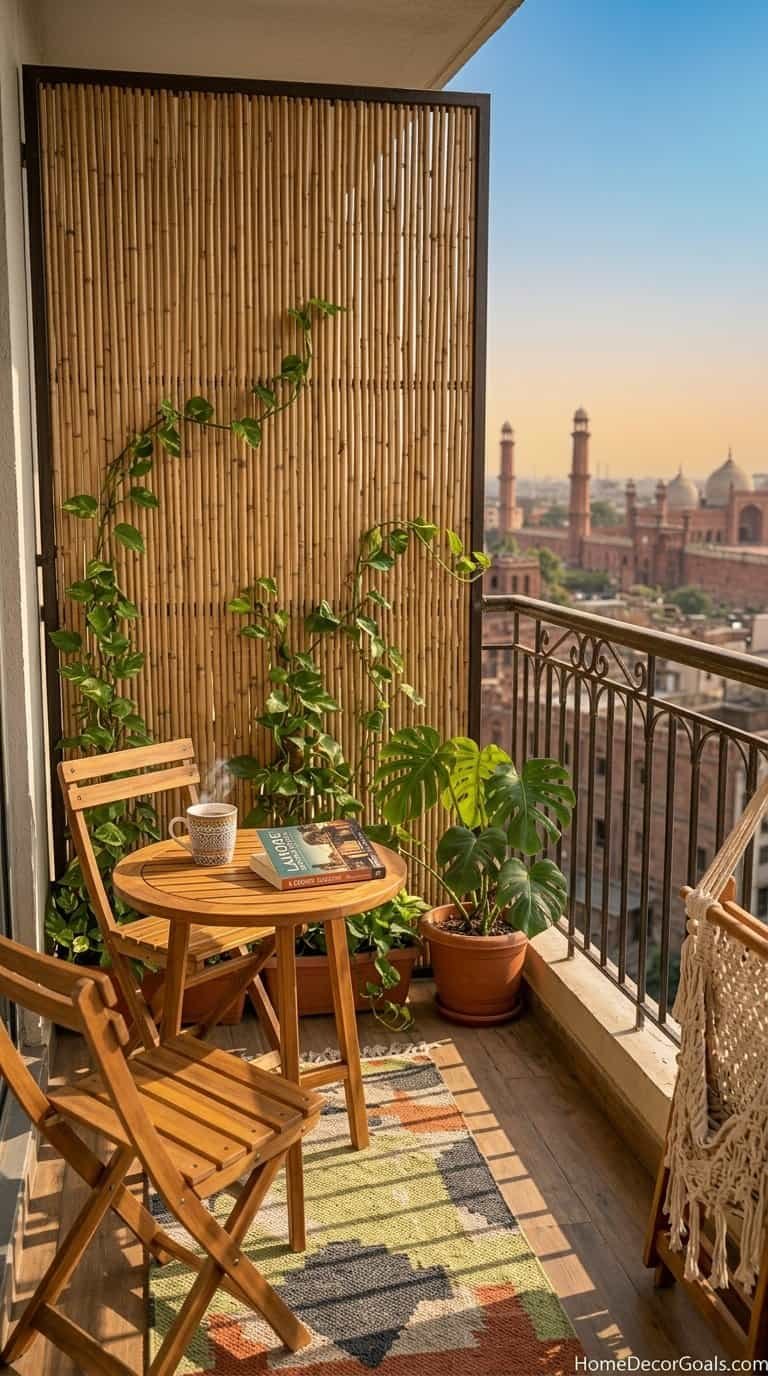
Close-proximity apartment balconies often face directly into a neighbor’s balcony, creating a social awkwardness that discourages outdoor use. Nobody wants to read a book three feet from a stranger who is also reading a book. A bamboo privacy screen solves this completely — it blocks the line of sight between balconies while allowing air circulation and filtered light to pass through.Roll-up bamboo screens ($15 to $30 for a 4×6 foot panel) attach to the railing or wall with zip ties, hooks, or twine. They provide instant privacy while maintaining the natural, organic aesthetic that works beautifully with outdoor plants and warm-toned decor. The bamboo reeds create a textured, zen-like backdrop that photographs well and makes the balcony feel enclosed and protected without feeling claustrophobic.For an alternative that also adds greenery, mount a trellis panel against the side wall and train a climbing plant — jasmine, clematis, or morning glory — to grow up it over the season. By mid-summer, the trellis becomes a living privacy wall that smells incredible and looks like something from a garden in southern Italy. The tradeoff is time — a plant trellis takes four to eight weeks to fill in, while a bamboo screen works immediately.
12. Outdoor Curtains for Softness and Shade
Sheer outdoor curtains hung from a tension rod or curtain wire across the top of the balcony opening add a layer of softness, shade, and drama that hard surfaces like railings and concrete cannot provide. The curtains billow gently in the breeze, filter harsh afternoon sun into a soft golden glow, and create the visual impression of a room that opens to the sky — rather than a concrete platform exposed to the elements.Use weather-resistant sheer fabric in white or cream for maximum light filtration without darkness. Install a simple tension rod ($10 to $15) between the walls at the top of the balcony opening, hang the curtains with clip rings, and let them drape naturally. Pull them closed for shade and privacy during the day, sweep them to one side for an unobstructed view in the evening.The visual impact of curtains on a small balcony is disproportionately large because they add a design element that people associate with intentional interior design — curtains signal “someone designed this space” in a way that bare railings and concrete never can. They also photograph spectacularly well, which is why every Pinterest image of a gorgeous small balcony seems to include billowing white curtains.
Decorative Details That Complete the Space
13. A Small Outdoor Mirror to Double the Space
Hanging a weather-resistant mirror on the balcony wall is the oldest small-space trick in the interior design playbook, and it works just as well outdoors as it does indoors. The mirror reflects the sky, the plants, the lights, and the view, creating the illusion that the balcony extends deeper than it actually does. A 12×18 inch mirror positioned on the wall at seated eye height effectively doubles the visual depth of a four-foot-deep balcony.Choose a mirror with a weather-resistant frame — metal, resin, or sealed wood. Avoid glass-front mirrors on high-rise balconies where wind could knock them over; acrylic mirrors are lighter, safer, and equally reflective. Lean the mirror against the wall on a shelf rather than hanging it if drilling is not permitted in your rental.At night, the mirror reflects your string lights and lanterns, multiplying the warm glow throughout the space. During the day, it reflects the sky and clouds, bringing the vastness of the outdoors into your tiny outdoor room. The psychological effect of reflected light and sky in a small space is remarkable — the balcony genuinely feels more open and airy.
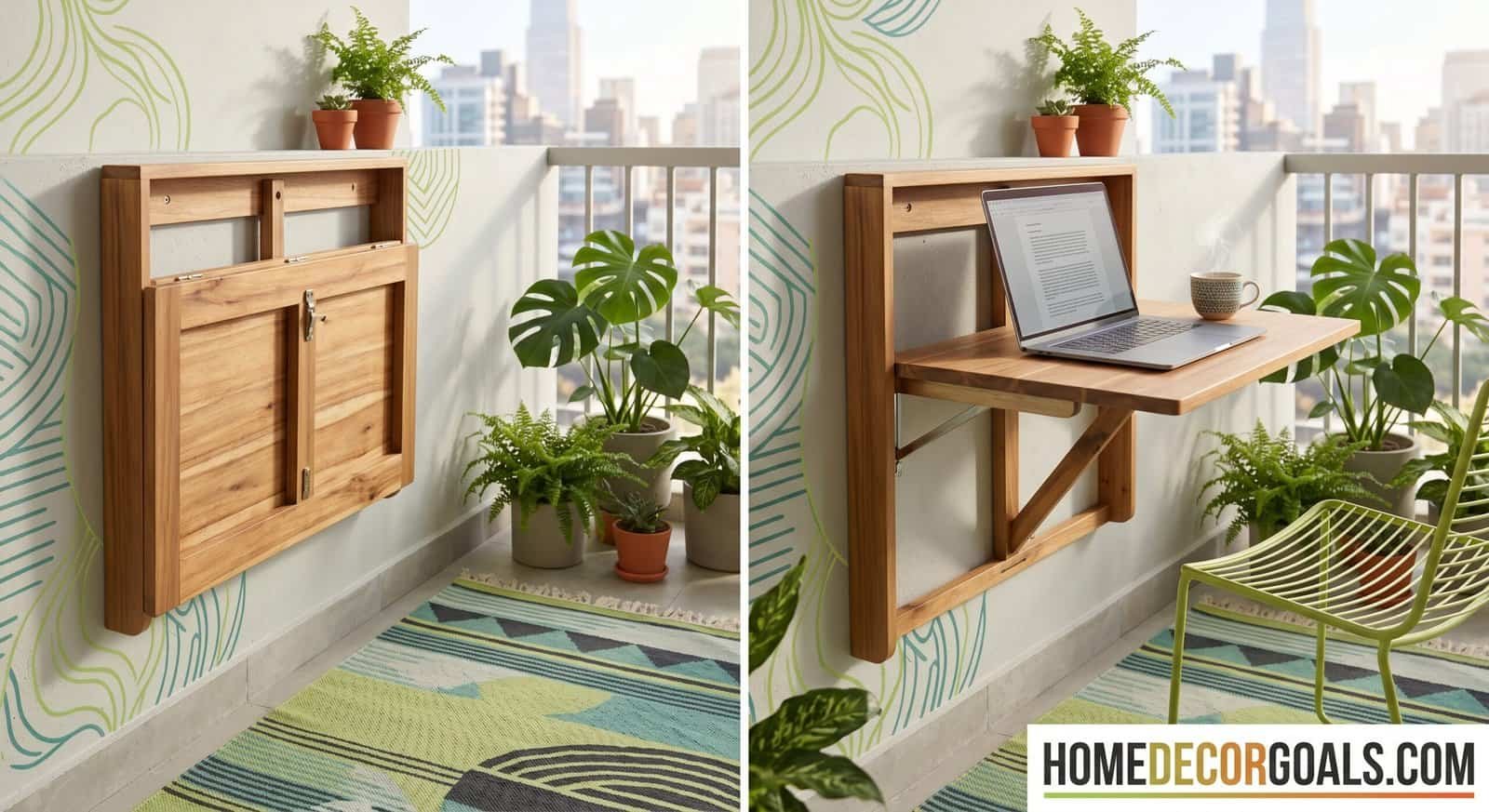
A wall-mounted fold-down table is the ultimate space-saving solution for balconies where you need a surface sometimes but cannot afford to lose the floor space permanently. These tables attach to the wall with hinges and fold flat against the wall when not in use — protruding only two to three inches from the wall surface. When you need a table, you flip it up, lock the supporting leg or bracket into position, and you have a stable surface for eating, working, or displaying plants.When folded down, the table is essentially invisible, and your balcony has its full floor area available for standing, exercising, or entertaining multiple guests. When folded up, it provides a 24-inch surface that comfortably holds two plates, two drinks, a laptop, or a collection of small potted plants.IKEA’s wall-mounted drop-leaf tables ($30 to $50) and Amazon’s outdoor fold-down tables ($40 to $70) are specifically designed for this purpose. Choose a table depth of 12 to 16 inches for narrow balconies — deep enough to be functional but shallow enough that you can still walk past it when it is deployed.
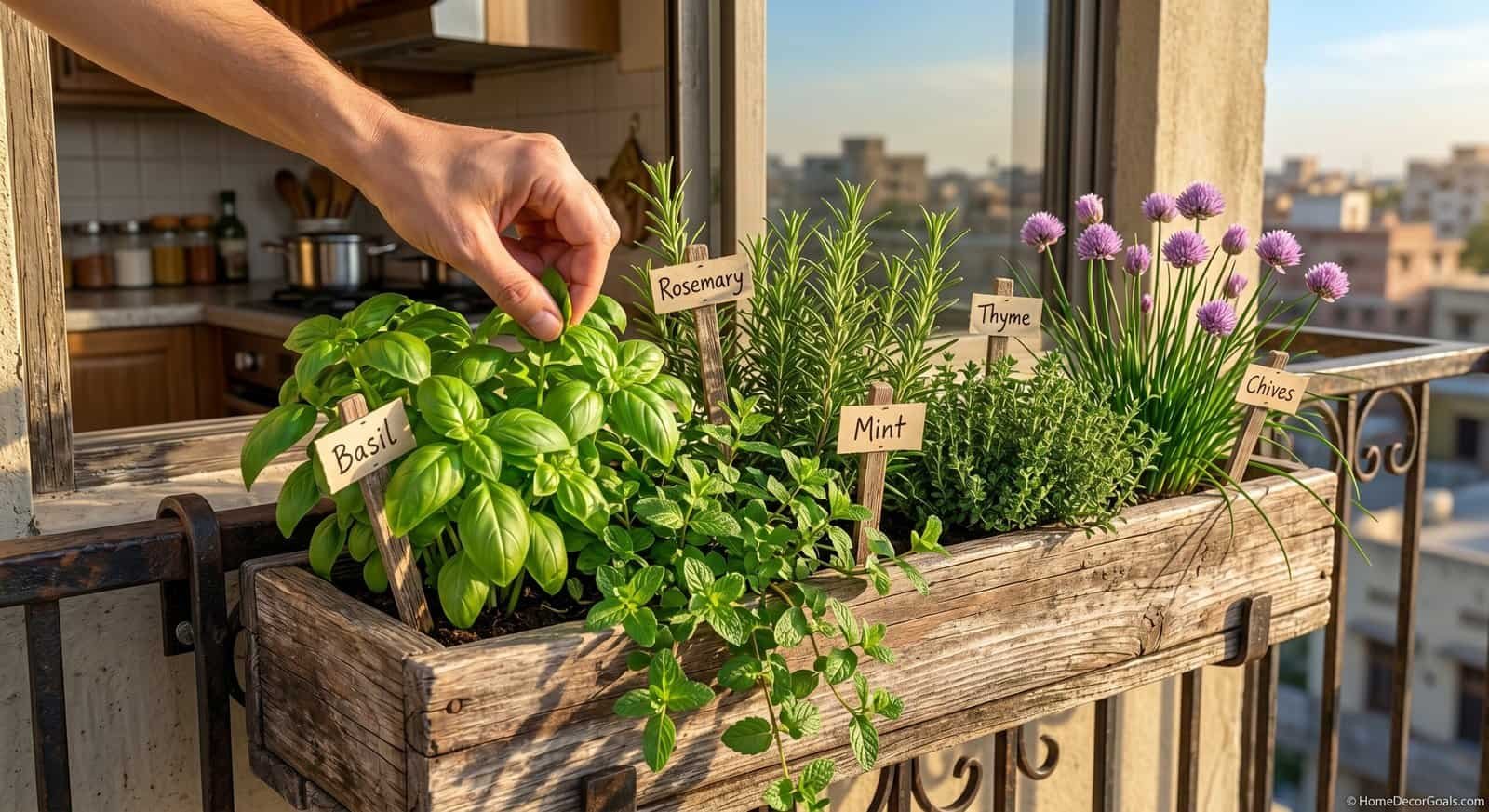
15. Herb Garden Window Box (Functional Beauty)
A window box mounted on the balcony wall or railing and planted with culinary herbs serves triple duty: it is decoration (lush, fragrant greenery), it is functional (fresh herbs for cooking), and it is sensory (the smell of fresh basil, rosemary, and mint wafting through the sliding door into your apartment). Few decorating choices deliver this much value from a single element.Plant a 24-inch window box with three to four herbs that you actually use in cooking. Basil grows quickly and abundantly in summer. Rosemary is nearly indestructible and smells incredible. Mint grows aggressively and provides fresh leaves for cocktails, tea, and garnishes. Thyme stays compact and adds year-round greenery. Chives provide both an herb and delicate purple flowers that add color.Position the herb box where it receives at least four to six hours of direct sunlight. Water daily during hot weather — herbs in containers dry out faster than herbs in the ground. Harvest frequently by pinching off the top leaves, which encourages bushy, full growth rather than leggy, sparse plants.The cost of a window box ($8 to $15) plus soil ($3) plus herb starter plants ($2 to $3 each) totals about $20 to $30 for a herb garden that provides fresh ingredients all summer and makes your balcony smell like a Tuscan kitchen.
16. Layered Textiles (Throws, Cushions, and Rugs Together)
The secret to making any outdoor space feel warm, inviting, and “finished” is layered textiles — multiple fabric elements working together to soften the hard surfaces of concrete, metal, and glass that dominate most balconies. A rug on the floor, cushions on the chairs, and a throw blanket draped over the chair back create three layers of softness that transform the balcony from an outdoor platform into an outdoor room.Choose textiles in a coordinated color palette — not matching, but harmonizing. A cream rug with terracotta cushions and a sage green throw. Or a blue-and-white striped rug with navy cushions and a white throw. The key is that every textile element feels like it belongs to the same family without being identical. This “curated but not matching” approach is what gives Pinterest-featured balconies their effortlessly styled appearance.All textiles should be outdoor-rated or easily washable. Bring cushions and throws inside during rain, or store them in a small deck box on the balcony. The few seconds of effort to protect your textiles extends their life from one season to several years.
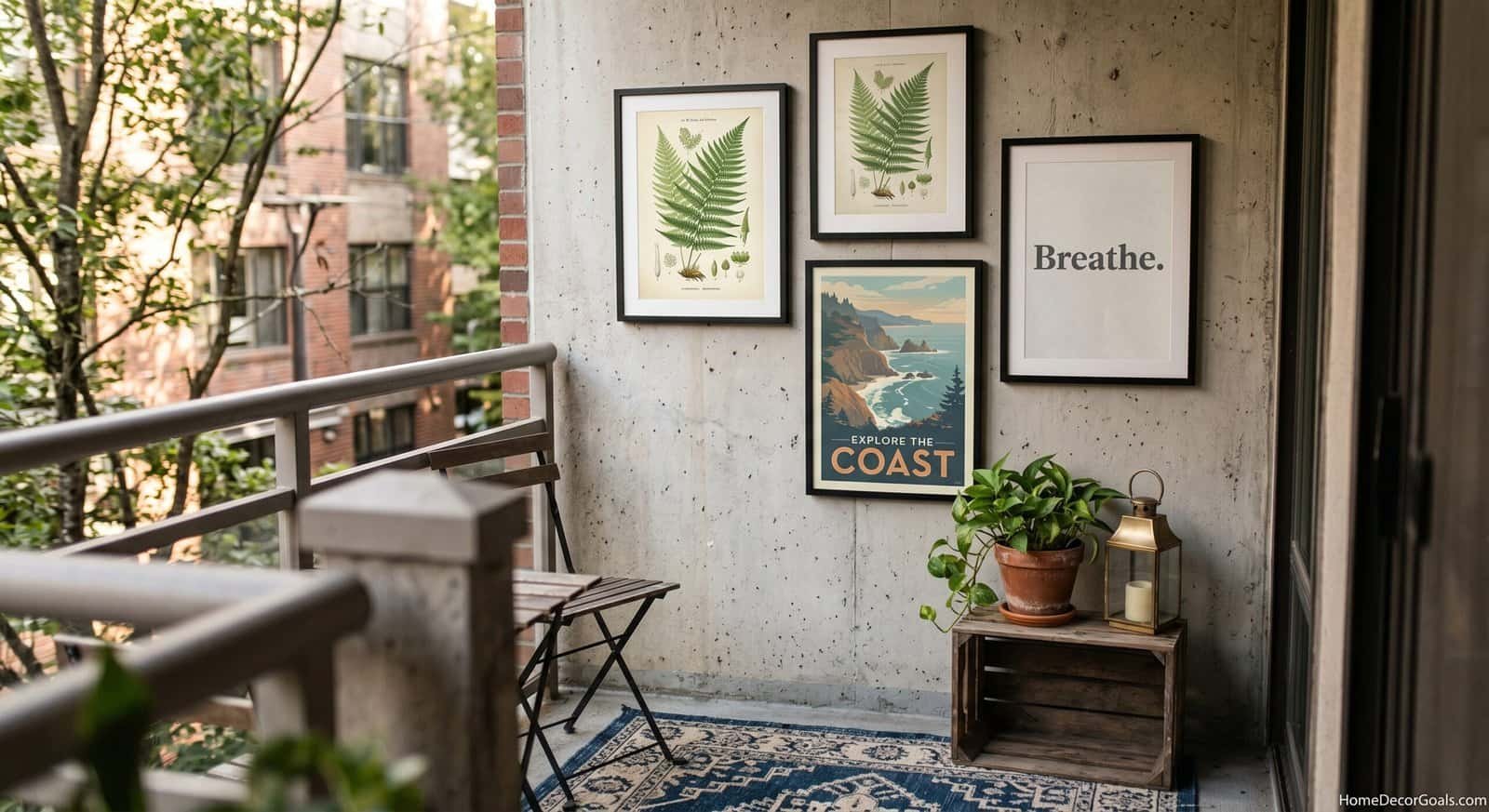
17. A Gallery Wall of Outdoor-Safe Art
Create a small gallery wall on the balcony’s back wall using weather-resistant prints, metal signs, or sealed wooden pieces. Two to three framed prints in a simple arrangement add personality and visual interest to what is typically a blank, boring wall. Choose prints that complement the outdoor theme — botanical illustrations, vintage travel posters, abstract landscapes, or typography prints with quotes about relaxation and nature.Use outdoor-safe frames (metal or plastic, not real wood which warps in humidity) and hang with command strips for renter-friendly installation. Position the gallery at seated eye level so you see and enjoy the art while sitting in your balcony chair rather than only when standing.
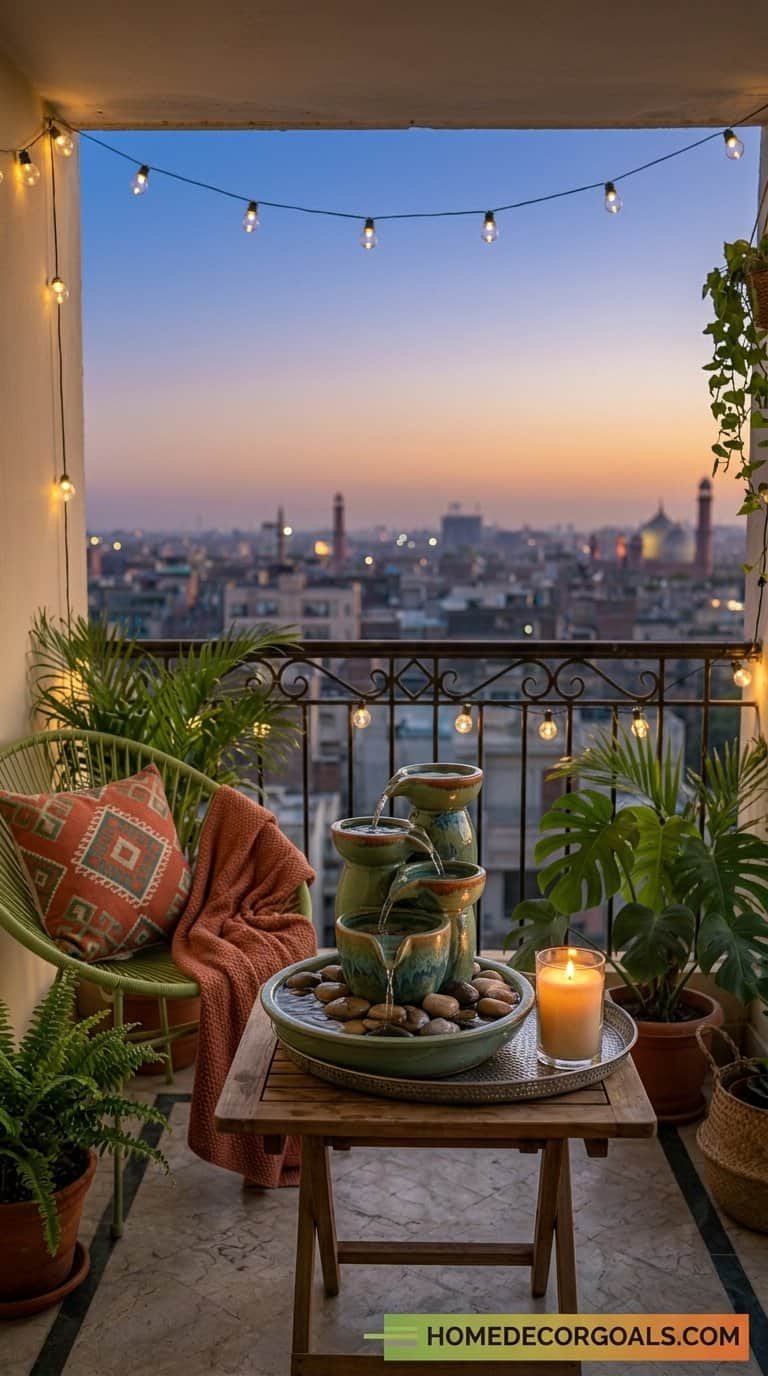
18. A Small Water Feature for Ambient Sound
A small tabletop water fountain ($15 to $30) adds the sound of trickling water to your balcony, which does two remarkable things: it masks the noise of traffic, neighbors, and city life below, and it creates a meditative, spa-like atmosphere that makes the balcony feel like a wellness retreat rather than a concrete ledge. The gentle sound of water is one of the most universally calming sounds in nature, and bringing it onto your balcony transforms the acoustic experience of the space as dramatically as string lights transform the visual experience.Choose a small ceramic or resin fountain that runs on a quiet submersible pump. Solar-powered fountains eliminate the need for an outlet. Place it on the table, on a shelf, or on the floor beside your chair. Refill the water reservoir weekly and clean the pump monthly to prevent mineral buildup.
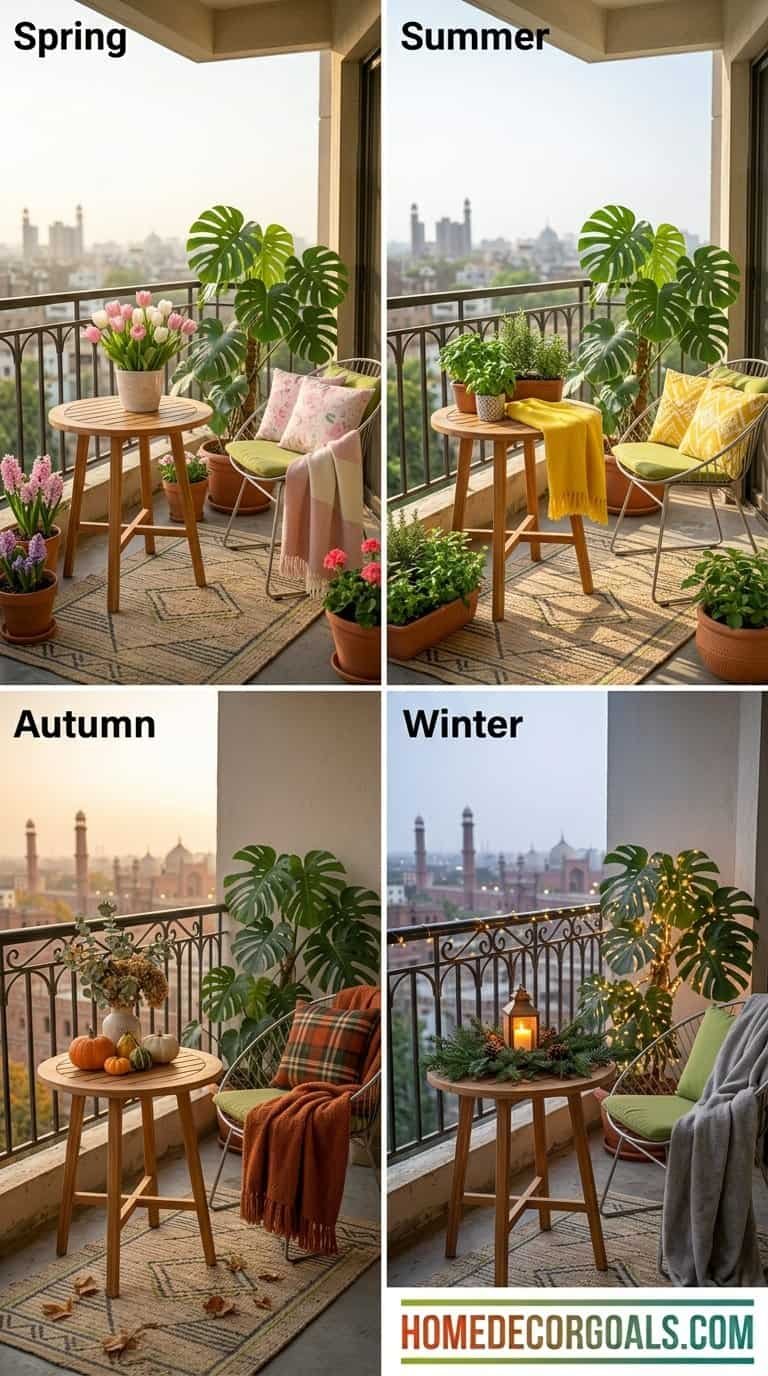
19. Seasonal Decor Rotation (Four Balconies in One)
Treat your small balcony like a room that changes with the seasons. In spring, add pastel cushions, flowering bulbs, and a light linen throw. In summer, switch to bright tropical colors, herbs, and citronella candles. In fall, add warm plaids, small pumpkins, and amber lanterns. In winter, add evergreen sprigs, fairy lights, and a heavy fleece blanket. The core furniture stays the same — the rug, the bistro set, the string lights — but swapping cushion covers, plants, and three to four small accessories creates a completely new look four times per year for $10 to $20 per season.
Frequently Asked Questions
What is the best furniture for a very small balcony?
A folding bistro table and two folding chairs is the most practical choice for balconies four feet wide or more. For narrower balconies, a wall-mounted fold-down table with floor cushions provides a surface when needed and disappears when not. A hanging hammock chair is perfect for solo use when floor space is extremely limited.
How do I decorate a balcony in a rental apartment?
Use command hooks, tension rods, zip ties, and freestanding elements that require no drilling or permanent modification. Interlocking deck tiles, removable outdoor rugs, railing planters that clamp on, and solar-powered lights all install and remove without leaving any trace. Everything on this list can be taken with you when your lease ends.
What plants work best on a small balcony?
For sunny balconies: herbs (basil, rosemary, mint), petunias, geraniums, and succulents. For shady balconies: ferns, pothos, begonias, and impatiens. For maximum impact with minimum maintenance: a single large snake plant or bird of paradise in a beautiful pot. Trailing plants like ivy, string of pearls, and sweet potato vine add drama without using floor space.
How do I make a small balcony feel bigger?
Use a rug to define the space, hang a mirror to create visual depth, choose furniture that is proportional (not oversized), use vertical space for plants and storage, keep the floor as clear as possible, and maintain a cohesive color palette of no more than three colors. Light-colored rugs and cushions reflect light and make spaces feel more open than dark colors.
How much does a balcony makeover cost?
A budget makeover (rug, one plant, string lights, two cushions) costs $50 to $75. A mid-range transformation (deck tiles, bistro set, multiple plants, lights, accessories) runs $150 to $300. A premium makeover (hanging chair, extensive planting, curtains, lanterns, full accessorizing) costs $300 to $500. The most impactful items per dollar are the rug ($25-$40), string lights ($8-$15), and railing planters ($15-$25).
Is it worth decorating a tiny balcony?
Absolutely. A decorated small balcony adds a functional room to your apartment that did not exist before. It increases your living space, provides fresh air and sunlight, boosts your mental health, and gives you a private outdoor retreat in the middle of a city. People who invest in their balcony consistently report it becomes their favorite room — not despite its size, but because its intimacy makes it feel uniquely personal and protected.
Your balcony is not too small. It is just waiting for someone to see its potential. These 20 ideas are the blueprint — now go build the outdoor retreat you deserve, one square foot at a time.Pin your favorite ideas and visit HomeDecorGoals.com for more small-space inspiration that proves size is not what matters — intention is.