1. Choose a Sofa That Does Double Duty
The sofa is the anchor of any living room, and in a small apartment, it is also your biggest square-footage commitment. Choosing the wrong one is the single most common mistake people make. A bulky three-seater with wide arms and a deep seat might look lush in a showroom, but it will eat your entire room alive.
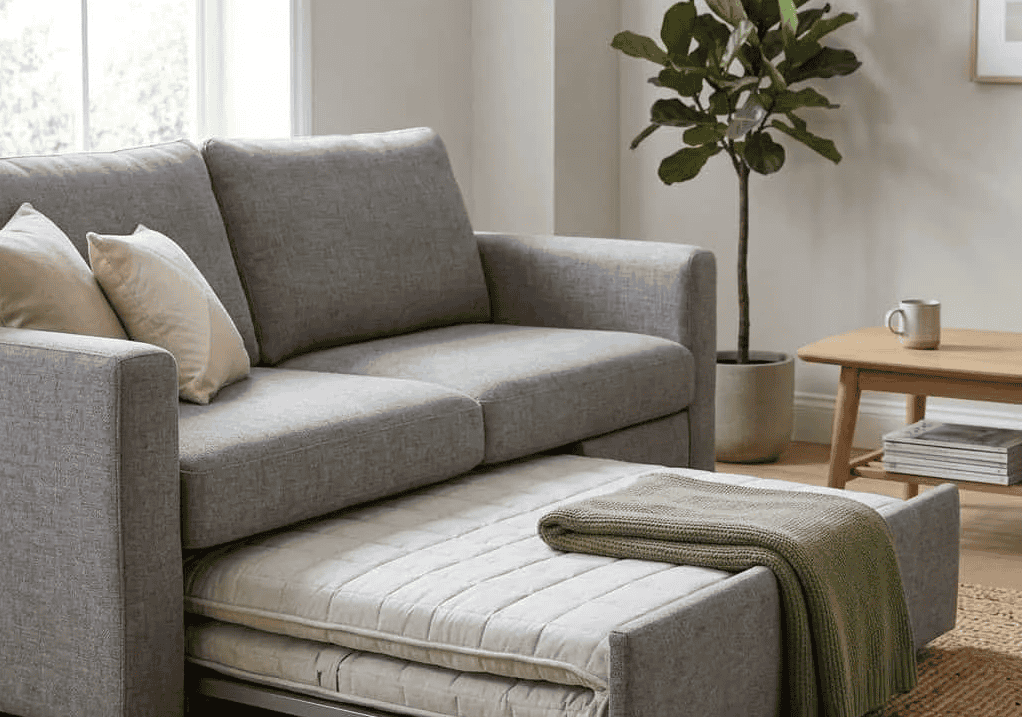
Instead, look for a sleeper sofa or a sofa with hidden storage underneath the seat cushions. A sleeper sofa gives you a guest bed without needing a separate room. Storage sofas let you hide extra blankets, books, or off-season items in plain sight. The design has evolved enormously — modern sleeper sofas look nothing like the clunky fold-out nightmares of the 1990s. Brands like Article, Burrow, and West Elm now make genuinely stylish pieces that are compact and multi-functional. Aim for a sofa that is no deeper than 36 inches and has narrow or track arms to preserve visual breathing room.
2. Float Your Furniture Away From the Walls
This is counterintuitive advice that almost every interior designer agrees on: pushing all your furniture against the walls does not make a room feel bigger. It actually makes it feel smaller. When everything is flush against the perimeter, you create a big empty box in the middle that reads as awkward dead space.Instead, float your sofa a few inches — or even a foot — away from the wall behind it. Pull your coffee table toward the center. Create a defined seating zone rather than a ring of furniture hugging the edges. This technique creates visual depth and makes the room feel like it was arranged with intention rather than squeezed in out of desperation. It sounds scary when you first try it, but the difference is immediate and dramatic. Even a two-inch gap between the back of your sofa and the wall can make the space feel more considered and open.
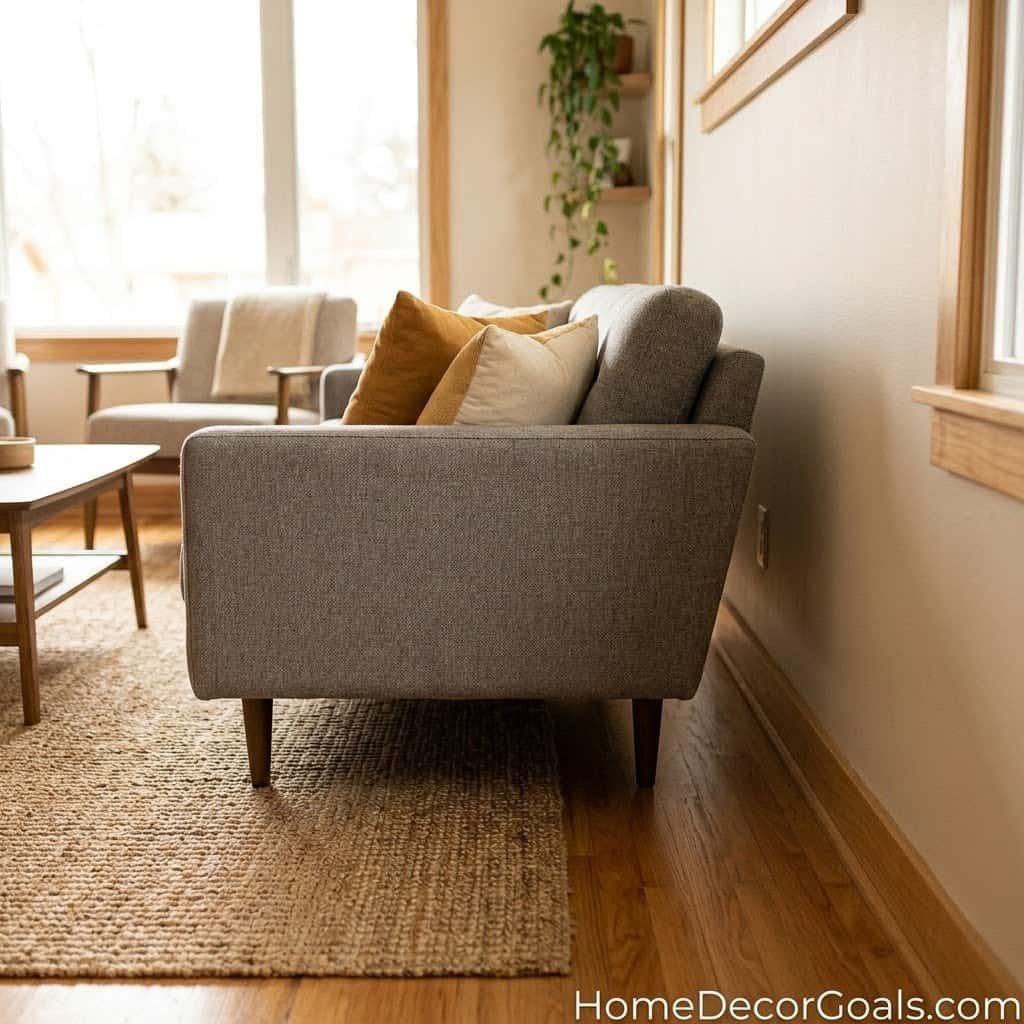
3. Use a Large Area Rug to Define the Space
A rug that is too small is one of the most common decorating mistakes in apartments. A tiny rug that only fits under the coffee table looks like a postage stamp on a football field and actually draws attention to how small the room is. The fix is the opposite of what most people expect: go bigger.A large area rug — at minimum 8×10 feet for most living rooms — acts as an anchor for the entire seating area. It visually defines the room within the room, making the space feel deliberate and designed rather than haphazard. Even better, a rug with a simple low-contrast pattern or a solid, light-toned color will make the floor space look expansive. Avoid very busy, high-contrast patterns in small rooms, as they visually fragment the floor. If budget is a concern, sites like Ruggable, Boutique Rugs, and Wayfair offer large area rugs at accessible price points.
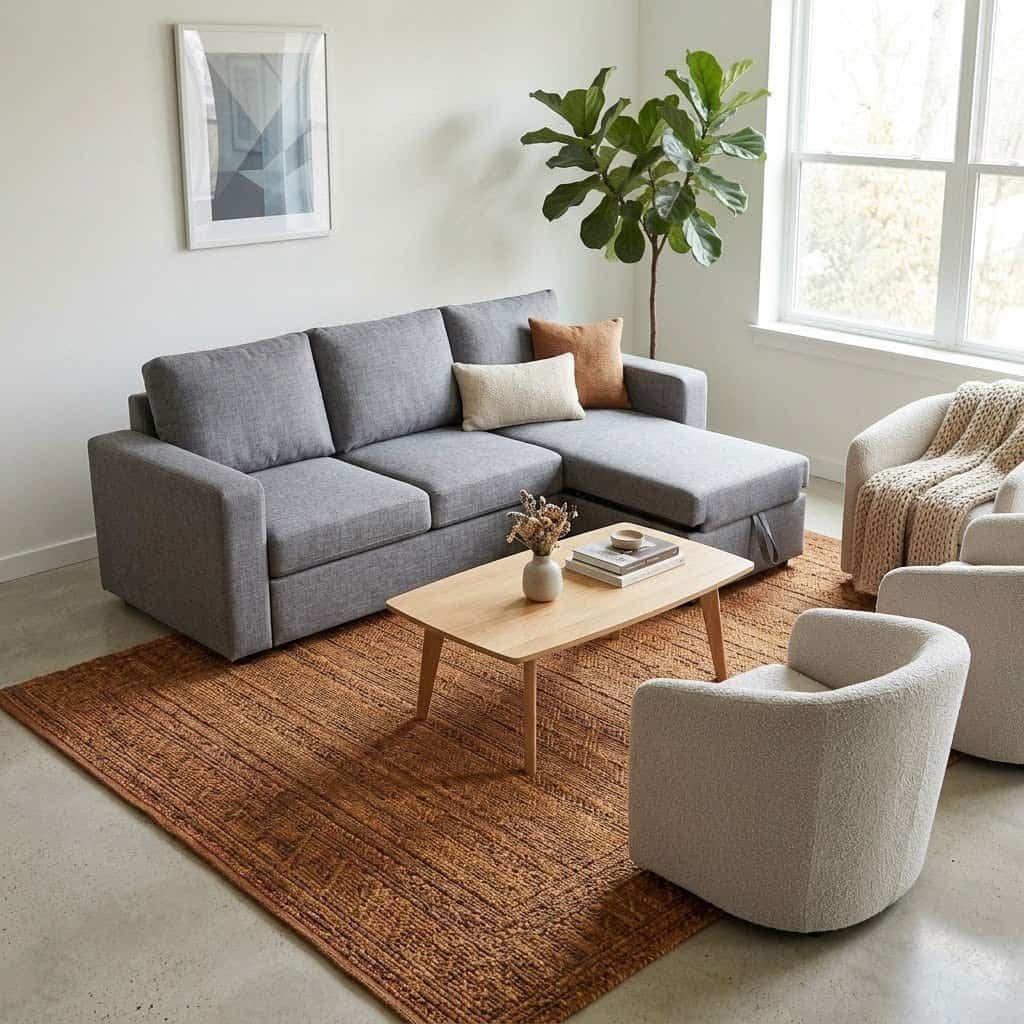
4. Mount Your TV on the Wall
A TV stand or entertainment unit is a massive piece of furniture that consumes floor space, collects clutter, and visually weighs down the room. Mounting your television directly on the wall eliminates all of that in one move. You reclaim the floor space underneath, the room instantly looks cleaner, and you can style the wall around the TV with intention.For the area below the mounted TV, you have several elegant options: a slim floating shelf, a low-profile sideboard that serves as storage, or simply nothing at all if the room does not need it. Cable management is worth doing properly — use an in-wall cable kit or a cord cover raceway that you can paint to match your wall. It takes about 90 minutes and costs under $30, but the payoff is enormous. A floating TV with clean walls around it elevates the entire room.
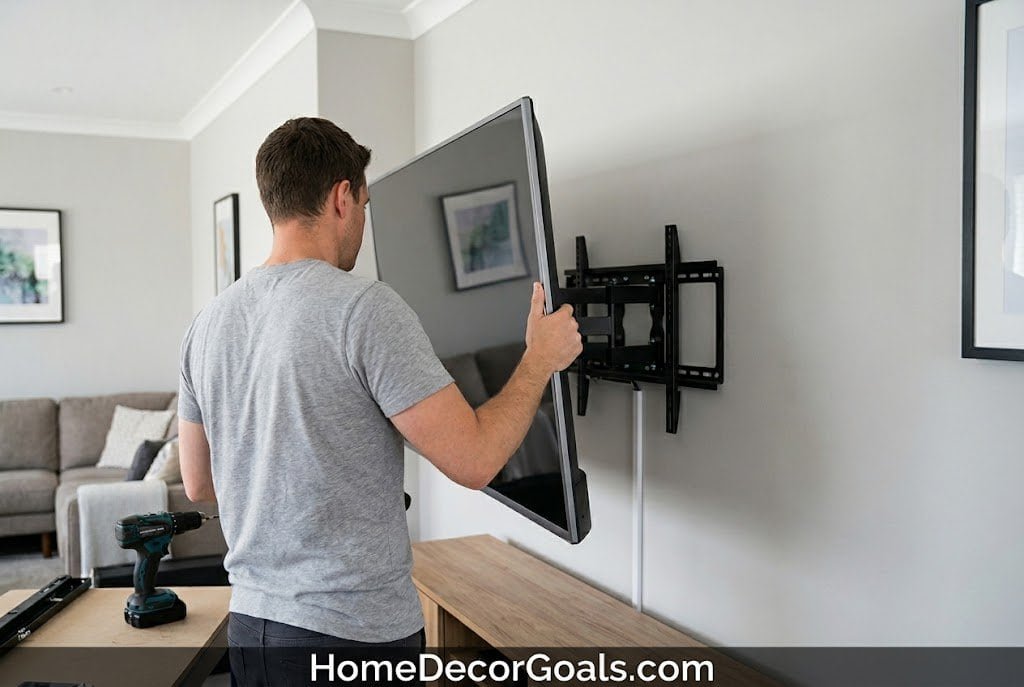
5. Embrace Vertical Space With Floor-to-Ceiling Shelving
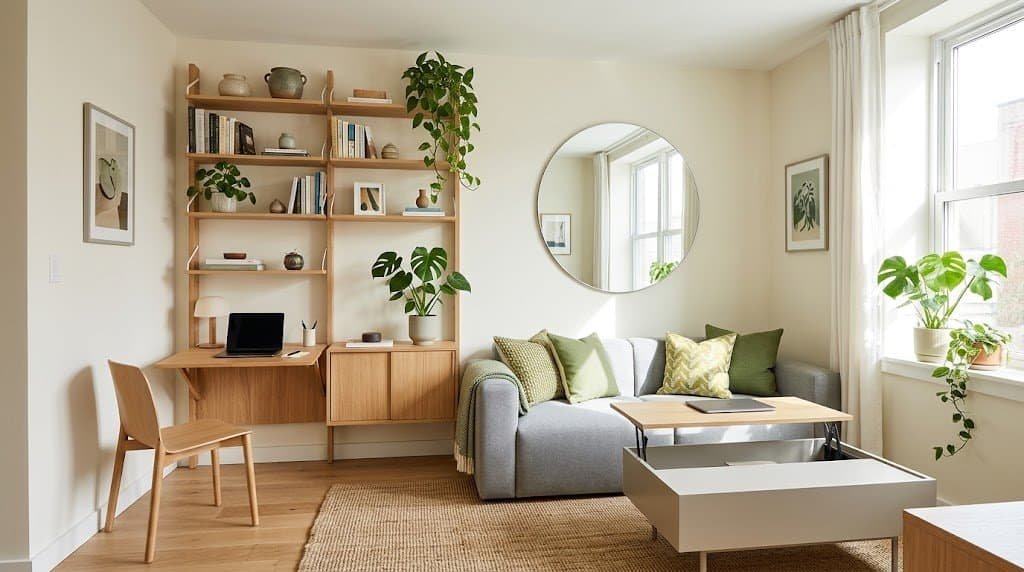
When you cannot go wide, go tall. Most apartments have eight to nine feet of ceiling height that is almost entirely wasted. Installing floor-to-ceiling shelving — whether built-in or a modular unit like IKEA’s Billy bookcase with extension — draws the eye upward, makes ceilings feel higher, and gives you enormous storage without taking up additional floor space.The key is to style the shelves thoughtfully. Do not just stack books horizontally and call it done. Mix books with objects, plants, small art prints, and decorative baskets for hidden storage. Leave some shelves partially open — negative space on a shelf is just as important as what you put on it. Painted a color slightly different from your walls (like a warm cream against a white wall), the shelving unit becomes a design feature rather than a utilitarian piece of furniture. This one upgrade alone can transform a bare, boxy room into something that looks curated and characterful.
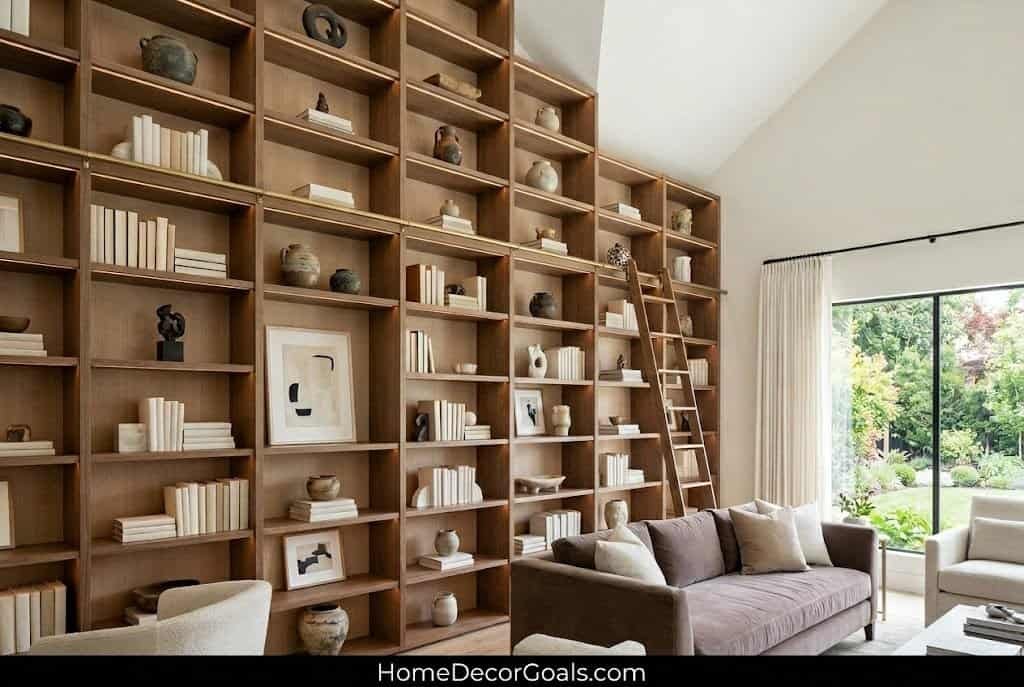
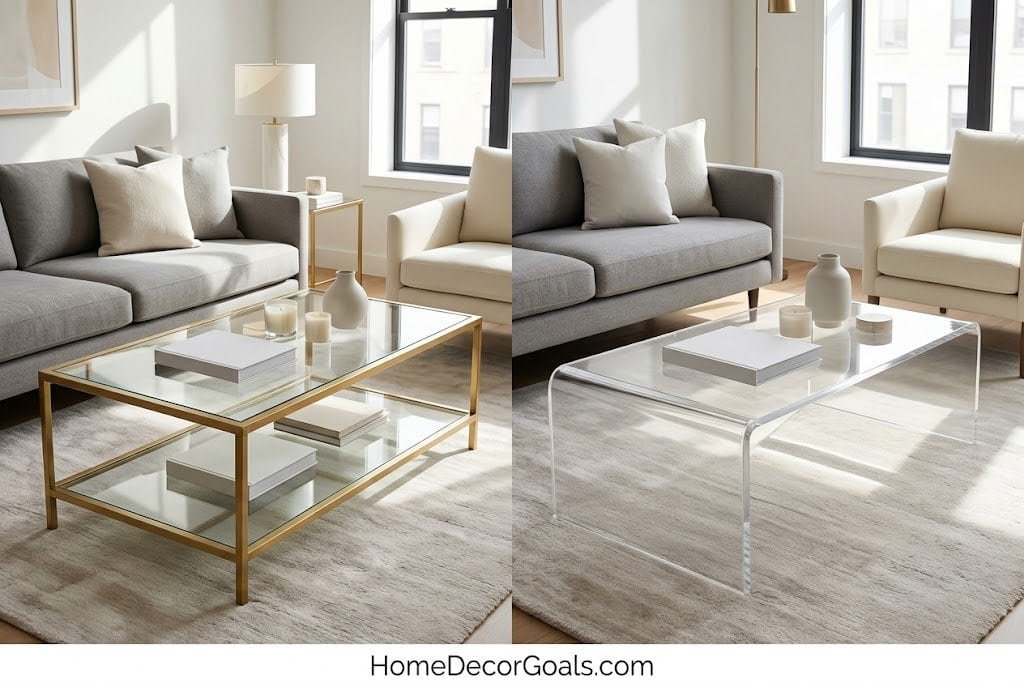
6. Choose a Glass or Lucite Coffee Table
Solid, opaque coffee tables — especially large wooden ones — break up the visual flow of a room and make it feel more crowded. A glass or acrylic (Lucite) coffee table, by contrast, allows your eye to travel through and across it, which keeps the room feeling open even when there is not much physical space to spare.This is one of those tricks that interior designers use constantly in small spaces because it works so consistently. You get the function of a coffee table — a surface for your remote, your coffee mug, your books — without the visual weight. Pair it with a textured rug underneath to add warmth and depth so the room does not feel cold or clinical. Round glass tables are particularly effective in tight spaces because they eliminate sharp corners, which both look softer and are physically safer in a compact layout.
7. Use Mirrors Strategically to Double the Room
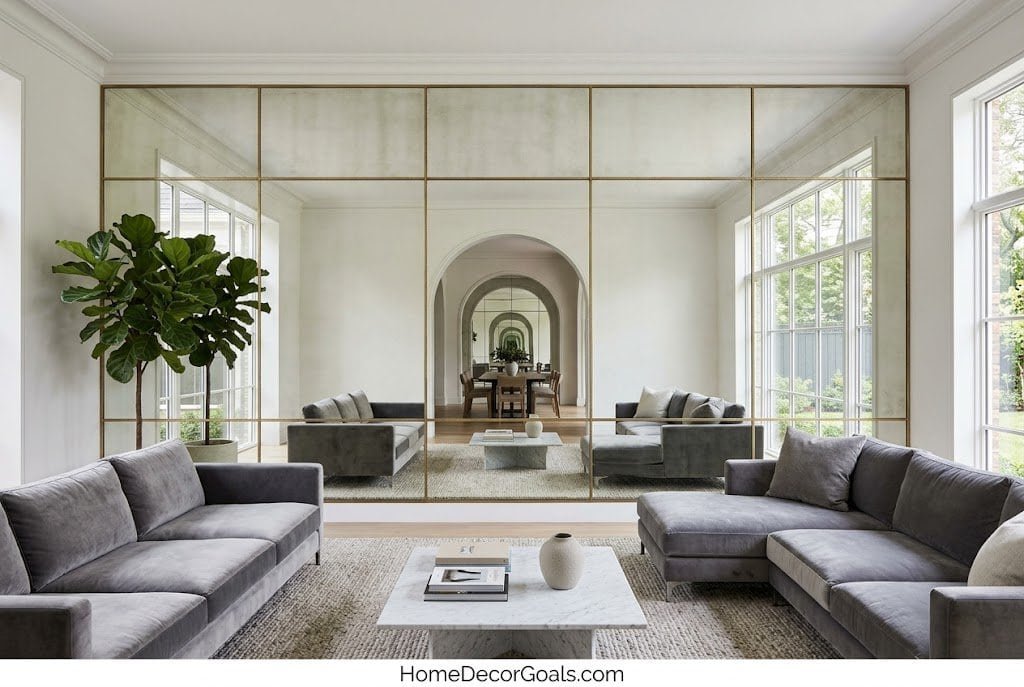
Mirrors are the oldest trick in the interior design handbook for a reason: they genuinely work. A large mirror on the wall opposite or adjacent to your main window bounces natural light deep into the room and creates the illusion of a second space beyond the glass. The effect is close to magical, especially in rooms that feel dark or cave-like.The biggest mistake with mirrors is going too small. A little decorative mirror the size of a dinner plate has essentially no effect on how spacious a room feels. You need scale: a full-length leaning mirror, a large round mirror at least 30 to 36 inches in diameter, or a series of mirrors grouped together on a single wall. Lean a large mirror against the wall behind your sofa or hang it opposite a window. Thrift stores and Facebook Marketplace are excellent sources for large vintage mirrors at a fraction of retail prices — the frame style matters far less than the size.
8. Light From Multiple Sources, Not Just Overhead
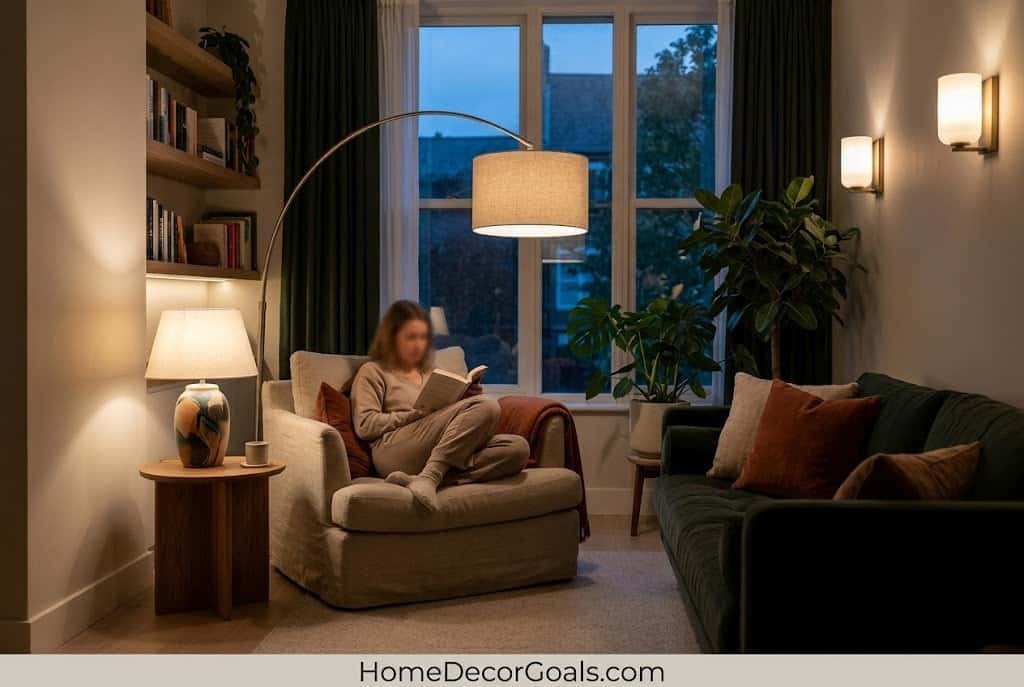
Overhead lighting — that single ceiling fixture that came with the apartment — is the enemy of atmosphere in small spaces. It casts a flat, uniform light that flattens the room visually and makes every inch of limited space fully visible at once, which works against the feeling of expansiveness.Instead, layer your lighting across multiple heights and sources. A floor lamp in the corner creates warmth and lifts the eye. A table lamp on a side table adds coziness and intimacy. Under-shelf LED strips or small plug-in sconces on the walls create depth and dimension. The goal is to have pools of light across the room rather than one harsh blanket of illumination. When the overhead light is off and your layered lamps are on, the room immediately feels larger, warmer, and more intentional. This costs less than most people think — a well-chosen floor lamp from a thrift store or IKEA can do the job beautifully.
9. Go With Light, Neutral Wall Colors
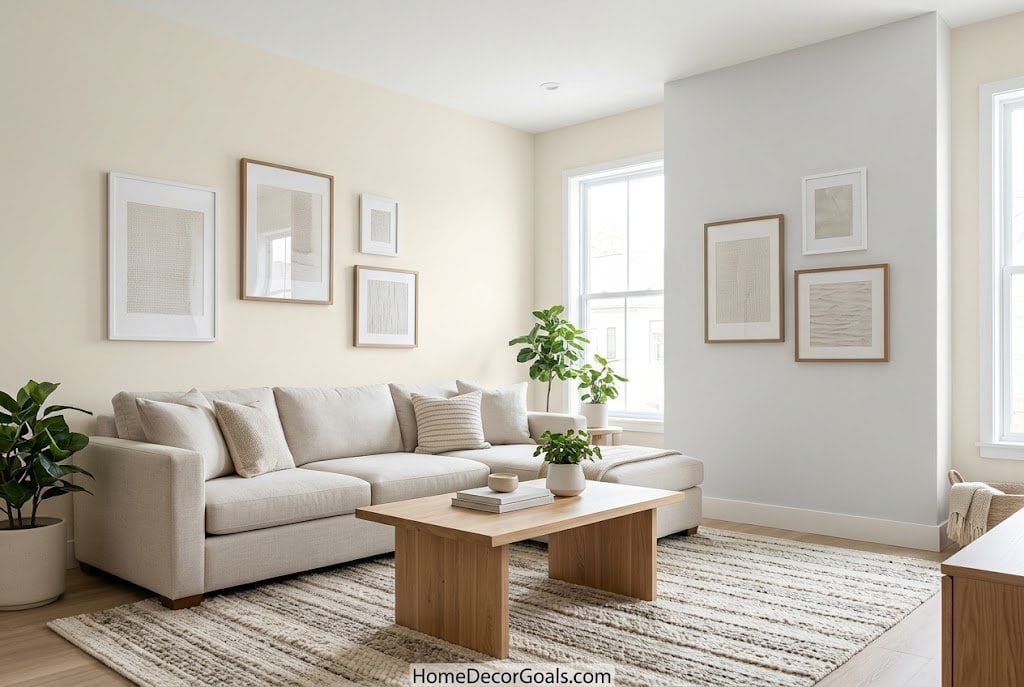
Color has a profound effect on how large or small a room feels. Dark colors absorb light and visually bring the walls in toward you. Light colors reflect light and push the walls back. In a small living room, painting your walls a light, warm neutral — think soft white, warm ivory, pale greige, or very light sage — is one of the highest-return investments you can make.If you are renting and cannot paint, there are workarounds: large art prints in light frames, removable wallpaper, or simply leaning into what you have with strategic lighting and furniture placement. If you do have the freedom to paint, do not neglect the ceiling. Painting the ceiling the same color as your walls — or even slightly lighter — makes the room feel taller. The visual separation created by a stark white ceiling against colored walls actually makes low ceilings more obvious. Continuity of color, counter-intuitively, opens up the space.
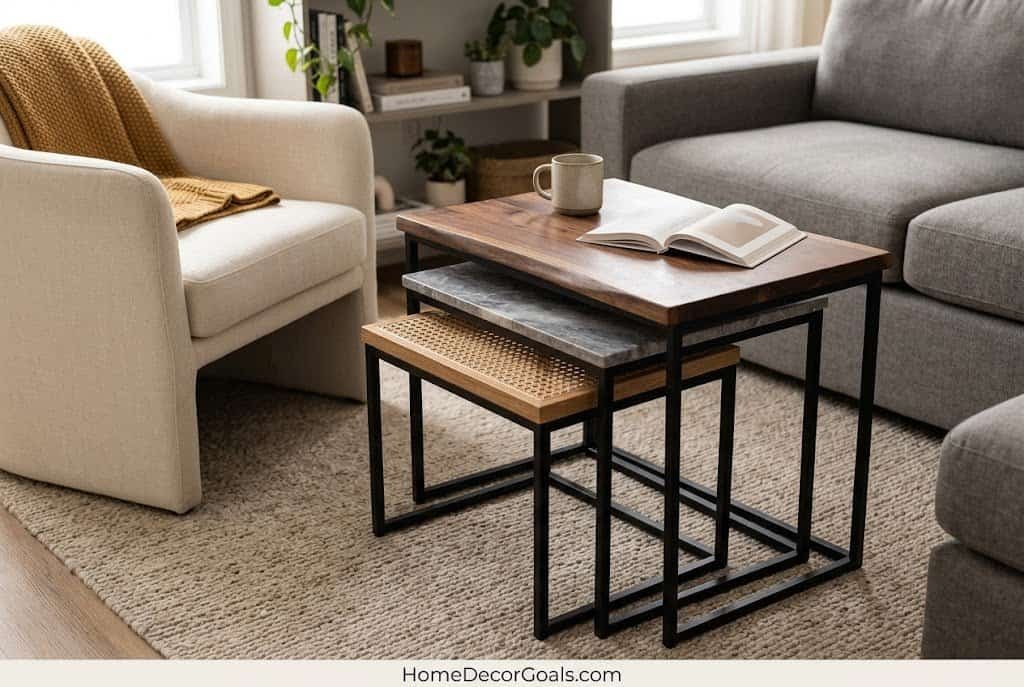
10. Invest in Nesting Tables Instead of a Bulky Side Table
Traditional side tables are often oversized for small apartment living rooms — they sit permanently, taking up floor space even when you do not need them. Nesting tables solve this elegantly. A set of two or three tables that stack inside each other can be pulled apart when you need a surface and tucked back together when you do not, effectively reducing your floor footprint by 60 to 70 percent when not in full use.Modern nesting tables come in an extraordinary range of styles — marble-topped, rattan, powder-coated steel, solid oak. They are not a compromise; they are genuinely good-looking. Placed at the end of a sofa or beside an armchair, they function exactly like a regular side table. But their true value is flexibility: pull one out to hold a guest’s drink, use the tallest one as a laptop stand, or spread all three apart during a dinner party to create multiple surfaces throughout the room. This kind of flexible, modular thinking is the core philosophy of small-space living done right.
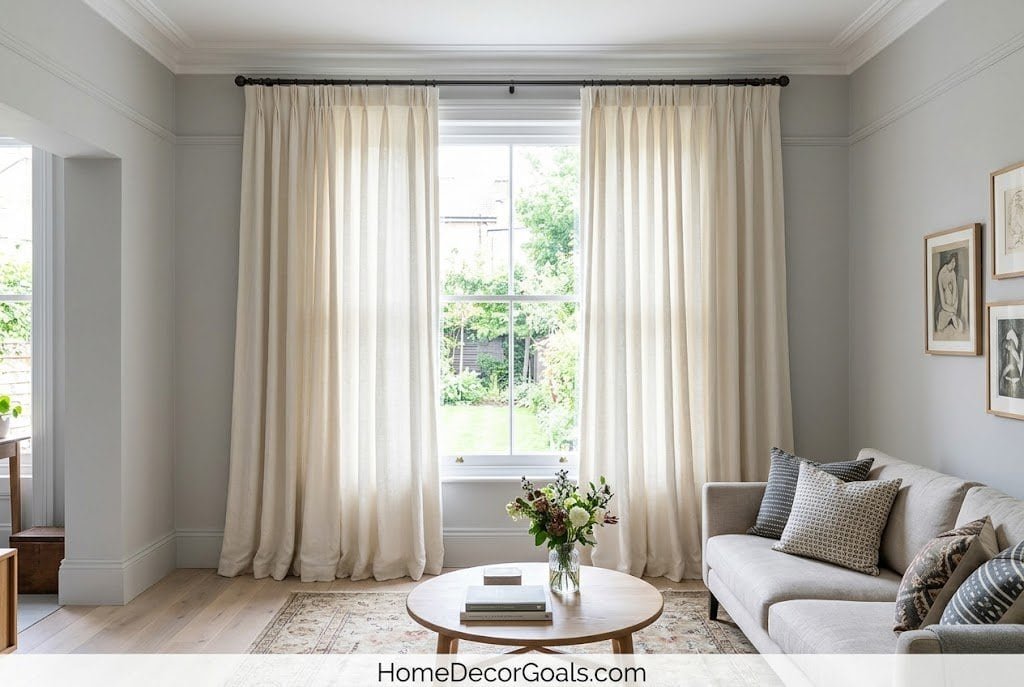
11. Use Curtains Hung High and Wide
This is one of the simplest and cheapest upgrades in this entire list, and it may have the biggest visual impact. Most people hang curtains at the top of the window frame or just a few inches above it. This is wrong for small spaces. Curtains hung at the window frame make the window look small, the ceiling look low, and the room look cramped.Instead, hang your curtain rod as close to the ceiling as possible — ideally right at the ceiling line — and extend it 8 to 12 inches wider on each side of the window than the window itself. When the curtains fall from ceiling to floor in long, unbroken lines, they create the illusion of floor-to-ceiling windows. The room looks taller. The windows look grand. The space feels expansive. This works in any apartment, costs almost nothing (a longer curtain rod and longer curtain panels), and you can take the curtains with you when you move. Use light, airy fabrics — linen or sheer cotton — to keep the room feeling bright.
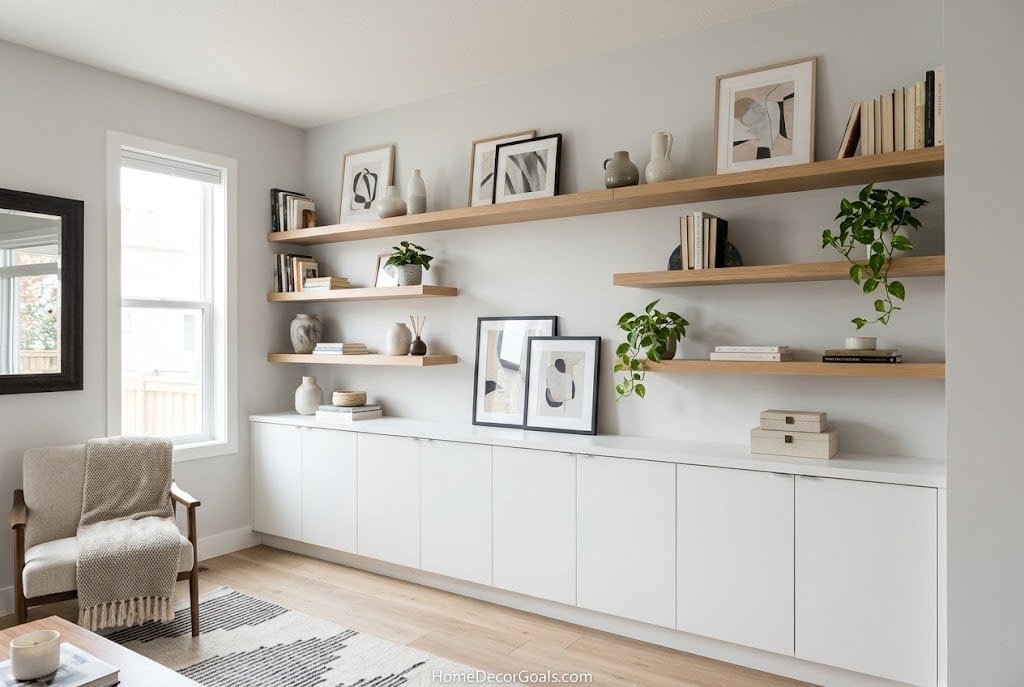
12. Incorporate Built-In-Looking Storage With Floating Shelves
Freestanding storage furniture — bookshelves, cabinets, consoles — takes up floor space and often looks like an afterthought that was added after the room was already furnished. Floating shelves mounted directly to the wall give you the same storage function without touching the floor, which keeps the visual field open and the room feeling larger.The key to making floating shelves look intentional rather than cheap is grouping and scale. A single tiny shelf floating in isolation looks like an accident. A cluster of three to five shelves at different heights and lengths, arranged in a considered composition, looks designed. Use them to display a rotating mix of books, plants, framed photos, candles, and small objects. Change the arrangement seasonally to keep the room feeling fresh. If you are in a rental, heavy-duty wall anchors and proper stud-finding will allow you to mount shelves that can hold real weight — and you can patch the holes when you leave.
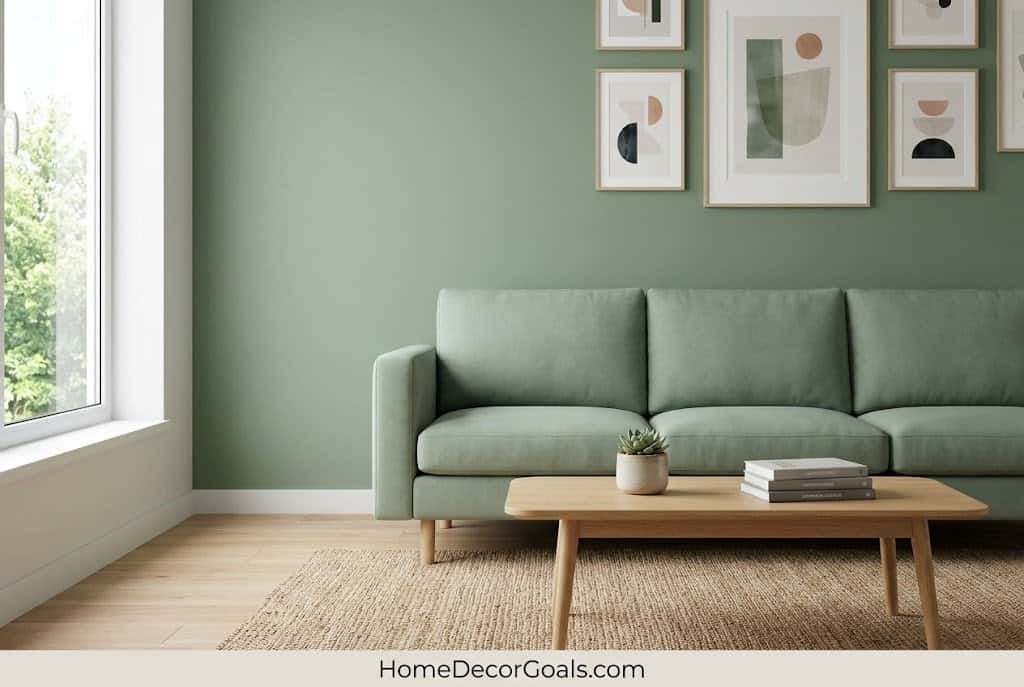
13. Choose a Sofa in the Same Color as Your Walls
Tonal dressing — matching your large furniture pieces to your wall color — is a technique borrowed from high-end interior design that works remarkably well in small spaces. When your sofa is a similar shade to your walls (both in a warm cream, or both in soft greige, for example), the eye does not register a hard visual stop at the edge of the sofa. The furniture blends into the room rather than sitting in front of it, which makes the overall space feel more continuous and expansive.This does not mean the room needs to be boring or monochromatic. You add visual interest through texture — a linen sofa against a painted wall, a boucle armchair against a plaster-finish surface. Texture creates depth and richness without the visual fragmentation that comes from strong color contrast. You can then introduce pops of color through pillows, a rug, artwork, or plants — things that are easy to change and do not commit you to a color permanently.
14. Use Ottomans as Multi-Purpose Furniture
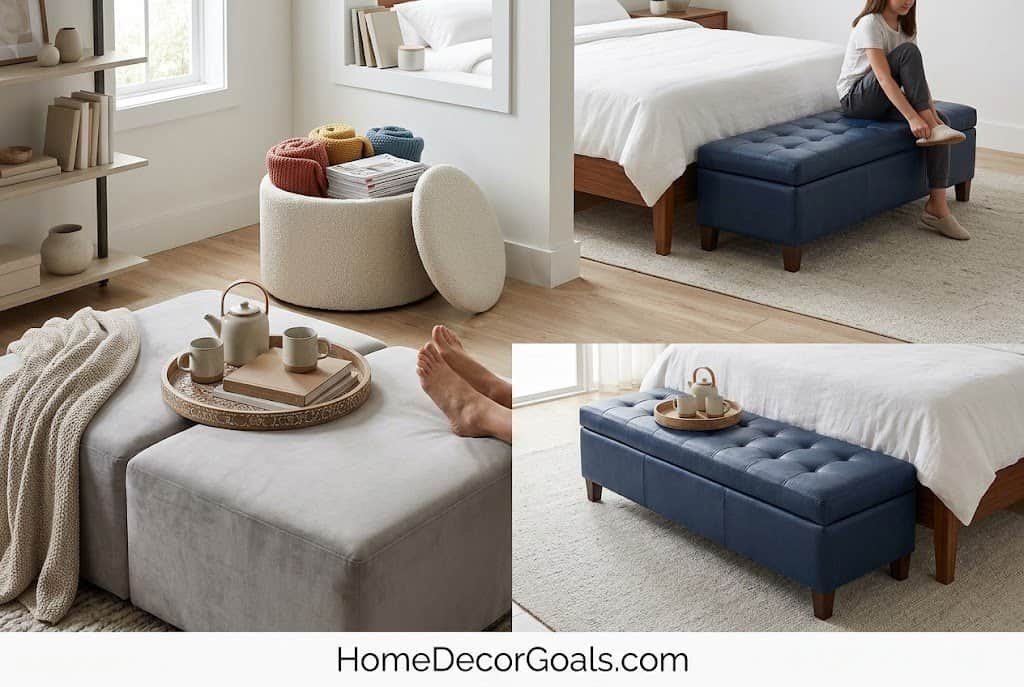
An ottoman is the most versatile piece of furniture in a small apartment. Used as a coffee table (top it with a tray to create a stable surface), it replaces a separate, harder piece of furniture. Used as extra seating when guests arrive, it replaces the need for an extra chair you would otherwise need to store. Used with a lift-top or as a storage ottoman, it hides blankets, books, board games, or anything else that would otherwise create clutter.Choose an ottoman in a soft, rounded shape — square-cornered ottomans can feel rigid and domineering in small rooms. A round or oval upholstered ottoman in a neutral velvet or boucle fabric adds softness and warmth while functioning as three separate pieces of furniture in one. For maximum versatility, choose a storage ottoman with a removable lid so you can use the interior for hidden storage and the top as a coffee table surface at the same time. Few pieces of furniture deliver this much value per square foot.
15. Bring in Plants to Add Life Without Bulk
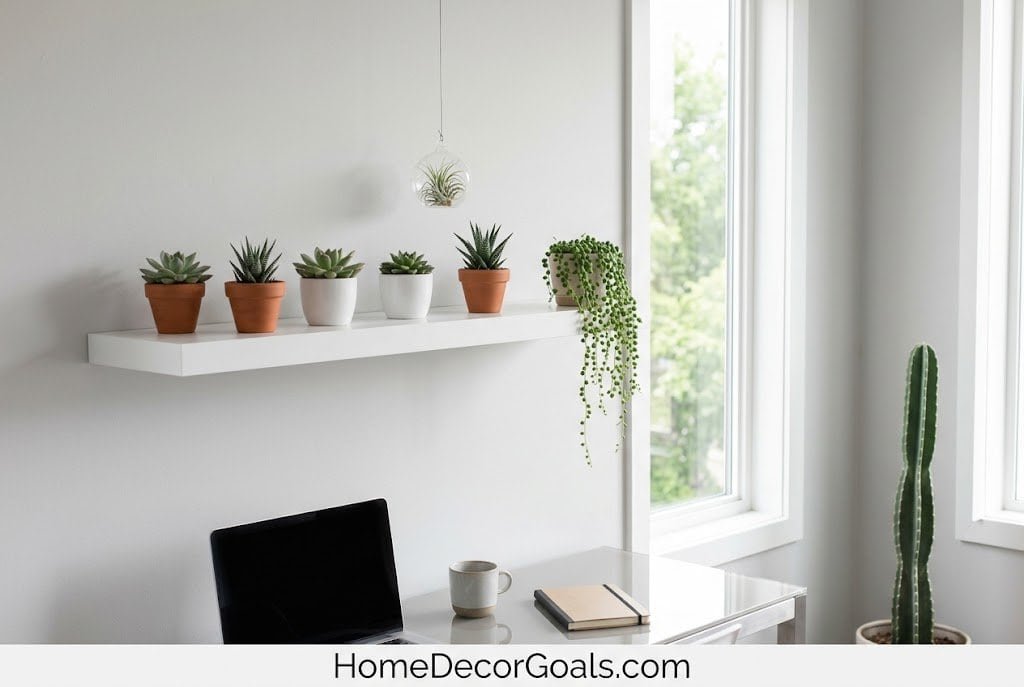
Plants are one of the most underrated tools in small-space design. They add color, life, and texture in a way that no object can replicate — and they do it in a way that feels natural rather than decorative. The key is choosing plants that earn their place without consuming floor space.Hanging plants in macrame holders near windows take up zero floor space. Small potted plants on floating shelves add greenery at eye level. A tall, dramatic plant like a fiddle-leaf fig or a snake plant in a single corner draws the eye upward and gives the room a sense of vertical scale. Avoid clustering too many plants in one area, as it can feel crowded — instead, distribute green throughout the room so every angle has a touch of life. Trailing plants like pothos or string of pearls on high shelves create a downward drape that adds dimension and movement without any additional floor footprint.
16. Install a Murphy Bed With an Integrated Living Space
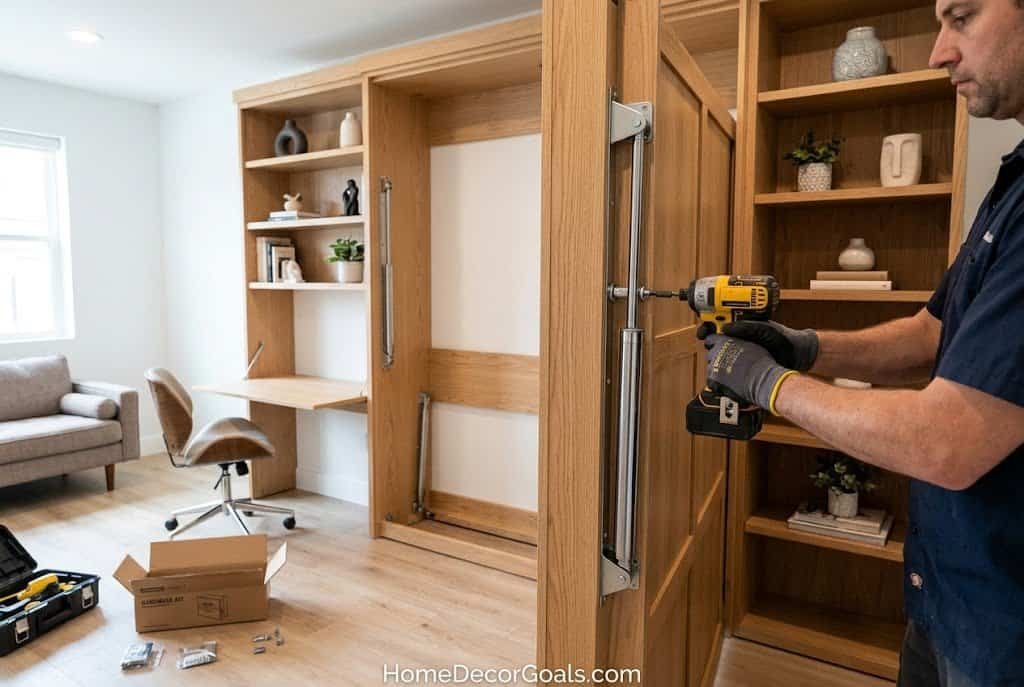
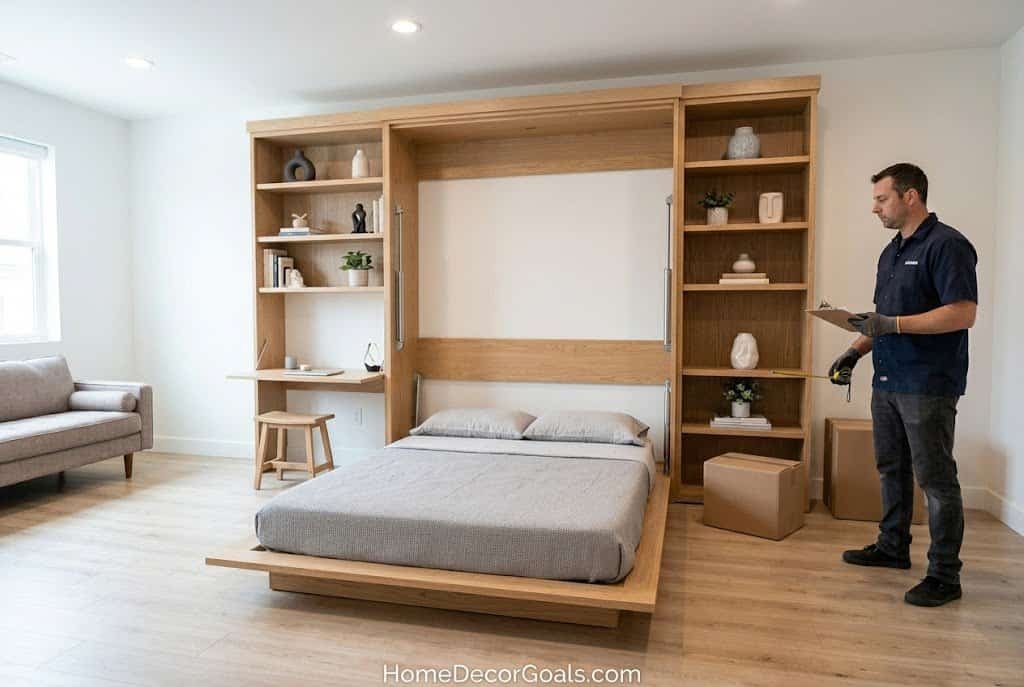
If your living room doubles as a bedroom — as it does in many studios — a Murphy bed (also called a wall bed) is the single most impactful upgrade you can make. A modern Murphy bed folds up into a cabinet during the day, freeing your entire floor for living room furniture, and pulls down at night to become a full bed. The technology has advanced significantly, and today’s Murphy beds are smooth, safe, and stylish.The real game-changer is Murphy bed systems that integrate a sofa or shelving unit into the same wall unit. When the bed is down, it is a bedroom. When it is up, the sofa swings out and the wall cabinet becomes a living room. These integrated systems from brands like Resource Furniture and Ori Living are not cheap, but they effectively double the functional square footage of a studio apartment. Even a standalone Murphy bed with a simple DIY cabinet surround can transform a room that currently serves two functions badly into one that serves both functions well.
17. Choose Low-Profile Furniture to Preserve Visual Height
Furniture height has a dramatic effect on how tall a room feels. Tall, chunky furniture — high-backed armchairs, towering wardrobes, big upright bookshelves — eats into your ceiling height visually and makes a room feel like the walls and ceiling are closing in. Low-profile furniture does the opposite: it keeps the upper portion of the room clear, which allows the ceiling to feel higher and the room to feel more open.Look for sofas with a seat height around 15 to 17 inches and a back height no taller than 30 inches. Choose coffee tables, sideboards, and media consoles that sit low and horizontal. The Scandinavian and Japanese aesthetic traditions are masters of low-profile furniture for exactly this reason — look to Japanese tansu furniture or mid-century modern Scandinavian pieces for inspiration. Even your choices about art placement follow this logic: hanging artwork slightly lower than you instinctively might keeps the eye at a human level and lets the ceiling breathe above.
18. Declutter Ruthlessly — Every Object Needs a Home
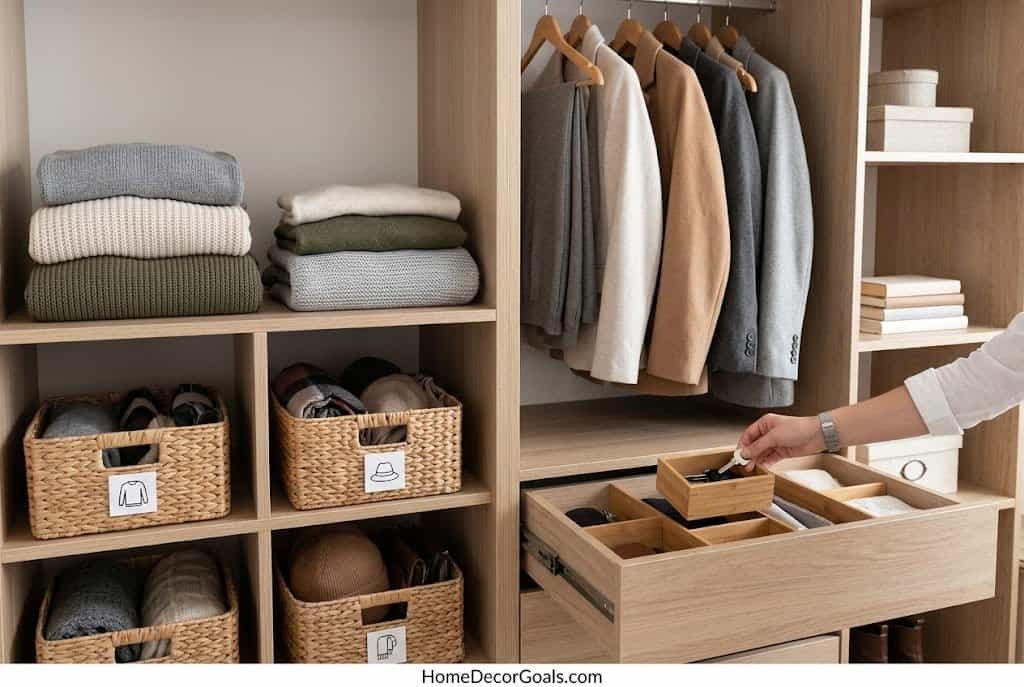
No amount of design genius can make a cluttered small room feel spacious. Clutter — random objects on surfaces, stacks of things without homes, visible cords, mismatched storage containers — is the single biggest killer of the feeling of space. A room with one tenth of the furniture of a larger room but twice the clutter will feel smaller than the larger, messier room.The Marie Kondo principle applies directly here: every object in your living room should either serve a clear function, bring you genuine joy, or get out. Adopt a “one in, one out” policy — when something new comes into the room, something old leaves. Invest in hidden storage so that the objects you need but do not want to look at have somewhere to live. A lidded basket on the floor, a closed sideboard, a storage ottoman — all of these hide the functional chaos of real life while keeping surfaces clean and the room feeling airy. The most beautifully designed small rooms are not just stylish. They are disciplined.
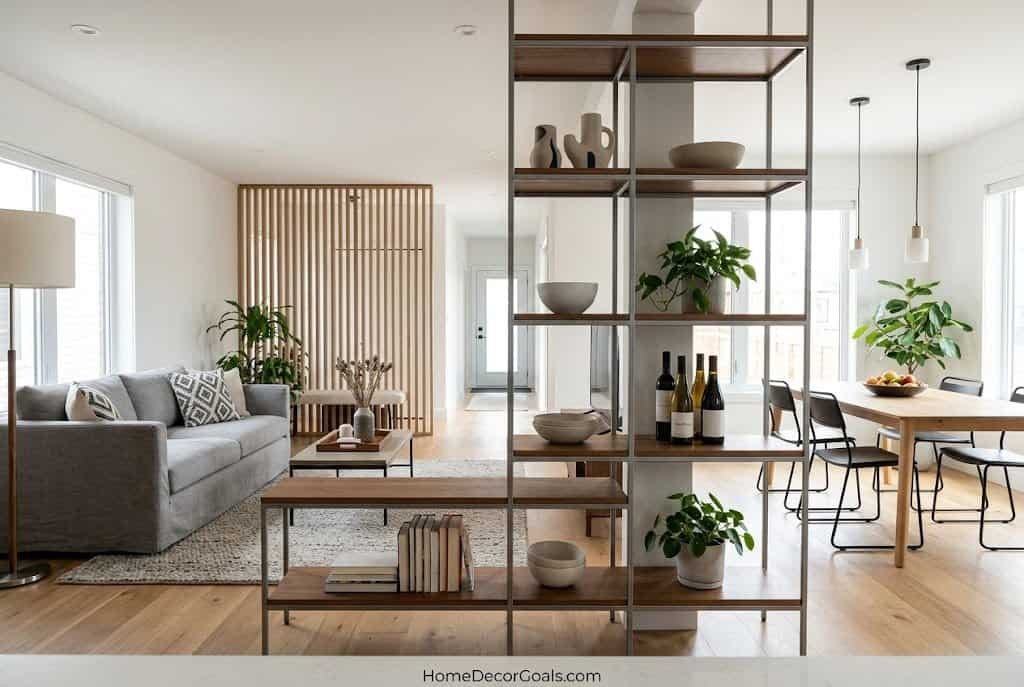
19. Create Zones With a Room Divider or Open Shelving
In a studio or open-plan apartment, the living room often needs to coexist with a dining area, a workspace, or even a sleeping area. Without any visual separation, the space feels chaotic and undefined. Creating zones — distinct areas within the larger space — paradoxically makes the whole feel bigger, not smaller, because the brain reads each zone as its own organized space.The best dividers for small spaces are ones that preserve light and air flow. An open bookshelf used as a room divider separates spaces while still allowing light through and serving double duty as storage. A sheer curtain panel hung from a ceiling-mounted track creates a soft, elegant separation without blocking light. A long, low credenza placed perpendicular to the wall creates a visual barrier at waist height that defines the living area while keeping the upper room completely open. Any of these approaches creates architectural structure in a space that otherwise has none.
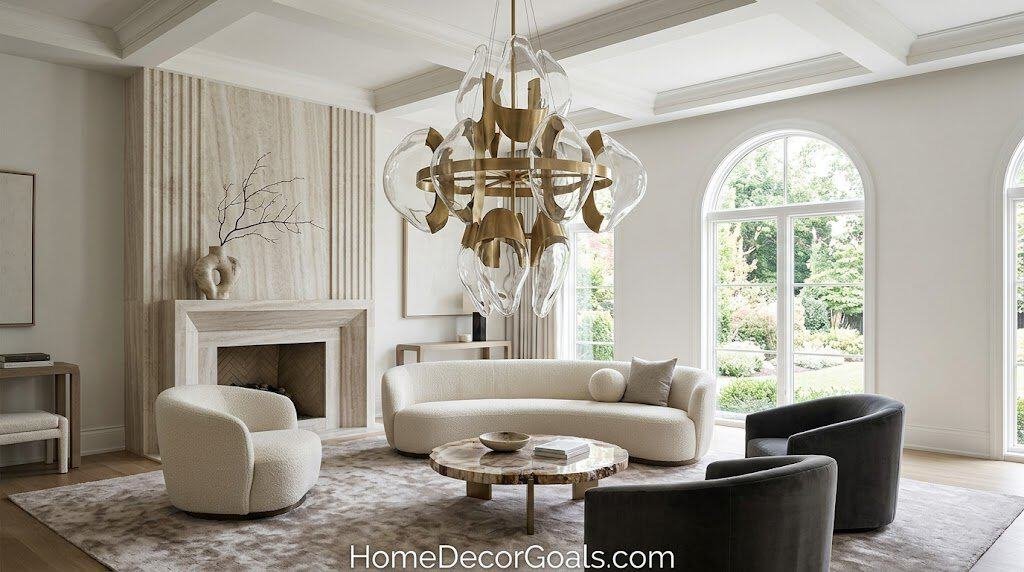
20. Add a Statement Piece to Anchor the Room
Small rooms often fail not because they have too much in them, but because every piece is equally forgettable. There is no focal point, no visual anchor — just a collection of similarly sized, similarly toned objects that the eye does not know where to land. The result is a room that feels random rather than designed.Adding one deliberate statement piece — a large, bold piece of artwork above the sofa, a dramatically shaped floor lamp, a single piece of furniture in an unexpected color, a large architectural mirror — gives the room a focal point that immediately makes it feel more put-together. The rest of the room’s design revolves around this anchor. Everything else can be quiet and neutral. The statement piece does the work. This is counterintuitive in small rooms, where the instinct is to keep everything small and understated, but a well-chosen bold element actually makes the room feel more confident and therefore more spacious.
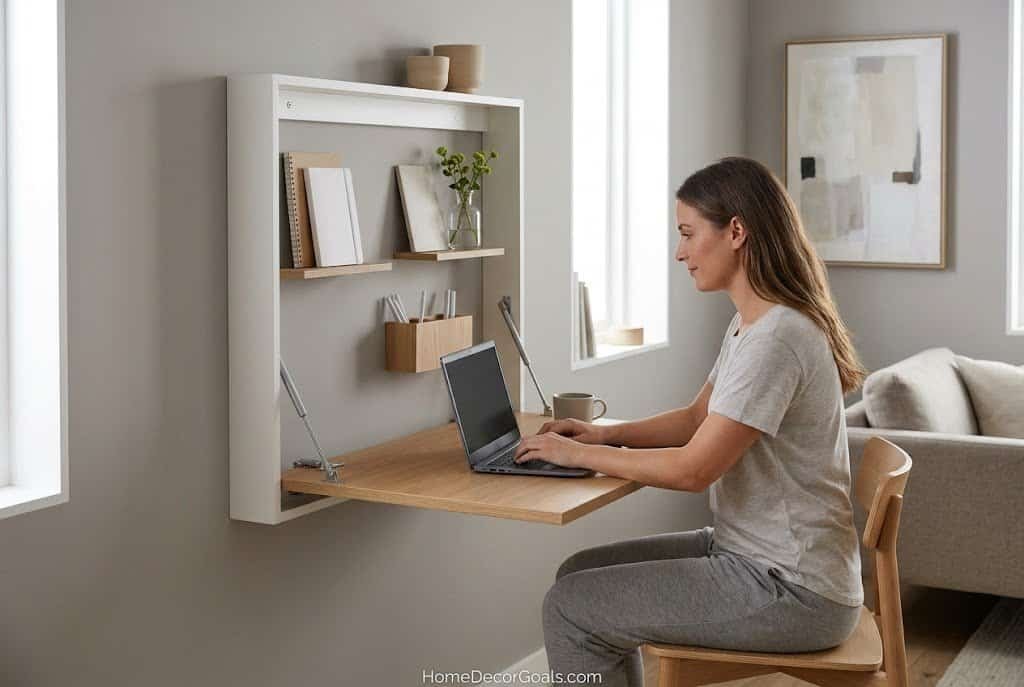
21. Use a Fold-Down Wall Desk to Add a Workspace
Working from home in a small apartment often means your living room becomes your office, which creates its own kind of psychological and visual chaos. A fold-down wall desk — a Murphy desk, essentially — is the cleanest solution. Mounted to the wall, it folds flat when not in use and reveals a proper work surface when you need it. Closed, it looks like a simple wall panel or a decorative piece. Open, it is a functional desk.Pair a fold-down desk with a wall-mounted shelf above it for storage, and a sleek stool that slides under it or tucks into a nearby space when not in use, and you have a complete home office footprint that essentially disappears when the workday ends. This is enormously valuable not just for space reasons but for mental health reasons — the ability to visually “close” the office when you are done for the day helps maintain work-life separation in a home where the boundaries are already blurry.
22. Choose Legs Over Bases on All Furniture
This is a detail that seems minor until you see the difference it makes. Furniture that sits directly on the floor — sofas with platform bases, storage units that rest flat on the ground, cabinets without legs — creates a solid, heavy visual line at floor level that interrupts the room and makes the floor feel smaller. Furniture on legs, by contrast, shows the floor underneath, which makes the continuous floor plane visible and the room feel larger.Specifically: choose sofas with visible legs rather than skirted or platform bases. Choose side tables and coffee tables with thin legs (metal hairpin legs are ideal). Choose bed frames, if your bedroom shares space, with legs that leave several inches of clearance. Even three or four inches of visible floor under a piece of furniture opens the room measurably. This applies to storage furniture too — a credenza on tapered mid-century legs looks lighter and more elegant than an identical piece with a flat base, and the room breathes more easily around it.
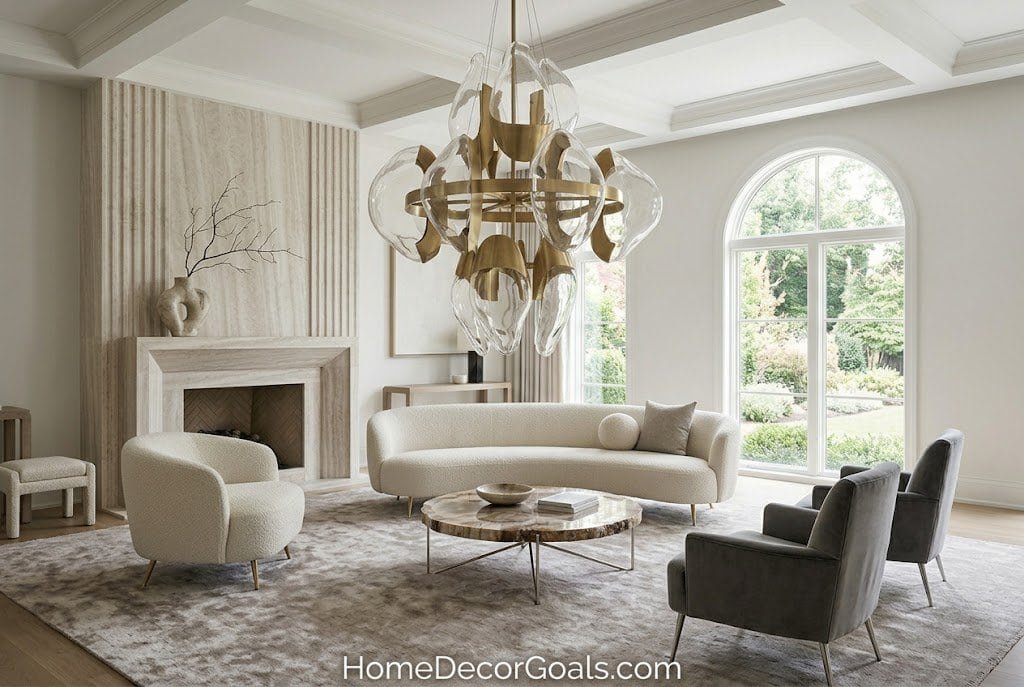
23. Paint or Wallpaper One Accent Wall for Depth
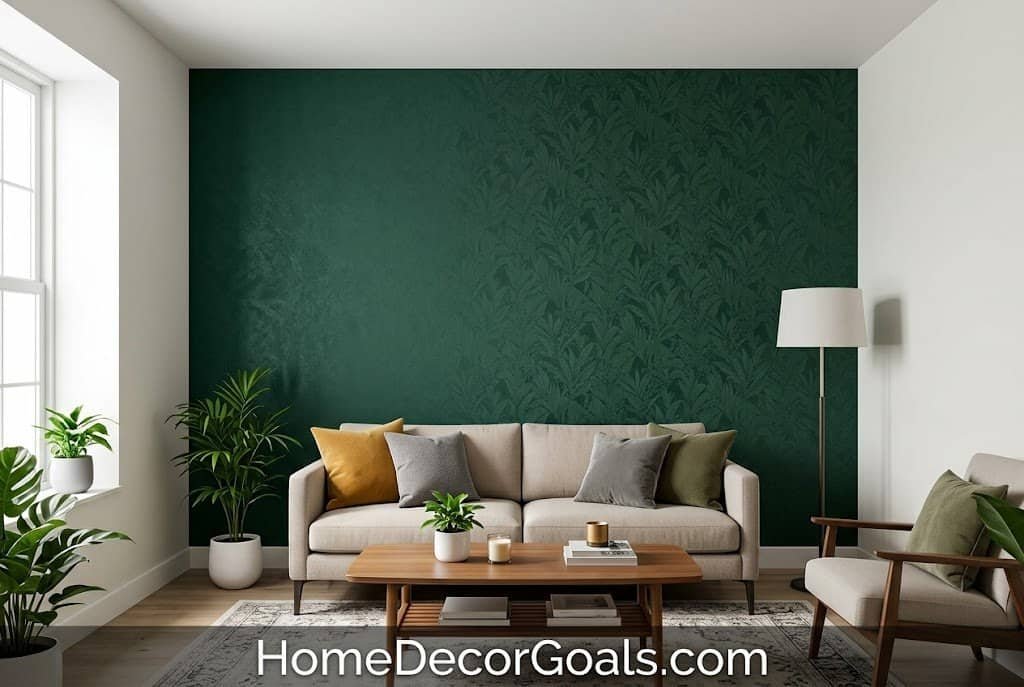
While keeping walls light is generally excellent advice for small rooms, an accent wall done well can actually make a room feel larger by creating a sense of depth. The technique is to select the wall furthest from your main entry point — typically the wall behind the sofa — and treat it differently. A deep, saturated color, a textured wallpaper, or a mural on this single wall creates a visual sense that the room extends beyond where it physically ends.The key word is restraint: one wall, treated boldly. Not two, not three. The contrast between the accent wall and the light walls on the sides creates spatial depth the way shadows create depth in a photograph. Dark colors on the far wall actually make that wall recede, which makes the room feel longer. Wallpaper with a botanical print, a subtle geometric pattern, or a plaster-effect texture adds enormous richness to a room without any additional furniture or decor. In a small room, the walls are your largest design canvases — use them.
24. Replace a Dining Table With a Bar Cart or Wall-Mounted Folding Table
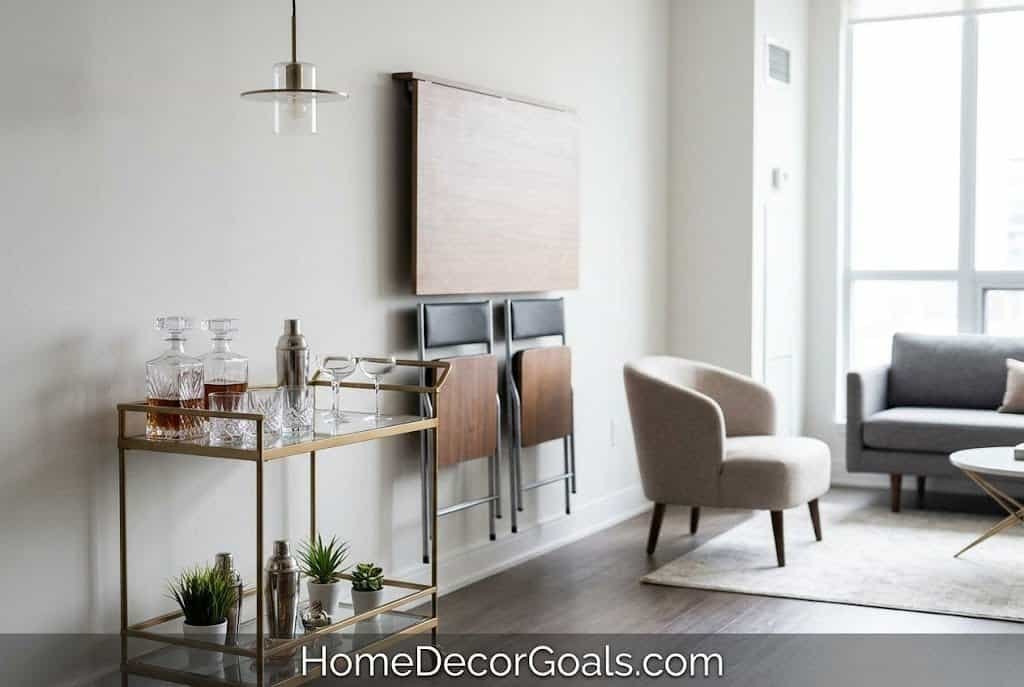
In a small apartment where the living room and dining area share the same space, a full-sized dining table can overwhelm everything else. If you live alone or primarily eat solo, consider replacing a traditional dining table with a bar cart or a wall-mounted folding table that you only deploy for actual meals or when guests come over.A bar cart serves as a drinks station, a decorative display surface, and a food staging area during meals — all in a footprint of about two square feet. A wall-mounted folding table (like the kind found in small European apartments and sailboats) folds completely flat when not in use and reveals a full dining surface when extended. If you do have people over for dinner occasionally, a round table — even a small one — accommodates more people per square foot than a rectangular table of the same area, because you can always pull up one more chair around a circle. Rethinking the dining table is one of the highest-leverage space decisions you can make in an open-plan small apartment.
25. Create a Cohesive Color Story Throughout the Room
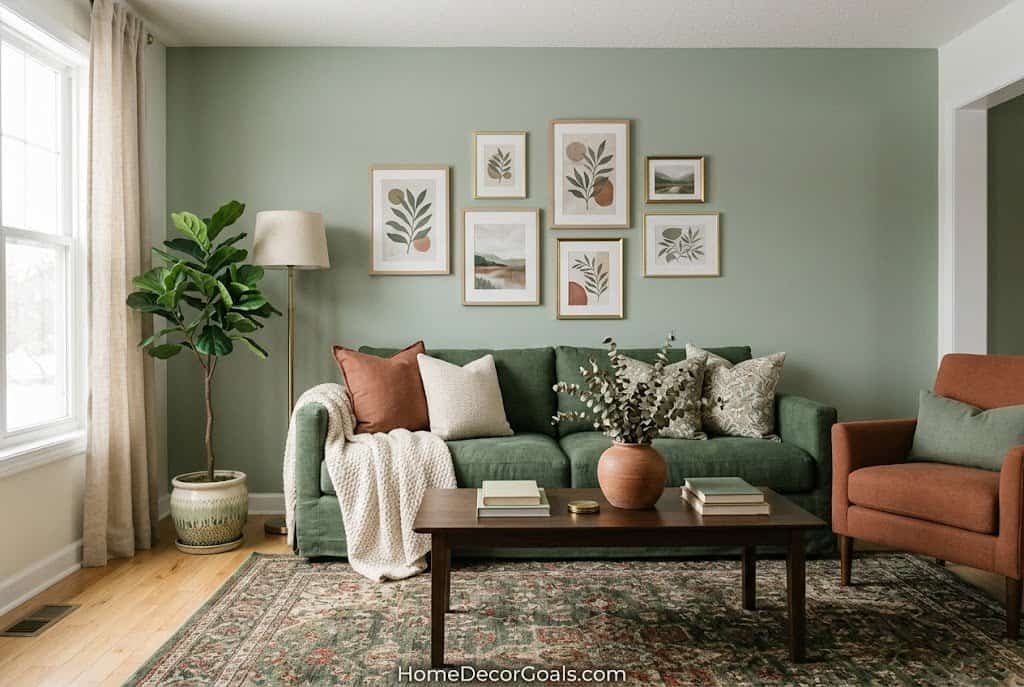
The final idea — and in some ways the most important — is to approach the entire room as a single, cohesive visual composition rather than a collection of independent purchases. This is the difference between a room that looks designed and a room that looks assembled. A cohesive color story means choosing three to four colors that repeat throughout the room in different proportions and forms: a dominant neutral for walls and large furniture, a secondary tone for textiles and wood, and one or two accent colors that appear in smaller doses through plants, art, cushions, and ceramics.When the eye moves around a room and the colors echo and repeat, the brain reads the space as unified and intentional. This makes the room feel larger because there is no visual noise — nothing jumps out as inconsistent or jarring. The color story does not need to be boring: you can have a rich, layered palette with warm terracotta accents, sage green plants, and pale cream walls. The rule is not monotony — it is consistency. Every purchase you make for the room should pass the test: does this fit the color story? If it does not, it does not belong, no matter how much you love it on its own.
Bringing It All Together
When I finally packed up that Brooklyn apartment and moved out three years after moving in, the woman who came to look at it as a potential subletter stood in the middle of the living room and said, “Wow, this feels so much bigger than 132 square feet.” That was the number — 132 square feet for the living area alone. She did not know any of the design tricks I had used. She just felt the effect of them.That is what good small-space design does. It is invisible. The room does not announce that it has been optimized or cleverly arranged. It simply feels good to be in. It feels bigger than it is, warmer than it looks on a floor plan, and more personal than a space its size has any right to be.You do not need to implement all 25 of these ideas at once. Start with the ones that cost the least — float your furniture off the walls, rehang your curtain rods at the ceiling, add a large rug and a floor lamp. Notice the difference. Then, as budget and time allow, work through the rest. Each one builds on the others. And before long, the small apartment that felt like a limitation becomes the place that guests leave saying: “I cannot believe how good it feels in there.”
Which of these ideas are you planning to try first? Save this to your Pinterest board and tag it for your next apartment refresh.
Written by a small-space living enthusiast with five years of hands-on apartment design experience across three cities. This article is based on personal experience and research into professional interior design principles for compact living spaces.